Norms Impact
Trump Accused of Using ChatGPT to Create Tariff Plan After AI Leads Users to Same Formula: ‘So AI is Running the Country’
If U.S. tariffs are being set by an undisclosed AI-style deficit formula, national trade power is being exercised without transparent methodology or accountable decision-making.
Apr 3, 2025
Sources
Summary
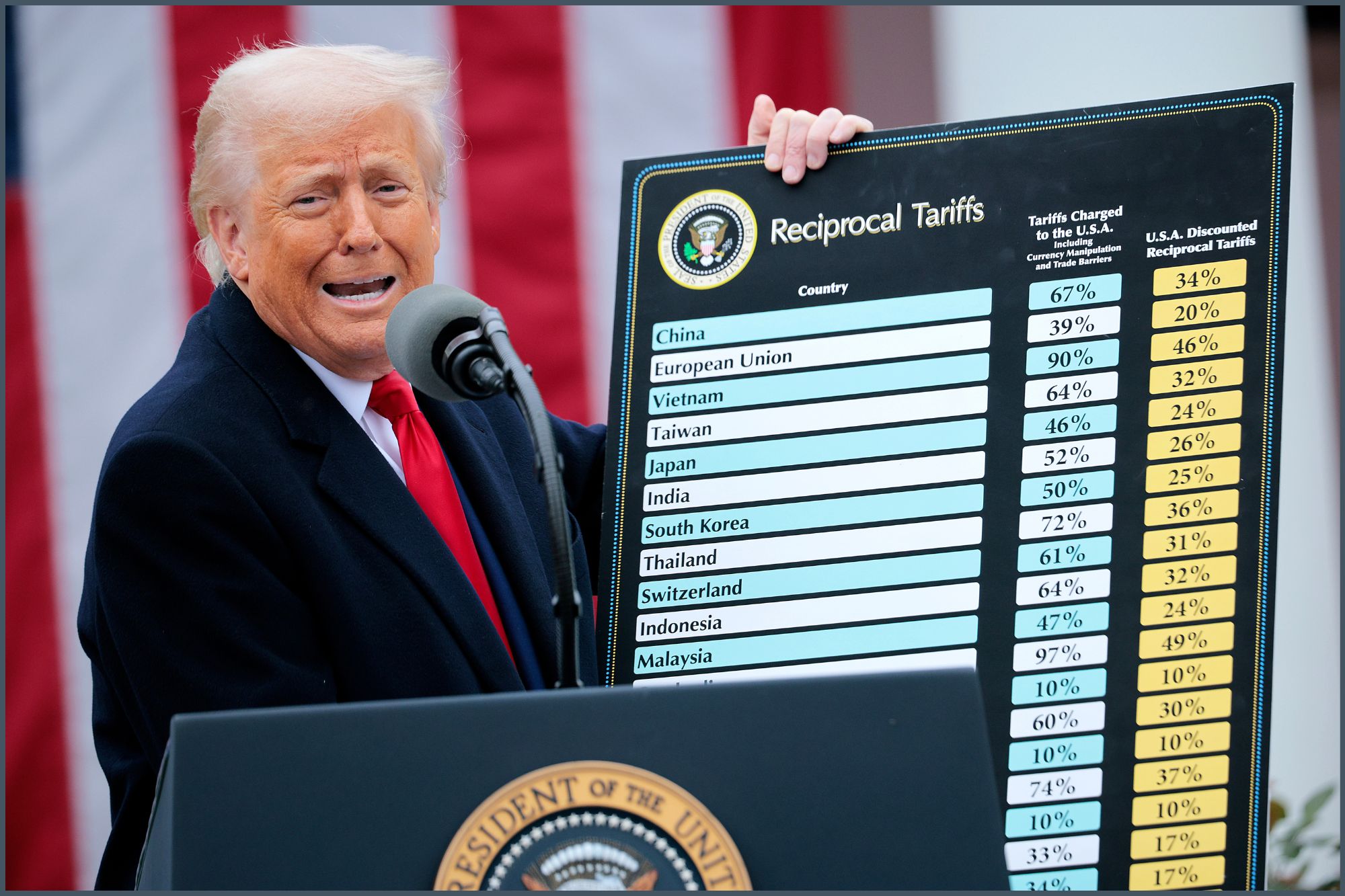
Internet users and commentators alleged the Trump administration’s tariff percentages mirror a simple formula produced by ChatGPT when prompted to set a minimum tariff of 10%. The tariff-setting process is portrayed as shifting from disclosed economic methodology to an opaque, tool-driven heuristic tied to trade-deficit ratios. The immediate consequence described is market turmoil, including a sharp one-day drop in major indexes as trade policy signals destabilize expectations.
Reality Check
Letting opaque, unverified calculations drive trade policy sets a precedent where executive economic power can be exercised without traceable reasoning, and that instability hits our jobs, savings, and rights through market shock. On this record, the conduct is not clearly criminal: using an AI tool to draft a policy heuristic is not itself fraud, and the text provides no evidence of false statements made to obtain money or property that would anchor federal wire fraud (18 U.S.C. § 1343) or securities fraud theories. The democratic injury is governance-by-black-box—policy made without disclosed inputs, sourcing, or review—leaving the public unable to audit whether decisions reflect lawful analysis or arbitrary automation. When markets move on that kind of nontransparent state action, accountability collapses precisely where constitutional democracy requires it most: in decisions that bind the nation and punish or reward whole sectors.
Media
Detail
<p>Online commentary following the Trump administration’s “Make America Wealthy” event on Wednesday alleged that the tariff percentages presented align with a formula generated by ChatGPT in response to a prompt about creating an “easy way” to set tariffs based on trade deficits with a minimum of 10%.</p><p>Political commentator Destiny posted that the rates appear to be calculated by dividing the U.S. trade deficit with a country by U.S. imports from that country, or applying 10%, “whichever is greater,” and attached a screenshot of an exchange with the AI tool that produced a proportional tariff formula.</p><p>John Aravosis posted a TikTok video describing the same calculation method, stating the tariffs could be derived by taking the U.S. trade deficit with a country divided by total imports from that country into the United States. The reporting also noted market reaction the next day, with the S&P 500 falling more than 4% and the Nasdaq more than 5%, described by an Academy Securities strategist as a “disaster,” as reported by The New York Times.</p>