Norms Impact
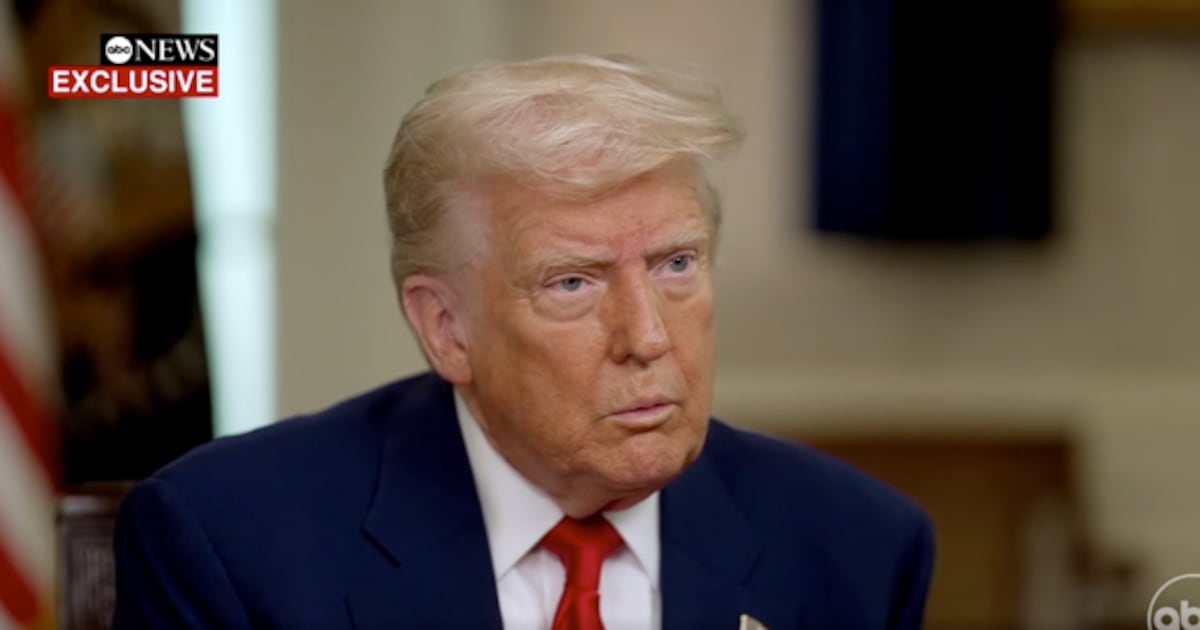
Trump Melts Down at Being Fact-Checked Right to His Face
When a president demands a reporter say “yes he does” to a disputed, digitally annotated “MS-13” claim, our due-process norms get replaced by executive branding.
Apr 30, 2025
⚖ Legal Exposure
Sources
Summary
President Donald Trump repeatedly insisted in an ABC News interview that Kilmar Abrego Garcia had “MS-13” tattooed across his knuckles, despite the contested authenticity of that claim and the use of a digitally altered image. The presidency is being used to publicly assert disputed “gang” evidence to defend a deportation carried out despite a withholding of removal order. The practical consequence is a normalized template for branding a person a “terrorist” without a court finding, while press scrutiny is treated as hostility.
Reality Check
This conduct threatens our rights by normalizing government punishment by accusation—labeling a person “MS-13” and a “terrorist” while bypassing the basic judicial check that separates enforcement from retaliation. The most clearly documented act here is political: pressing contested “evidence” in public to justify a deportation carried out despite a withholding of removal order and without a court ever finding gang membership, a direct assault on due process as a governing norm. On this record alone, criminality is not clearly established, but the underlying pattern—using state power to impose severe consequences while publicly manufacturing certainty from disputed material—tracks the governance failure our system was built to prevent.
Legal Summary
Exposure is driven by alleged procedural/rights violations and politicized use of contested evidence to justify a deportation despite a referenced “withholding of removal order.” The article raises substantial investigative concerns about whether officials knowingly relied on misleading predicates and denied process, but it does not show transactional corruption or sufficiently developed intent and decisionmaker facts to treat it as clearly criminal on its face.
Legal Analysis
<h3>18 U.S.C. § 242 — Deprivation of rights under color of law</h3><ul><li>Article alleges the deportee had a court-issued “withholding of removal order” yet was detained and deported without being allowed to appear before a judge, raising a due process/immigration court compliance issue if done willfully.</li><li>Administration justification described as relying on “tenuous evidence” (tattoos) and a disputed/possibly digitally-altered image; if officials knowingly used false predicates to effect removal, that can support willfulness, but the article does not identify the decisionmakers, their knowledge, or intent.</li></ul><h3>18 U.S.C. § 1001 — False statements (within federal jurisdiction)</h3><ul><li>Trump is quoted asserting as fact that the person had “MS-13” tattooed on his knuckles; the article states the “M-S-1-3” overlay was digitally added and experts dispute the interpretation.</li><li>However, the statements described are made in a media interview and social media post; the article does not indicate a false statement was made to a federal agency in a matter within federal jurisdiction, limiting prosecutable exposure on these facts alone.</li></ul><h3>5 C.F.R. Part 2635 / Executive Branch ethics — Misuse of position / public communications</h3><ul><li>Publicly amplifying a misleading/altered image to brand an individual a gang member, while the article asserts no court finding and no criminal record, presents an abuse-of-office/ethical integrity concern tied to government messaging around enforcement actions.</li><li>The article does not allege a money-for-action exchange or personal enrichment; the pattern described is politicized/irregular justification rather than transactional corruption.</li></ul><b>Conclusion:</b> The facts described indicate a serious investigative red flag involving potential willful disregard of immigration court protections and reliance on contested/misleading evidence, but the article does not establish a money-access-official action quid pro quo or the intent elements needed to charge a clear criminal deprivation-of-rights case on this record.</p>
Detail
<p>During an interview Tuesday with ABC News correspondent Terry Moran marking the first 100 days of Trump’s second term, Trump focused on Kilmar Abrego Garcia, a Maryland father who was mistakenly deported on March 15 to El Salvador’s CECOT prison. Trump asserted multiple times that Abrego Garcia had “MS-13” tattooed on his knuckles. Moran responded that the claim was disputed and said Abrego Garcia had tattoos that some interpret that way.</p><p>Earlier in April, Trump posted an image of Abrego Garcia’s hand showing four tattoos (a marijuana leaf, smiley face, cross, and skull) with “M-S-1-3” digitally added above them to argue the symbols signified gang membership. Experts cited in reporting said the tattoos are not associated with MS-13, and additional sources said even consulted gang members did not believe the tattoos indicated MS-13.</p><p>The administration has described Abrego Garcia as a “terrorist” and MS-13 member, despite no criminal record and no court finding; he was deported after an immigration judge had granted a withholding of removal order and without being allowed to appear before a judge.</p>