Norms Impact
Trump administration briefed top Republicans before Iran strikes, but not some Democrats | CNN Politics
By briefing top Republicans while leaving key Democratic intelligence leaders in the dark, the White House turned war-making notice into partisan privilege and weakened Congress’ constitutional check on force.
Jun 22, 2025
⚖ Legal Exposure
Sources
Summary
President Donald Trump’s administration notified the top two Republican congressional leaders ahead of US strikes on Iranian nuclear facilities while key Democrats, including the top Democrats on the House and Senate intelligence committees, were not informed until after the strikes. The White House treated leadership notification as a selective “courtesy heads-up,” while conducting major military action without prior congressional authorization and without full pre-strike briefings for the “Gang of Eight.” The result is a war-powers confrontation in Congress, with lawmakers demanding classified briefings and votes to reassert Article I authority.
Reality Check
Selective notification for a major strike is how a presidency trains Congress to accept war as a partisan entitlement, not a constitutional decision, and it erodes our right to accountable governance when lives and escalation are on the line. The conduct described is most plausibly a grave norms and separation-of-powers breach—circumventing Congress’ Article I war authority and the established “Gang of Eight” practice—rather than a clean fit for a specific federal criminal statute on these facts. Even if the White House can claim “courtesy calls,” briefing some leaders while withholding timely notice from the ranking intelligence officials invites weaponization of national security and turns oversight into an after-the-fact ritual. Congress’ only durable answer is compulsory classified briefings and binding war-powers votes that restore a real check before—not after—bombs fall.
Legal Summary
The described conduct presents a serious investigative red flag: selective pre-strike briefings favored top Republicans while key Democratic intelligence leaders were notified only after the strikes. However, the article alleges no payments, personal enrichment, or transactional exchange, so this does not read as prosecutable structural corruption on the stated facts. Any legal exposure turns on whether specific statutory notification requirements applied and were unmet, which the article does not establish.
Legal Analysis
<h3>50 U.S.C. § 3092 & § 3093 (Covert action / congressional notification framework) — potential notification irregularities</h3><ul><li>Article describes selective pre-strike notifications: top Republicans were briefed ahead of time; key Democrats on the intelligence committees (Warner, Himes) were notified only after strikes occurred, contrary to typical “Gang of Eight” practice described in the piece.</li><li>If the operation fit within intelligence/covert-action reporting regimes (not established in the article), delayed or selective notice could raise legal compliance questions; the story does not establish whether these strikes were conducted as a “covert action” vs. overt military operations.</li><li>Gap: the article provides no classification/authority posture, no stated legal basis, and no details on whether any statutory notification requirements were triggered or satisfied.</li></ul><h3>18 U.S.C. § 242 (Deprivation of rights under color of law) — not implicated on stated facts</h3><ul><li>The alleged conduct concerns war powers and congressional briefing practices; the article does not allege deprivation of individual constitutional rights through coercion or targeted enforcement.</li><li>No factual predicate in the article for criminal civil-rights prosecution.</li></ul><h3>52 U.S.C. § 30121 / 18 U.S.C. § 201 (Foreign contribution / bribery) — no money-access-official action transaction alleged</h3><ul><li>The story alleges partisan breakdown in briefings and unilateral military action, but contains no allegation of payments, personal enrichment, gifts, or outside benefits tied to the strikes or the briefing decisions.</li><li>Absent any financial transfer/personal benefit facts, this reads as procedural/political irregularity rather than structural corruption.</li></ul><b>Conclusion:</b> The article supports a serious investigative red flag regarding selective congressional notification and war-powers process, but it does not allege a money-for-action structure or facts satisfying criminal public-corruption elements; exposure is best characterized as procedural irregularity with potential statutory compliance questions depending on the operation’s legal posture.
Detail
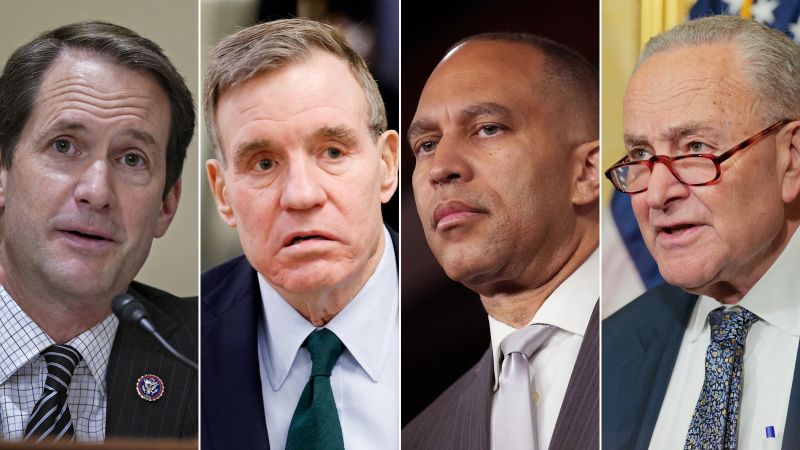
<p>Before US airstrikes on Iranian nuclear facilities, the Trump administration notified House Speaker Mike Johnson and Senate Majority Leader John Thune, according to multiple GOP sources. A source said Senate Minority Leader Chuck Schumer was called around 6 p.m., less than an hour before the strikes began, and was told of imminent military action without the country being identified. The White House press secretary said House Minority Leader Hakeem Jeffries could not be reached until after the strikes, but was briefed, and sources said multiple attempts were made to contact him after speaking with Schumer.</p><p>Sources said Sen. Mark Warner and Rep. Jim Himes, the top Democrats on the Senate and House intelligence committees, were not told until after the strikes occurred. Democrats noted that the “Gang of Eight” typically is briefed before significant military engagements. In the aftermath, Democrats condemned the strikes as lacking congressional approval and demanded classified briefings, while Republicans largely supported the action. Congress is expected to take votes in the coming days on measures to limit or assert presidential war powers.</p>