Norms Impact
Trump Plans Military “Reaction Force” to Use Against Americans
A permanent, president-directed National Guard “reaction force” would normalize routine military deployment for domestic policing, bypassing traditional state-requested assistance and eroding civilian control safeguards.
Aug 12, 2025
⚖ Legal Exposure
Sources
Summary
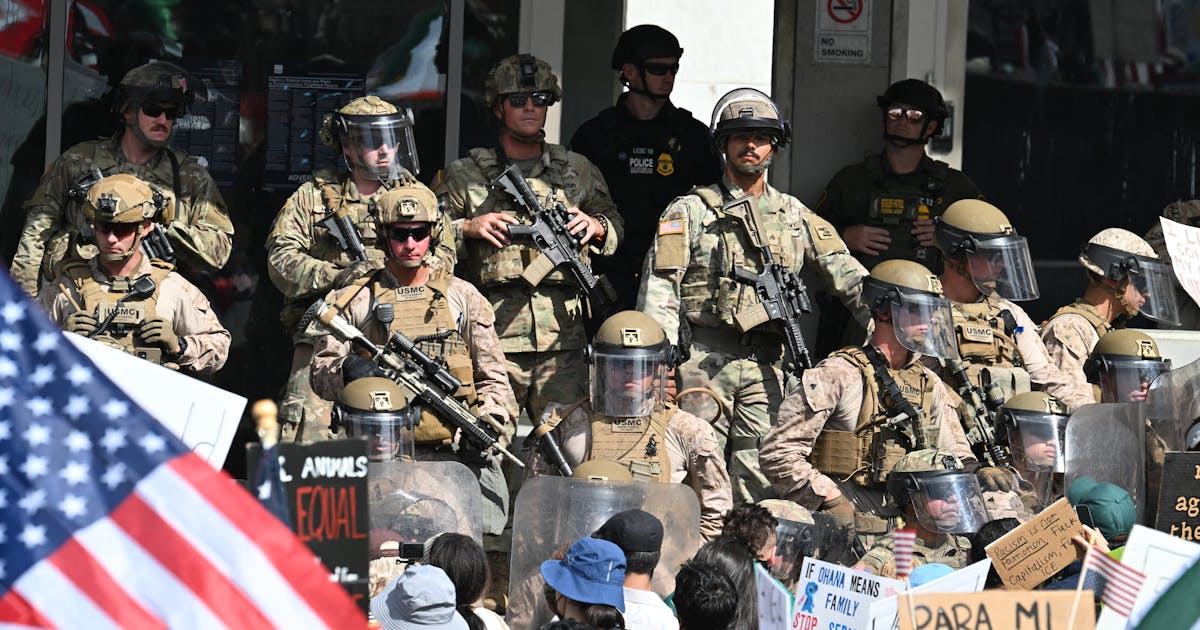
The Pentagon and President Trump are considering a full-time “Domestic Civil Disturbance Quick Reaction Force” of roughly 600 National Guard troops deployable to U.S. cities on short notice, based on internal documents reviewed by The Washington Post.
The plan would shift domestic public-order responses toward standing, federally directed military deployments—primarily under Title 32 authority that can expand Guard powers in states experiencing “unrest.”
If implemented, it would create a ready-to-fly force with riot gear and military-style weapons that can be sent in waves to police protests and civil unrest, potentially including arrest authority.
Reality Check
A standing, rapid-deploy military force for domestic “unrest” sets a precedent that makes protest and dissent easier to meet with troops, weakening our civil liberties and the practical meaning of civilian policing. Even if Title 32 and Title 10 provide pathways for Guard activation, building a permanent, federally directed apparatus to “quash” civil unrest risks weaponizing executive power against Americans outside the traditional, state-driven emergency request process. On the facts provided, the conduct is not clearly criminal on its face under federal law, but it presses directly against core governance norms meant to prevent military participation in law enforcement from becoming routine and politically directed. Once normalized, this template can be invoked again and again—on shorter timelines and broader rationales—while ordinary people bear the cost in chilled speech and coerced compliance.
Legal Summary
The article describes plans to formalize a rapid-deployment domestic National Guard force and use it to respond to unrest and protests, creating significant risk of civil-rights violations if used to suppress lawful speech/assembly or conduct arrests without proper legal basis. However, the context lacks concrete incidents, identified victims, or specific unlawful orders, so the exposure is best characterized as an investigative red flag rather than an already-chargeable structural corruption or clear criminal violation.
Legal Analysis
<h3>18 U.S.C. § 242 — Deprivation of rights under color of law</h3><ul><li>Alleged plan to create a standing domestic “quick reaction force” and deploy troops to “quash civil unrest and protest” raises risk of willful deprivation of First Amendment (speech/assembly) and Fourth Amendment (unreasonable seizure) rights if used to suppress lawful protest or conduct arrests without lawful predicate.</li><li>Article alleges a pattern of “manufacturing emergencies” and “inflating crime numbers,” which—if substantiated and tied to specific deployments and arrests—could support willfulness, but the context does not allege a concrete rights-violating incident, identified victims, or specific unlawful orders.</li></ul>
<h3>18 U.S.C. § 241 — Conspiracy against rights</h3><ul><li>Internal planning documents and interagency coordination to stand up a force designed for rapid deployment against protests could become evidence of an agreement to interfere with protected activity, but the article does not allege an explicit agreement to violate rights or specific planned unlawful acts.</li></ul>
<h3>18 U.S.C. § 1385 — Posse Comitatus Act (and related National Guard authorities)</h3><ul><li>The article states the President can call the National Guard under Title 10 and Title 32 and suggests the intent to use Title 32 to enable arrests and more aggressive action; legality turns on statutory prerequisites and whether deployments are properly requested/authorized and constrained.</li><li>Because the context itself notes legal pathways (Title 10/Title 32) and does not allege deployment of federal active-duty forces to execute domestic law enforcement outside lawful exceptions, the record supports investigative scrutiny for misuse rather than a clear statutory violation on these facts alone.</li></ul>
<h3>Misuse of appropriations / budget process (general)</h3><ul><li>Article notes uncertainty whether the administration would “speed up” budgeting for a program costing “hundreds of millions,” and references concerns about process and precedent, but provides no concrete allegation of unlawful expenditure, false statements, or circumvention of Congress.</li></ul>
<b>Conclusion:</b> The described conduct reflects a serious investigative red flag involving potential politicized or abusive domestic militarization with civil-rights exposure, but the article does not provide specific, provable unlawful deployments or discrete rights-deprivation events sufficient to charge based on this context alone.
Detail
<p>Internal Pentagon documents reviewed by The Washington Post describe a proposed “Domestic Civil Disturbance Quick Reaction Force” composed of about 600 National Guard troops. Roughly half would be stationed on military bases in Alabama and Arizona, kept on standby to deploy by air to any city or state. The documents describe troops equipped with military-style weapons and riot gear, deploying in waves of 100 and rotating out after 90 days.</p><p>The documents note concerns including National Guard availability, cost, logistics, and “Public and Political Impact.” The plan contemplates presidential use of National Guard authorities under Title 10 and Title 32, with the force primarily used under Title 32, which would use federally funded status to expand powers in states experiencing “unrest,” including arrest authority and more aggressive operations.</p><p>If approved through the traditional budget process, the program would begin in 2027 and cost hundreds of millions of dollars, though it is unclear whether the administration would attempt to accelerate implementation.</p>