Norms Impact
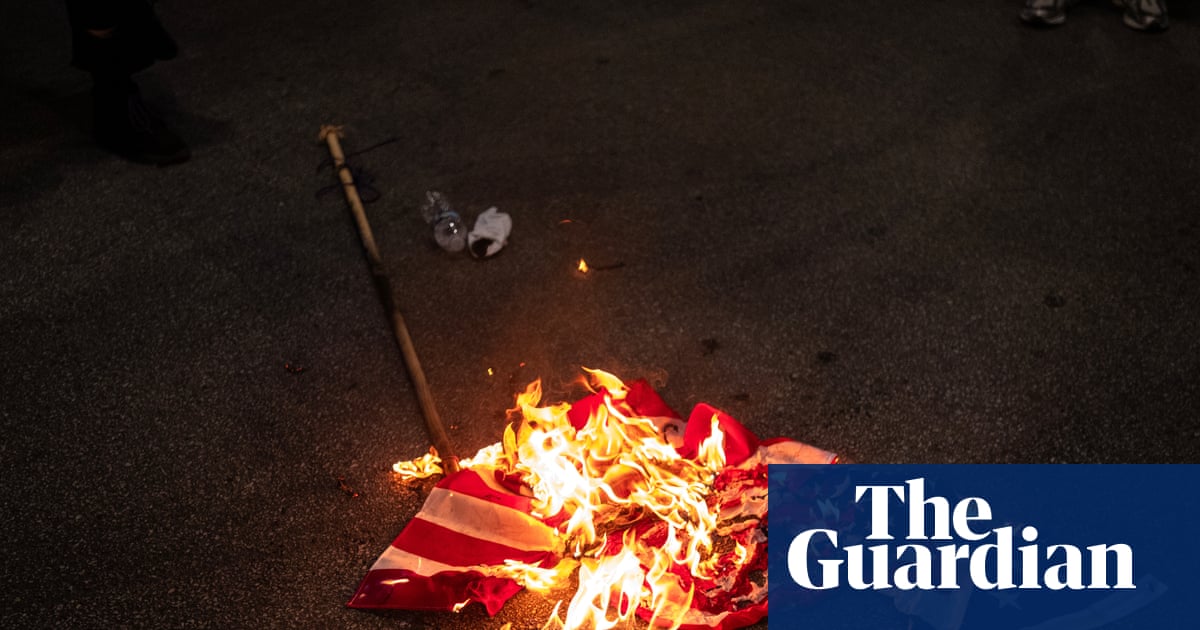
Trump signs order to criminally charge those who burn US flag in protest
A president is directing prosecutors to “find a crime” around protected speech, pressing federal power to punish political protest despite binding Supreme Court precedent.
Aug 25, 2025
⚖ Legal Exposure
Sources
Summary
Donald Trump signed an executive order directing federal prosecutors to pursue criminal charges against people who burn American flags during protests. The order instructs the attorney general to seek alternative criminal theories to bypass the Supreme Court’s 1989 ruling that flag burning is protected speech. The practical effect is federal pressure to reframe political protest as prosecutable conduct through ancillary offenses such as disturbing the peace or environmental violations.
Reality Check
This is a blueprint for criminalizing constitutionally protected dissent by ordering prosecutors to hunt for pretexts, a precedent that weakens our First Amendment rights and makes protest contingent on prosecutorial discretion. On these facts, the core conduct—flag burning as political expression—remains protected under Texas v Johnson, and using federal charging power to evade that ruling is more plausibly an abuse-of-power norm violation than a clean fit for a specific federal criminal statute. The danger is institutional: when the executive branch treats speech as punishable by repackaging it as “disturbing the peace” or “environmental” crime, we normalize viewpoint-driven enforcement that our constitutional system is designed to forbid.
Legal Summary
The executive order, as described, signals a significant risk of unconstitutional, pretextual prosecutions aimed at punishing protected First Amendment protest activity, which can implicate federal civil-rights criminal statutes if carried out willfully. The article does not identify конкретe prosecutions, targets, or agreements that would satisfy criminal elements on the current facts. This is best characterized as a serious investigative red flag rather than a completed, provable quid-pro-quo corruption case.
Legal Analysis
<h3>18 U.S.C. § 241 — Conspiracy against rights</h3><ul><li>Executive order directs federal prosecutors to pursue criminal charges targeting a form of protest the Supreme Court has held is protected speech (Texas v. Johnson), creating a risk of using federal power to chill or punish First Amendment activity.</li><li>No conspiracy facts are stated (no agreement among officials or others is alleged), but the directive to seek alternative criminal hooks (e.g., disturbing the peace, environmental violations) for flag-burning conduct raises exposure if implemented as a coordinated effort to deprive speakers of constitutional rights.</li></ul><h3>18 U.S.C. § 242 — Deprivation of rights under color of law</h3><ul><li>Directing prosecutions to punish flag burning (protected political expression) could amount to willful deprivation of rights under color of law if prosecutors pursue charges as a pretext to penalize protected speech.</li><li>Key factual gap: the article describes the order/instruction but does not provide specific ensuing prosecutions, specific targets, or proof of willfulness in a concrete case; exposure increases substantially if actual charges are brought for flag-burning-as-speech rather than independent unlawful conduct.</li></ul><h3>First Amendment / Separation-of-powers (constitutional constraints on executive prosecution policy)</h3><ul><li>The order is described as an attempt to circumvent a controlling Supreme Court decision protecting flag burning, indicating a significant constitutional irregularity and potential abuse of prosecutorial discretion.</li><li>However, the order reportedly focuses on charging “other crimes” (e.g., disturbing the peace, environmental laws), which could be lawful in genuine, content-neutral applications; illegality turns on pretext and selective enforcement aimed at suppressing viewpoint.</li></ul><b>Conclusion:</b> The described conduct presents a serious investigative red flag of politicized, potentially pretextual enforcement against protected speech (procedural/constitutional abuse), but the article does not establish a completed, case-specific criminal deprivation of rights or a transactional corruption scheme.</p>
Media
Detail
<p>On Monday, Donald Trump signed an executive order in the Oval Office instructing federal prosecutors to pursue criminal charges against individuals who burn American flags during protests. The order directs the US attorney general, Pam Bondi, to review instances of flag burning and assess whether participants can be charged under other criminal provisions, including disturbing the peace or violations of environmental laws.</p><p>The directive follows the Supreme Court’s 1989 decision in <strong>Texas v Johnson</strong>, which held 5-4 that burning the flag constitutes protected political expression under the First Amendment. That ruling invalidated flag-burning laws in 48 states and established that destruction of the flag as protest is constitutionally protected. While Trump stated during the signing that flag burning results in “one year in jail,” the order does not specify any jail sentence.</p>