Norms Impact
The Right’s Secret Plan to Help Billionaires Buy Elections
A vice president-backed Supreme Court challenge and a DOJ reversal threaten to erase donation limits and further narrow bribery law—turning parties into conduits for legalized quid pro quo influence.
Oct 13, 2025
⚖ Legal Exposure
Sources
Summary
Two Supreme Court cases could soon eliminate remaining restrictions on campaign donations and further obstruct bribery enforcement. The Justice Department’s litigation posture shifted after President Trump’s inauguration when his solicitor general ended support for existing campaign-finance limits and joined the plaintiffs attacking them. The result could be a legal system in which political parties function as donation pass-throughs and prosecutors face narrower tools to pursue quid pro quo corruption.
Reality Check
This conduct threatens to convert campaign-finance and anti-corruption enforcement into optional constraints, setting precedent that weakens democratic stability and our ability to stop power being purchased. The described push to narrow what counts as an “official act” and to treat payments as permissible “gratuities” targets the core tools used in federal public-corruption cases—most directly 18 U.S.C. § 201 (bribery and illegal gratuities), and, in practice, the broader federal ecosystem of honest-services and extortion theories prosecutors rely on. Even where specific conduct might evade criminal liability under the Court’s narrowed doctrines, the institutional break is the same: executive branch attorneys aligning with plaintiffs to dismantle the rules they are charged to defend, while litigants use high-court review to make prosecutions of pay-to-play corruption functionally unworkable. We should read this as an engineered pathway to impunity that leaves ordinary citizens with fewer protections against government decisions being sold to the highest bidder.
Legal Summary
Level 3 because the article describes concrete payment-for-action structures (including a bribery conviction involving a campaign contribution exchanged for official support, and additional reported solicitations/acceptances of large sums linked to government favors/contracts). It also outlines a coordinated-spending legal strategy that, if successful, would materially increase opportunities for large donors to route money to candidates in ways that can function as quid pro quo conduits. Some key episodes are reported rather than adjudicated, but the transactional alignment warrants substantial criminal-exposure inference pending investigation.
Legal Analysis
<h3>18 U.S.C. § 201(b) — Bribery of public officials (quid pro quo)</h3><ul><li>The article describes alleged or prosecuted exchanges of campaign money/cash for favorable governmental action (e.g., Sittenfeld conviction described as a $20,000 contribution “in exchange for supporting a local development project”; Trump allegedly soliciting $1 billion from oil executives “in exchange for government favors”; and an FBI-reported $50,000 cash acceptance by a prospective “border czar” from would-be government contractors).</li><li>These fact patterns, as characterized, align structurally with a quid pro quo: thing of value (cash/contribution) + linkage to official action (supporting a project/government favors/contracts).</li><li>Gaps noted in the article: some allegations are framed as “reportedly” and not charged; however, the described exchanges are the core elements prosecutors pursue under federal bribery theories.</li></ul><h3>18 U.S.C. § 666 — Federal program bribery (state/local officials receiving bribes)</h3><ul><li>The Sittenfeld scenario involves a local elected official and an exchange of a campaign contribution for action on a development project; such conduct commonly falls within § 666 when the relevant government receives qualifying federal funds.</li><li>The article underscores a broader campaign to narrow bribery statutes; that litigation posture does not negate the underlying structural bribery exposure where payment is tied to governmental decisions.</li><li>Elemental gap from the article alone: no explicit description of federal-funding threshold or agency nexus, but the alleged exchange structure is consistent with § 666 investigative/prosecutorial focus.</li></ul><h3>52 U.S.C. § 30116 / Coordinated party expenditures — Contribution limits & anti-circumvention</h3><ul><li>The article asserts a Supreme Court challenge “spearheaded by Vice President J.D. Vance” seeks to eliminate restrictions on party committees’ coordinated spending with candidates, enabling parties to function as “pass-through conduits” for donors to bypass limits.</li><li>While litigating to change the law is not itself criminal, the described objective and predicted operational effect (large donor money routed through parties to directly aid particular candidates who can return “government favors”) presents a structural pay-to-play architecture that increases corruption risk and could facilitate future unlawful conduit/donation-limit evasion if actors implement it under existing law.</li><li>On the facts provided, this is primarily a systemic anti-circumvention vulnerability rather than a completed, chargeable contribution-limit offense by a specified actor in the article.</li></ul><h3>18 U.S.C. § 1346 & § 1343 — Honest services/wire fraud (corrupt deprivation of honest services)</h3><ul><li>The described conduct—payments/campaign contributions allegedly exchanged for official decisions benefiting payers (development approvals, contracts, regulatory/legislative favors)—is the classic honest-services corruption theory where communications/transactions use interstate wires.</li><li>The article highlights Supreme Court-driven narrowing of “official act” and corruption theories, indicating litigation risk, but the underlying payment-for-action alignment remains a prosecutable structural pattern when evidence supports intent and use of wires.</li><li>Elemental gap: the article does not specify wire transmissions or detailed communications, but the alleged schemes are of the type typically investigated under § 1346.</li></ul><b>Conclusion:</b> The article depicts multiple money-to-access-to-official-action alignments (some alleged, one described as proven by conviction) that reflect prosecutable structural corruption risk rather than merely procedural or political irregularity, though some instances lack charging detail and are presented as reported allegations.
Media
Detail
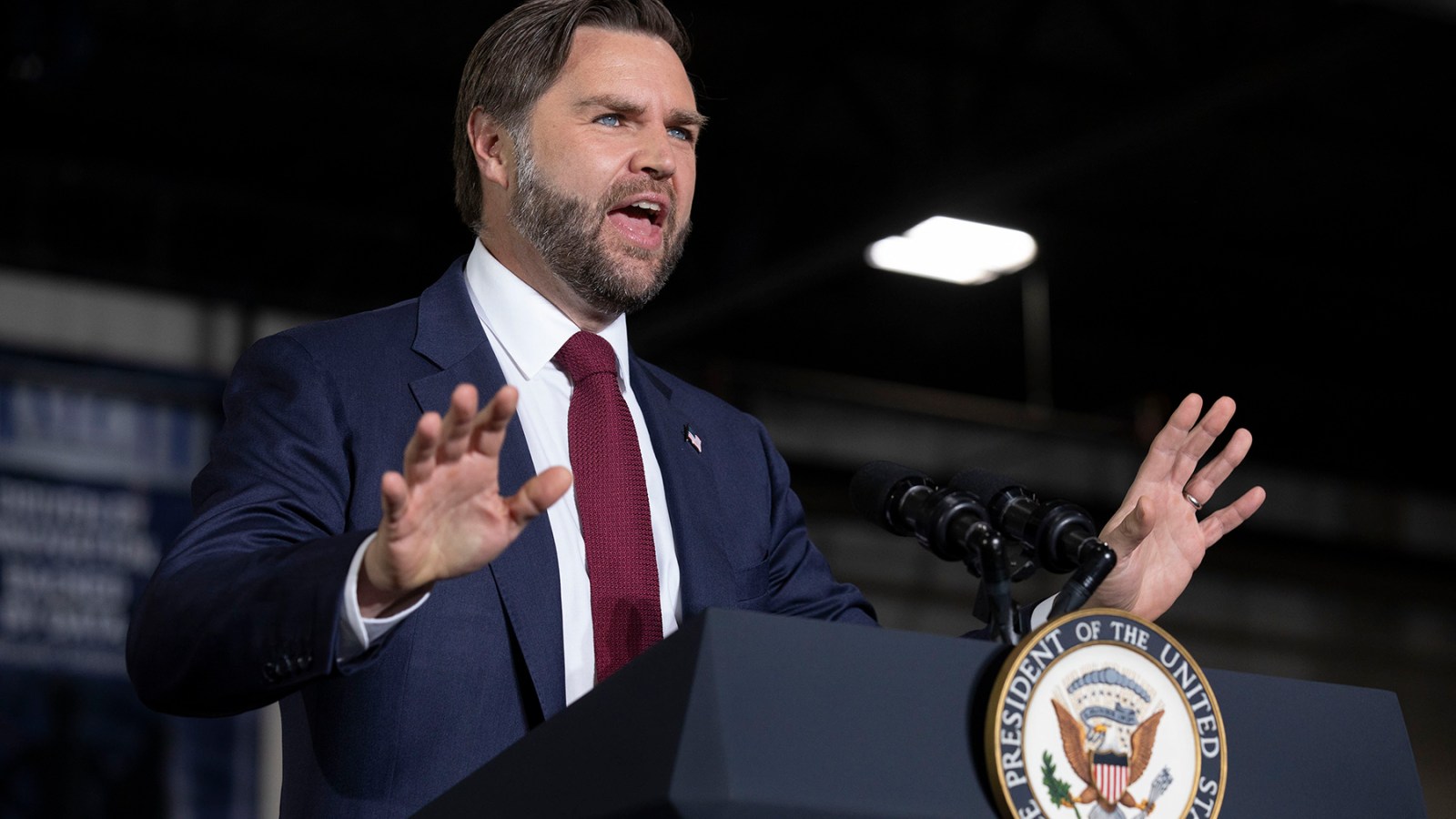
<p>A Supreme Court case spearheaded by Vice President J.D. Vance seeks to reverse a 2001 Supreme Court ruling and eliminate restrictions on political parties’ coordinated spending with candidates. If the rules are struck down, party committees could be used to route large donor money around contribution limits and deliver larger payments supporting lawmakers.</p><p>After President Trump was sworn in, his solicitor general ended the Justice Department’s support of the current law and joined the plaintiffs challenging it. The Supreme Court assigned defense of the law to a conservative attorney who previously clerked for Chief Justice John Roberts when Citizens United was decided; that attorney has recently argued for limiting the scope of federal anti-bribery laws.</p><p>In a concurrent Supreme Court matter, former Cincinnati City Council member P.G. Sittenfeld is asking the Court to overturn his bribery conviction arising from an FBI sting involving a $20,000 campaign contribution tied to support for a development project. Sittenfeld was pardoned by Trump and is represented by Trump’s former solicitor general, with additional support from former elected officials.</p>