Norms Impact
Border Patrol agents under fire for allegedly disrupting children’s Halloween parade in Chicago
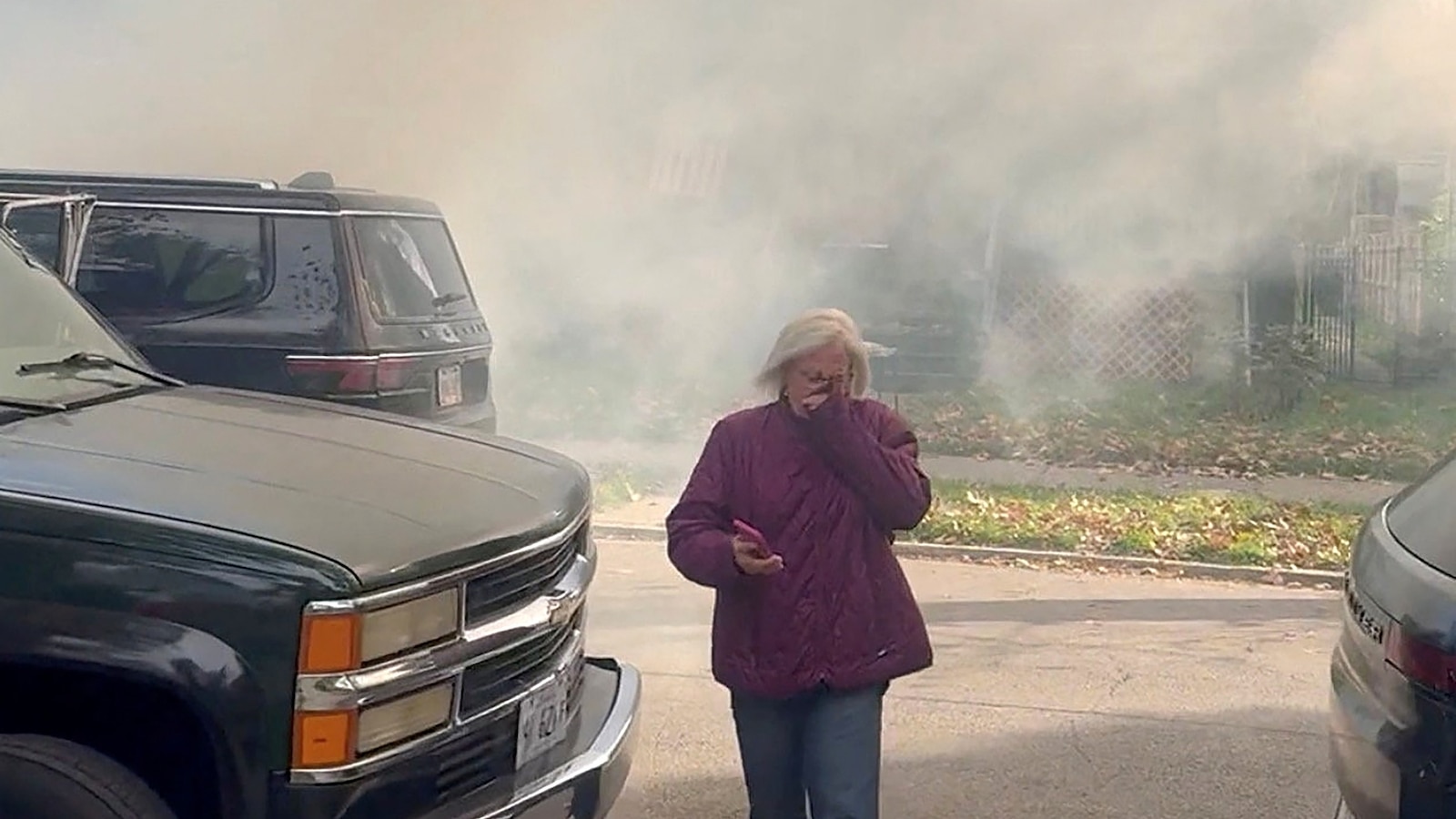
Federal immigration agents are accused of using crowd-control force in a children’s parade setting while a federal court is already restricting tear gas and aggressive protest suppression.
⚖ Legal Exposure
Sources
Summary
Chicago residents say U.S. Border Patrol agents disrupted a children’s Halloween parade during an immigration enforcement incident, including alleged aggressive tactics and tear gas. A federal judge has moved to scrutinize command decisions after prior allegations of unjustified tear gas use amid repeated clashes with demonstrators. The practical consequence is a widening conflict between federal enforcement operations and local public safety expectations under active court oversight.
Reality Check
Federal agents using tear gas and aggressive crowd-control amid public gatherings while under a court-ordered restraint risks normalizing force-first governance that chills lawful assembly and narrows our rights in practice. If tear gas was deployed “without justification” and contrary to a federal restraining order, the conduct can implicate contempt of court and, depending on intent and deprivation of rights, federal civil-rights exposure under 18 U.S.C. § 242. Even where criminal proof is difficult, the pattern described—repeated clashes and escalation despite judicial warning—signals institutional disregard for court supervision and undermines the rule-of-law constraints that keep policing power bounded.
Legal Summary
The alleged use of tear gas “without justification” and the court’s TRO restricting such tactics create significant civil and court-compliance exposure and warrant investigation into unconstitutional use of force and potential contempt. The current context does not establish the willfulness/injury details needed to elevate to clear criminal deprivation-of-rights exposure, and it contains no financial quid-pro-quo structure typical of public corruption.
Legal Analysis
<h3>18 U.S.C. § 242 — Deprivation of rights under color of law</h3><ul><li>Allegations that a Border Patrol commander personally deployed tear gas on a crowd of demonstrators “without justification” implicate use of force under color of federal authority affecting First/Fourth Amendment-protected activity.</li><li>Court has expressed “profound” concern and entered a TRO restricting aggressive tactics and tear gas deployment without advanced warning, supporting an inference of potentially unreasonable/retaliatory force if the alleged facts are proven.</li><li>Key gap for criminal exposure: the article context does not establish willfulness, the level of injury, or detailed circumstances justifying force.</li></ul><h3>42 U.S.C. § 1983 / Bivens-type constitutional tort exposure — Civil liability for excessive force / First Amendment retaliation</h3><ul><li>Residents claim agents used aggressive tactics and tear gas during an enforcement incident affecting a community event and demonstrators, creating civil exposure for excessive force and interference with protected assembly/speech.</li><li>The pending lawsuit and TRO indicate a judicial finding of sufficient concern to restrain conduct, increasing litigation risk even absent proof beyond a reasonable doubt.</li></ul><h3>Federal Rule of Civil Procedure 65 & Court authority — TRO compliance / contempt risk</h3><ul><li>A TRO was issued Oct. 9 restricting aggressive protest-quelling tactics and tear gas deployment without advanced warning; future actions inconsistent with these constraints could support contempt proceedings.</li><li>The commander is ordered to appear, reflecting heightened judicial scrutiny and potential enforcement of the TRO through sanctions if violations are found.</li></ul><b>Conclusion:</b> The article describes serious investigative red flags centered on alleged excessive/retaliatory use of force and potential TRO noncompliance, but it does not show a money-access-official-action transactional structure; exposure is primarily civil/constitutional and court-enforcement risk rather than classic public-corruption quid pro quo.
Detail
<p>Chicago residents criticized U.S. Border Patrol agents after a weekend incident in which residents claim federal agents disrupted a children’s Halloween parade during an immigration enforcement action, alleging aggressive tactics and the use of tear gas.</p><p>The incident occurred as Border Patrol commander Greg Bovino, who is leading “Operation Midway Blitz” immigration enforcement in Chicago, is scheduled to appear Tuesday before Judge Sara Ellis of the U.S. District Court for the Northern District of Illinois.</p><p>Ellis ordered Bovino to appear following allegations in court filings, in a lawsuit against the federal government, that he personally deployed tear gas on a crowd of demonstrators “without justification” the prior week.</p><p>Earlier this month, Ellis said she was “profoundly concerned” about tactics used by federal agents in a series of clashes with protesters and issued a temporary restraining order on Oct. 9 restricting federal agents from using aggressive tactics to quell protests, including deploying tear gas without advanced warning.</p>