Norms Impact
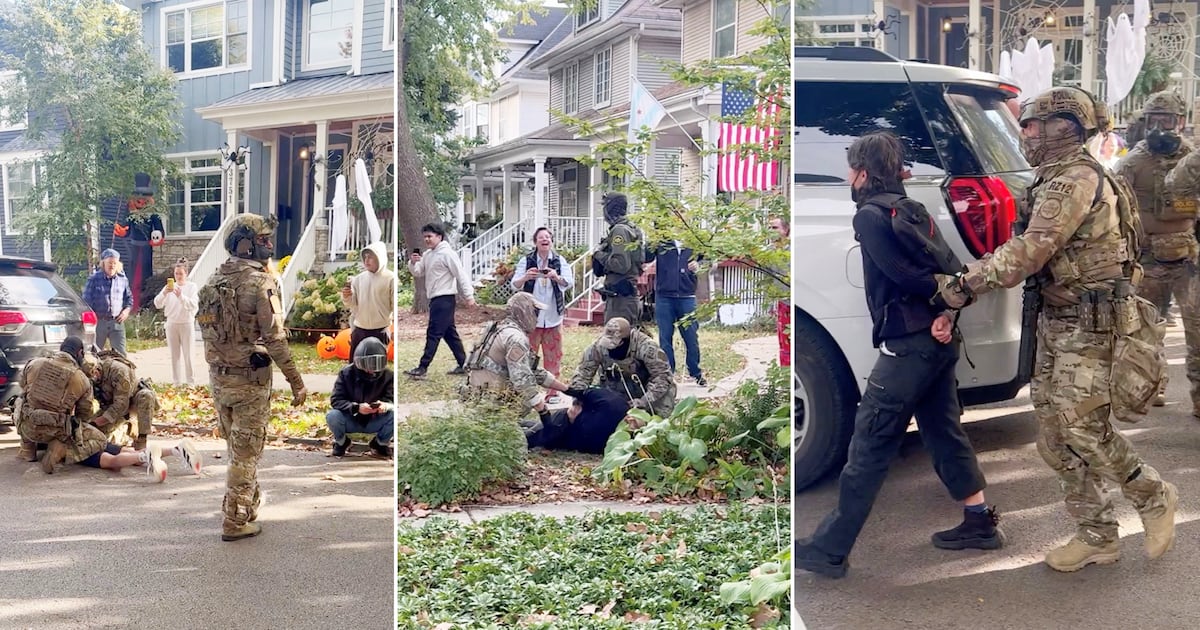
Trump Border Patrol Goons Allegedly Break Ribs of U.S. Man, 67, at Kids’ Halloween Party
Federal agents allegedly brutalized a U.S. citizen at a children’s Halloween parade while a federal judge was already restricting the same force tactics—turning court orders into optional guidance.
Oct 29, 2025
⚖ Legal Exposure
Sources
Summary
A 67-year-old U.S. citizen was allegedly dragged from his car by federal agents in Chicago’s Old Irving Park and hospitalized with six broken ribs and internal bleeding during an immigration sweep near a children’s Halloween parade. The enforcement unfolded amid court-ordered scrutiny of Border Patrol commander Gregory Bovino’s tactics under “Operation Midway Blitz,” including restrictions on force, body cameras, and use of tear gas around children. The practical consequence is a widening gap between federal street enforcement and judicial limits, with U.S. residents—including citizens—caught in violent encounters during community events.
Reality Check
When federal agents use street force that allegedly breaks ribs and causes internal bleeding during a neighborhood event—while a federal court is actively policing their conduct—we are watching a precedent where armed power treats judicial limits as negotiable and our physical safety as collateral. On these facts, the conduct plausibly implicates federal civil-rights crimes under 18 U.S.C. § 242 (deprivation of rights under color of law) and, depending on proof of coordination or intent, 18 U.S.C. § 241, alongside potential assault and battery liability under Illinois law. Even if prosecutors decline, the deeper rot is institutional: “crowd control” becomes a blanket license for coercion in residential neighborhoods, and citizens learn that compliance and innocence do not reliably protect them from state violence.
Legal Summary
Level 3 exposure because the article describes federal agents using severe, injurious force against an apparently nonthreatening U.S. citizen during an enforcement operation, supporting potential criminal civil-rights violations under color of law. The broader sweep tactics and prior court restrictions heighten investigative risk for unlawful-force patterns and possible contempt, pending verification of justification, resistance, and body-camera evidence.
Legal Analysis
<h3>18 U.S.C. § 242 — Deprivation of Rights Under Color of Law</h3><ul><li>Allegations and video-described conduct show federal agents (Border Patrol/DHS) pulling a 67-year-old U.S. citizen from his vehicle, pinning/kneeling on him, and causing six broken ribs and internal bleeding—facts supporting unreasonable force under color of law.</li><li>The man allegedly posed no immediate threat and was seeking to comply (“I’ll move my car”), while witnesses pleaded for agents to stop; these facts support a willfulness inference if force was gratuitous or punitive rather than necessary for safety.</li><li>Gap: article does not state agents’ specific lawful basis for seizure/arrest or whether the subject resisted beyond verbal protest; those facts bear on reasonableness but do not negate the severe-injury force pattern described.</li></ul><h3>18 U.S.C. § 241 — Conspiracy Against Rights</h3><ul><li>Operation-wide “immigration sweep” tactics described (multiple takedowns of apparent U.S. citizens, tear gas deployment amid a children’s event) could support inquiry into coordinated deprivation of constitutional rights if agents acted pursuant to a shared plan to use unlawful force/intimidation.</li><li>Gap: the article does not allege an explicit agreement among specific agents; conspiracy would require proof of coordinated intent beyond parallel action.</li></ul><h3>18 U.S.C. § 111 — Assaulting, Resisting, or Impeding Federal Officers (contextual exposure)</h3><ul><li>DHS claims two U.S. citizens were arrested for allegedly assaulting officers during a “hostile crowd” scenario; this raises reciprocal criminal exposure for civilians, but the article’s central allegation is excessive force by agents.</li><li>Even if civilians resisted, §111 does not immunize officers from §242 exposure for unreasonable, injurious force.</li></ul><h3>Civil/Equitable Exposure — Fourth Amendment Excessive Force; Court Order/TRO Compliance (procedural)</h3><ul><li>Reported prior temporary restraining order limiting aggressive tactics and requiring body-camera/force restrictions, plus allegations of tear gas used around children, create heightened risk of contempt or further injunctive findings if violations occurred.</li><li>The severe-injury takedown and described crowd-control measures in a residential children’s event strengthen civil liability and court-supervision exposure for DHS/command leadership (pattern/practice evidence).</li></ul><b>Conclusion:</b> The alleged facts present a strong, prosecutable color-of-law excessive-force pattern with serious bodily injury, supporting potential federal criminal civil-rights exposure (and parallel civil liability), not merely a procedural irregularity.
Detail
<p>Neighbors’ video from Old Irving Park in Chicago shows Border Patrol agents removing a 67-year-old man from the driver’s seat of his car and forcing him to the ground on a residential street. DWRunning Club stated the man had been driving home from a team run when he turned onto his block and encountered a road closure by federal vehicles as families gathered for a kids’ Halloween parade. Witnesses in the area pleaded for agents to stop, and the man is heard yelling, “I’ll move my car, get off of me!”</p><p>The club said agents threatened to break the car window, pulled him out, knelt on his back, and subdued him, resulting in “six broken ribs” and “internal bleeding” requiring hospital treatment. A source close to the man said he retained counsel and is considering legal action against the Department of Homeland Security.</p><p>That morning, agents also deployed tear gas, leading residents to relocate the Halloween parade. U.S. District Judge Sara Ellis had ordered Bovino to appear daily in court to account for tactics and ensure compliance with body-camera and force restrictions, after a temporary restraining order limiting aggressive tactics.</p>