Norms Impact
Noem claims to be a skilled trucker, calls foreign drivers ‘extremely dangerous’
A Cabinet secretary used the machinery of public safety to brand “foreign” truck drivers as a threat, normalizing government-by-suspicion as policy replaces evidence with identity.
Oct 30, 2025
⚖ Legal Exposure
Sources
Summary
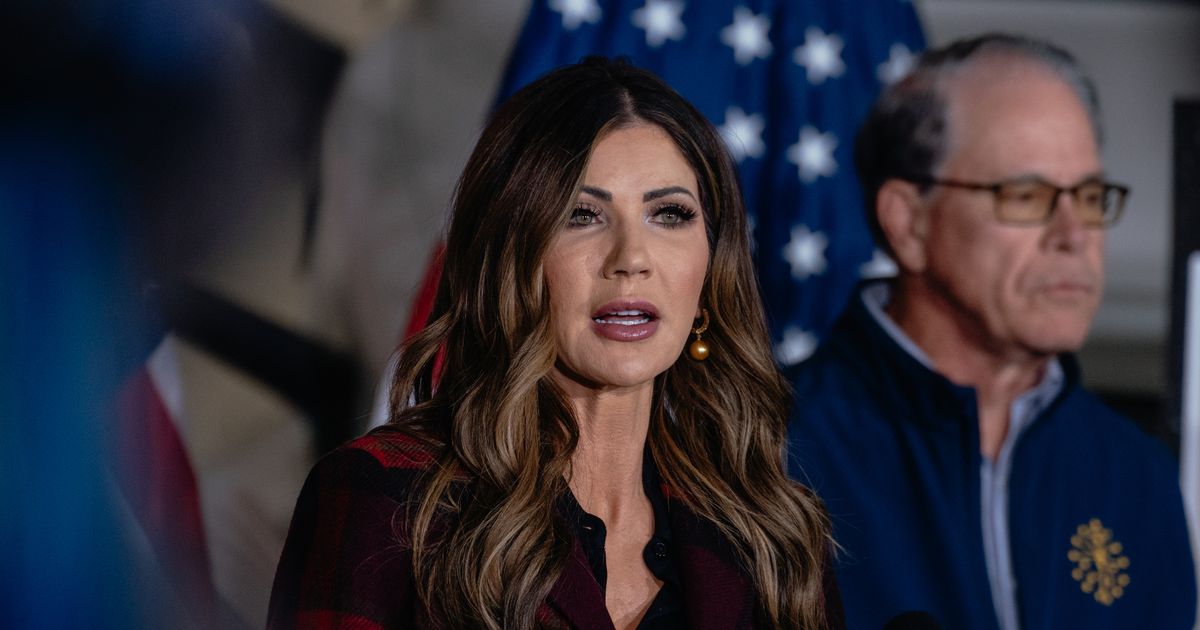
Homeland Security Secretary Kristi Noem said in Gary, Indiana, that putting “foreigners” behind the wheel of semi-trucks and 18-wheelers is “extremely dangerous” and endangers citizens on U.S. roads. Her remarks align with a broader executive-branch push to restrict non-citizens’ access to commercial driving work through visa pauses, license limits, and federal funding threats. The practical consequence is a federal posture that treats immigration status and nationality as proxies for public-safety risk in transportation policy, with immediate impacts on licensing, employment, and state–federal relations.
Reality Check
When senior officials cast entire classes of people as inherently “dangerous,” they lay the groundwork for policy that strips rights through stigma and coercion rather than proof—an abuse pattern that can widen from immigrants to any disfavored group. Based on the conduct described here, the more immediate exposure is not a clean criminal case but a profound breach of core governance norms: anti–collective punishment, evidence-based regulation, and non-discriminatory administration of licensing and employment rules. The most legally perilous conduct referenced is the instruction to falsify federal records by listing living immigrants as dead; if accurate, that implicates federal false-statement and records statutes, including 18 U.S.C. § 1001 and 18 U.S.C. § 2071. Even without prosecutions, using federal power to deny work and mobility by identity sets a precedent that weakens due process and invites weaponization of the state against ordinary residents.
Legal Summary
Exposure is driven mainly by the allegation that Noem directed SSA to falsely mark thousands of living immigrants as dead to cut off lawful work capability, which warrants investigation for federal records falsification and potential civil-rights violations. The jet purchase allegation raises significant procurement/appropriations red flags but lacks facts showing fraud, kickbacks, or a transactional corruption structure. The remaining statements are largely political rhetoric rather than prosecutable corruption on this record.
Legal Analysis
<h3>18 U.S.C. § 1001 — False statements (potentially, if directed falsification of federal records)</h3><ul><li>The article alleges Noem and an acting SSA commissioner instructed SSA to “falsely list” 6,000+ living immigrants as deceased; knowingly causing materially false entries in a federal database can satisfy falsity/knowledge/materiality elements.</li><li>Stated purpose (eliminate ability to earn wages legally to induce departure) supports materiality and intent; key gap is corroboration of directive, scope, and whether the database change constitutes a “statement/representation” within SSA processes.</li></ul><h3>18 U.S.C. § 641 — Theft/embezzlement of government property (records/data integrity theory)</h3><ul><li>Corruptly altering federal records/data to deprive individuals of lawful access to benefits/earnings capability could be investigated as misuse/conversion of government property (data/records), but the fit is fact-dependent.</li><li>Gap: the article does not specify any taking of money/property or personal benefit; prosecution would require clearer conversion/deprivation theory and evidence of knowing unauthorized use.</li></ul><h3>18 U.S.C. § 242 — Deprivation of rights under color of law</h3><ul><li>If a federal official knowingly weaponized SSA records to block lawful employment authorization pathways for living individuals without due process, that could constitute willful deprivation of rights under color of law.</li><li>Gap: the article provides allegation and motive but not the legal status of affected persons, process used, or willfulness proof beyond the described aim.</li></ul><h3>31 U.S.C. § 1301 / 18 U.S.C. § 287 / Procurement integrity concerns — Potential misuse of appropriated funds (jets)</h3><ul><li>The article alleges authorization of two $172M jets “for her and other officials,” raising red flags of waste/misapplication of appropriations and procurement irregularities.</li><li>Gap: no facts on contracting process, funding source, false claims, or personal kickbacks; on this record it reads as potential administrative/procurement abuse rather than a complete criminal case.</li></ul><h3>Ethics / Hatch Act-type considerations (political messaging)</h3><ul><li>Statements about “foreigners” being “extremely dangerous” and related rhetoric are primarily political/communications conduct; absent misuse of official resources or discriminatory enforcement actions, this is not itself criminal.</li></ul><b>Conclusion:</b> The strongest prosecutorial exposure described is the alleged direction to falsify SSA death records, which is a serious investigative red flag with potential criminal implications, but the article lacks the evidentiary detail to treat statutory elements as substantially satisfied; the jet purchase allegations read as procurement/appropriations irregularities absent quid-pro-quo or fraud facts.
Detail
<p>At a press conference in Gary, Indiana, Homeland Security Secretary Kristi Noem stated that she is an experienced driver of semi-trucks and 18-wheelers and claimed that placing “foreigners” behind the wheel “becomes extremely dangerous.” She asserted that operating large trucks requires both skill and the ability to “communicate” with others on the road and argued that non-citizens cannot be trusted to drive them safely, describing tractor-trailers as weighing “tens of thousands of pounds” and carrying “explosive fuel.”</p><p>Her comments followed a series of administration actions and statements focused on immigrants and public safety. In August, Secretary of State Marco Rubio pushed an order pausing the issuance of work visas for commercial truck drivers, and in September issued an emergency regulation reducing the number of driver’s licenses given to non-citizens by requiring a mandatory federal immigration status check for truck licensing. On Sunday, Transportation Secretary Sean Duffy said he planned to revoke $160 million in federal funds for California over alleged commercial licensing of undocumented drivers; a California DMV spokesperson said there was no legitimate basis to withhold funds and stated the state is in compliance with the September 29 emergency regulations.</p>