Norms Impact
U.S. citizen shot from behind as he warned ICE agents about children gathering at bus stop, lawyers say
When armed federal agents shoot a U.S. citizen during a disputed roadside encounter and then prosecute him for assault, the norm of accountable, documented use of force collapses in plain sight.
Nov 2, 2025
⚖ Legal Exposure
Sources
Summary
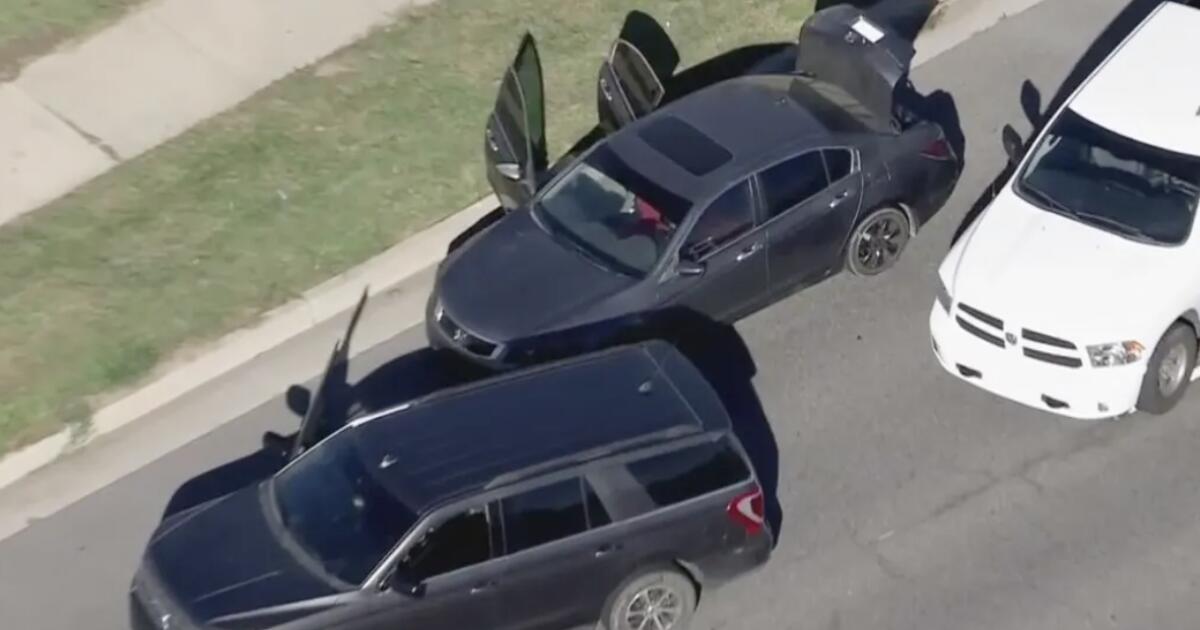
Carlos Jimenez, a 25-year-old U.S. citizen, was shot from behind by an ICE officer after stopping near an immigration enforcement traffic stop on Vineyard Avenue in Ontario, his lawyers say.
The encounter has moved from a street-level use-of-force incident into a federal prosecution, with Jimenez charged with assault on a federal officer even as accounts of the shooting sharply conflict and no public video has surfaced.
The practical consequence is that a disputed split-second decision by armed federal agents now determines both a citizen’s physical recovery and his exposure to felony liability.
Reality Check
When federal officers can use deadly force in a disputed encounter and the same incident immediately becomes the basis to charge the wounded citizen, we normalize a system where force can manufacture criminal liability and chill lawful community engagement. Based on the publicly described facts alone, criminal exposure is uncertain; the government’s theory tracks federal assault statutes such as 18 U.S.C. § 111, while the shooting’s legality turns on whether the force was justified under use-of-force standards that are not independently verified here because no video has surfaced. Even if no provable crime emerges, the conduct described—masked officers, guns and pepper spray displayed, and a shooting alleged to be from behind—tests core governance norms of transparency, proportional force, and meaningful accountability in our neighborhoods.
Legal Summary
Exposure centers on potential civil-rights violations and use-of-force unlawfulness rather than any money/access quid pro quo. The conflicting narratives (defensive shooting vs. unnecessary shot from behind) create a serious investigative red flag that could escalate if evidence shows objectively unreasonable, willful force or falsified reporting. Jimenez also faces ongoing exposure from the pending §111 assault-on-officer charge based on the government’s account.
Legal Analysis
<h3>18 U.S.C. § 242 — Deprivation of rights under color of law (excessive force)</h3><ul><li>Allegation: an ICE officer shot a U.S. citizen “from behind” as he attempted to leave after a brief verbal interaction, with a bullet lodged in his shoulder; if force was objectively unreasonable, it can constitute a Fourth Amendment violation under color of law.</li><li>Government narrative asserts a deadly-force predicate (Jimenez allegedly reversed rapidly toward an agent and a vehicle with occupants); if credible, that can negate “willfulness” and justify defensive force.</li><li>Key evidentiary gap: no publicly surfaced video; the criminal exposure depends heavily on resolving whether Jimenez posed an imminent threat when shots were fired and the officer’s state of mind (willfulness).</li></ul><h3>18 U.S.C. § 111 — Assaulting, resisting, or impeding certain officers (charged against Jimenez)</h3><ul><li>Complaint alleges Jimenez rapidly reversed his Lexus toward a Border Patrol agent and toward a stopped Honda with three occupants, supporting an assault/resistance theory if proved.</li><li>Defense narrative frames the reverse as an attempt to flee a perceived threat after agents blocked lanes; if factfinder credits that he lacked intent to assault and was reacting to unreasonable force, it may mitigate culpability.</li></ul><h3>18 U.S.C. § 1001 — False statements (potential exposure if accounts are knowingly false)</h3><ul><li>Competing accounts exist regarding whether Jimenez attempted to run officers over versus being shot while trying to disengage; knowingly false statements to federal investigators or in official reports can create exposure.</li><li>Record does not specify any proven false statement yet; investigation would focus on consistency of agent reports with physical evidence (trajectory, distance, vehicle positioning).</li></ul><b>Conclusion:</b> The article presents a serious investigative red flag focused on potential excessive-force conduct under color of law, but the record as described contains major factual disputes and lacks public video, making prosecutable structural corruption inapplicable and criminal culpability not yet clearly established from the article alone.</p>
Detail
<p>On Thursday morning in Ontario, Carlos Jimenez pulled over near a traffic stop being conducted by federal immigration officers on Vineyard Avenue and spoke to the agents, his lawyers said, to urge them to finish quickly because children would soon gather nearby for a bus stop. Jimenez’s attorneys said a masked agent drew a gun, spoke with Jimenez while holding pepper spray, and that Jimenez reversed to leave because he was afraid; they allege an ICE officer shot him from behind, leaving a bullet lodged in his right shoulder.</p><p>The Department of Homeland Security spokesperson said Jimenez attempted to run officers over by reversing at them and that the shots were defensive. A federal complaint filed Friday in the Central District of California states Jimenez engaged in a verbal altercation, was told to leave by an ICE agent who holstered his firearm and drew pepper spray, then pulled forward and rapidly accelerated in reverse toward a Border Patrol agent and the stopped Honda with three occupants inside. Jimenez was charged with assault on a federal officer and released on bond Friday. No video has publicly surfaced.</p>