Norms Impact
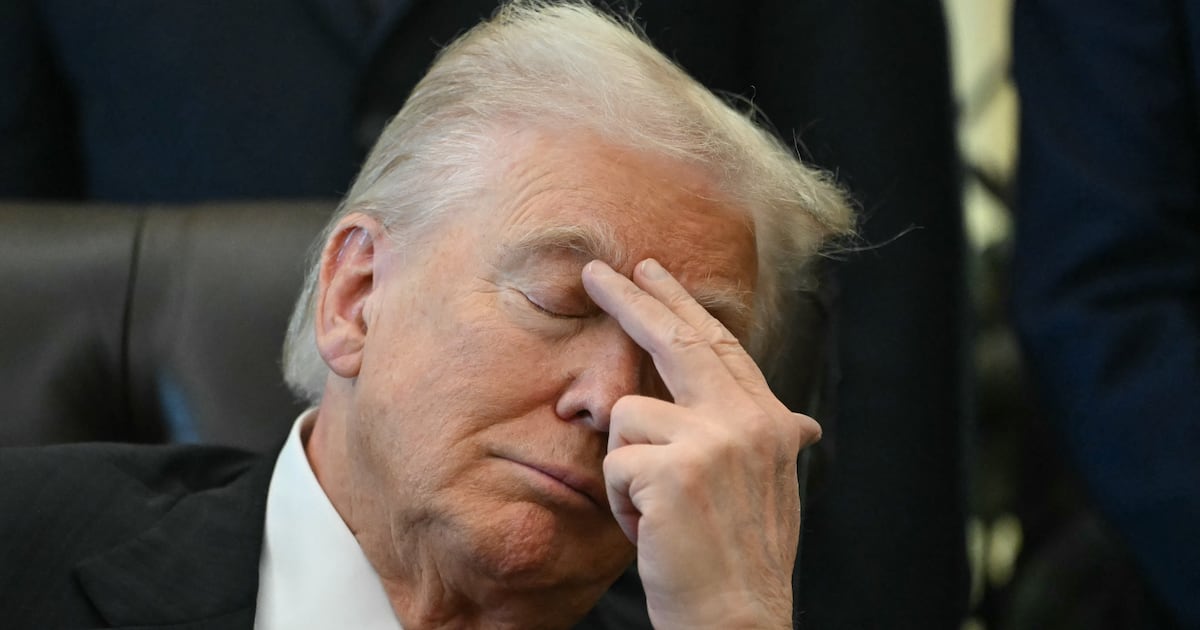
Confused Trump, 79, Demands Troop Deployment Over Fictional Mall
A president threatening troop deployment based on a nonexistent Chicago “shopping center” signals a widening rupture in the norm that domestic order is not governed by impulsive military force.
Nov 11, 2025
⚖ Legal Exposure
Sources
Summary
President Donald Trump threatened to “CALL IN THE TROOPS” to Chicago over a “Miracle Mile Shopping Center” that does not exist in the city.
The presidency is being used to frame routine economic and public-safety conditions as grounds for militarized intervention, untethered from accurate facts and local consent.
This posture pressures federal agencies and service members toward coercive domestic deployments while eroding the boundary between civilian governance and military force.
Reality Check
Threatening troop deployment on a factual error normalizes presidential power as a trigger for domestic coercion, and it puts every citizen’s liberty at the mercy of one late-night post. On this record, the conduct is not clearly criminal by itself, but it squarely violates core anti–abuse-of-power norms by leveraging the presidency to pressure federal force into local governance without verified predicate facts or local consent. If actual deployments follow, the legal risk shifts toward unlawful use of federal military power in domestic law enforcement—territory constrained by the Posse Comitatus Act (18 U.S.C. § 1385) absent a valid statutory exception such as the Insurrection Act. Our rights depend on a government that treats troops as a last resort under law, not as a political instrument activated by misinformation.
Legal Summary
Level 2 exposure because the article describes threatened troop deployment for domestic crime control based on muddled/unsupported factual premises and reports of “excessive use of force” criticism tied to federal operations. That combination raises investigatory concerns (e.g., rights-deprivation or improper military/law-enforcement boundary issues), but the article lacks specific facts showing an unlawful order, invoked authorities, or concrete rights violations attributable to the president. No transactional corruption pattern is alleged.
Legal Analysis
<h3>18 U.S.C. § 242 — Deprivation of rights under color of law</h3><ul><li>The article describes “multiple deployments of law enforcement agents to Chicago” and “critics describe as an excessive use of force during arrests,” which, if substantiated, could implicate willful rights deprivations by deploying officers/agents.</li><li>The president’s public pressure to “CALL IN THE TROOPS” to address purported crime (unsupported by cited local statistics) raises investigative questions about encouraging aggressive enforcement actions untethered to factual predicates; however, the article does not allege specific unconstitutional directives or particular rights violations ordered by the president.</li></ul><h3>18 U.S.C. § 1385 (Posse Comitatus Act) — Improper use of the Army/Air Force for domestic law enforcement</h3><ul><li>The president “threatened to deploy troops to Chicago” and has “sought to deploy National Guard troops,” but the article does not state that active-duty forces were actually used for law enforcement in Chicago, nor does it describe the legal authority invoked.</li><li>Absent facts on actual troop deployment, command orders, mission scope, and whether forces performed law-enforcement functions, statutory exposure remains an investigative red flag rather than charge-ready.</li></ul><h3>18 U.S.C. § 371 — Conspiracy to defraud the United States (impairing lawful governmental functions)</h3><ul><li>The piece alleges politically contentious federal deployments and a claimed “immigrant-driven crime wave” that is “unsupported by the facts,” but it does not allege coordinated deceitful means, falsified reports, or an agreement among officials to obstruct lawful functions.</li><li>No transactional (money/access/official act) pattern is alleged; the conduct is framed as politicized and factually confused rhetoric plus disputed enforcement posture.</li></ul><b>Conclusion:</b> The article reflects potential politicization and irregular domestic deployment posture (and possible downstream excessive-force concerns), but it does not allege a money-for-official-action structure or provide charge-ready facts; the exposure is best characterized as a serious investigative red flag rather than prosecutable structural corruption on this record.</p>
Detail
<p>Just after midnight Tuesday, President Donald Trump posted on Truth Social that Chicago’s “Miracle Mile Shopping Center” had a “more than 28% vacancy factor” and demanded, “CALL IN THE TROOPS, FAST, BEFORE IT IS TOO LATE!” The shopping center he named does not exist in Chicago.</p><p>The post appeared to echo a Nov. 8 report by Just the News about record vacancy levels in Chicago’s Loop office market, citing approximately 2.3 million square feet vacated over two years and attributing the shift to post-COVID changes in work culture, including remote and hybrid work.</p><p>Under Trump’s second administration, the federal government has undertaken multiple deployments of law enforcement agents to Chicago tied to claims of an immigrant-driven crime wave. Chicago Mayor’s Office statistics cited in the reporting show violent crime down 22% over the past year, with robberies down 32% and carjackings down 49%, and summer murders at their lowest in more than 60 years.</p><p>The administration has discussed moving Border Patrol personnel from Chicago to Charlotte for a new deportation crackdown later this month.</p>