Norms Impact
Trump renames the US Institute of Peace after himself after cutting funding
Renaming a congressionally funded, legally contested independent institute after a sitting president turns public governance into personal branding while courts are still deciding who controls the institution.
Dec 4, 2025
⚖ Legal Exposure
Sources
Summary
The State Department announced the U.S. Institute of Peace has been renamed the Donald J. Trump Institute of Peace after the administration seized control and cut its funding. The executive branch is asserting authority over a congressionally funded, statutorily independent institution amid ongoing litigation over who governs it. The move entrenches presidential personalization of public institutions while the institute’s legal status and financial survival remain unresolved.
Reality Check
This conduct normalizes the use of state power to seize and rebrand institutions as personal tributes, a precedent that erodes our protections against government being wielded for self-glorification rather than public purpose. A federal judge has already found the takeover illegal, and keeping control only because the judgment is stayed during appeal underscores how litigation can be exploited to cement faits accomplis. The clearest exposure here is not a tidy federal criminal charge on these facts, but a profound breach of anti–self-dealing norms and the constitutional expectation that public authority is exercised for lawful institutional missions, not political cult-building. When a sitting president’s name is installed on a contested, congressionally financed entity while its funding is being zeroed out, we are watching the boundary between public stewardship and personal rule being deliberately erased.
Legal Summary
Renaming the institute after the sitting President following an “illegal” takeover finding (stayed pending appeal) raises significant ethics and abuse-of-position concerns and warrants investigation into the legality of continued control of the facility. However, the article alleges no financial exchange or third-party benefit consistent with a bribery/honest-services structural quid-pro-quo, keeping exposure at an investigative red-flag level pending further facts and final court rulings.
Legal Analysis
<h3>5 C.F.R. § 2635.702 / 2635.101 (Executive Branch Standards of Conduct — misuse of position / appearance of impropriety)</h3><ul><li>Renaming a congressionally financed, purportedly independent peace institute to include the sitting President’s personal name creates a strong appearance of using public office and governmental communications for personal reputational benefit.</li><li>The State Department’s announcement and senior officials’ promotional statements amplify the personal-branding aspect, raising ethics concerns even absent a direct financial transfer.</li></ul><h3>18 U.S.C. § 641 (Theft/Conversion of Government Property) — investigative hook</h3><ul><li>The article describes a federal judge ruling the government’s “armed takeover” of the institute’s building was illegal (judgment stayed on appeal), suggesting potential unlawful conversion/possession issues depending on what property interests are ultimately adjudicated.</li><li>Key gap: the stay and ongoing appellate litigation leave ownership/authority and criminal intent elements unresolved on the stated facts.</li></ul><h3>18 U.S.C. § 242 (Deprivation of Rights Under Color of Law) — low-to-moderate investigative relevance</h3><ul><li>Use of police escort and forcible entry attempts, coupled with a judicial finding of illegality, could implicate color-of-law abuse if willful unlawful deprivation is proven.</li><li>Key gap: the article does not allege specific rights deprivation, willfulness, or particularized victims beyond employment/administrative displacement.</li></ul><h3>Structural corruption (18 U.S.C. § 201 bribery; 18 U.S.C. § 1346 honest services) — not indicated on these facts</h3><ul><li>No allegation of payments, gifts, or third-party financial transfers tied to official action; the conduct described is self-aggrandizement/abuse-of-process rather than money-access-official act alignment.</li></ul><b>Conclusion:</b> The conduct presents serious investigative red flags and ethics misuse-of-office concerns, with potential unlawful control/possession issues contingent on ongoing litigation, but the article does not establish a transactional quid-pro-quo corruption pattern.
Media
Detail
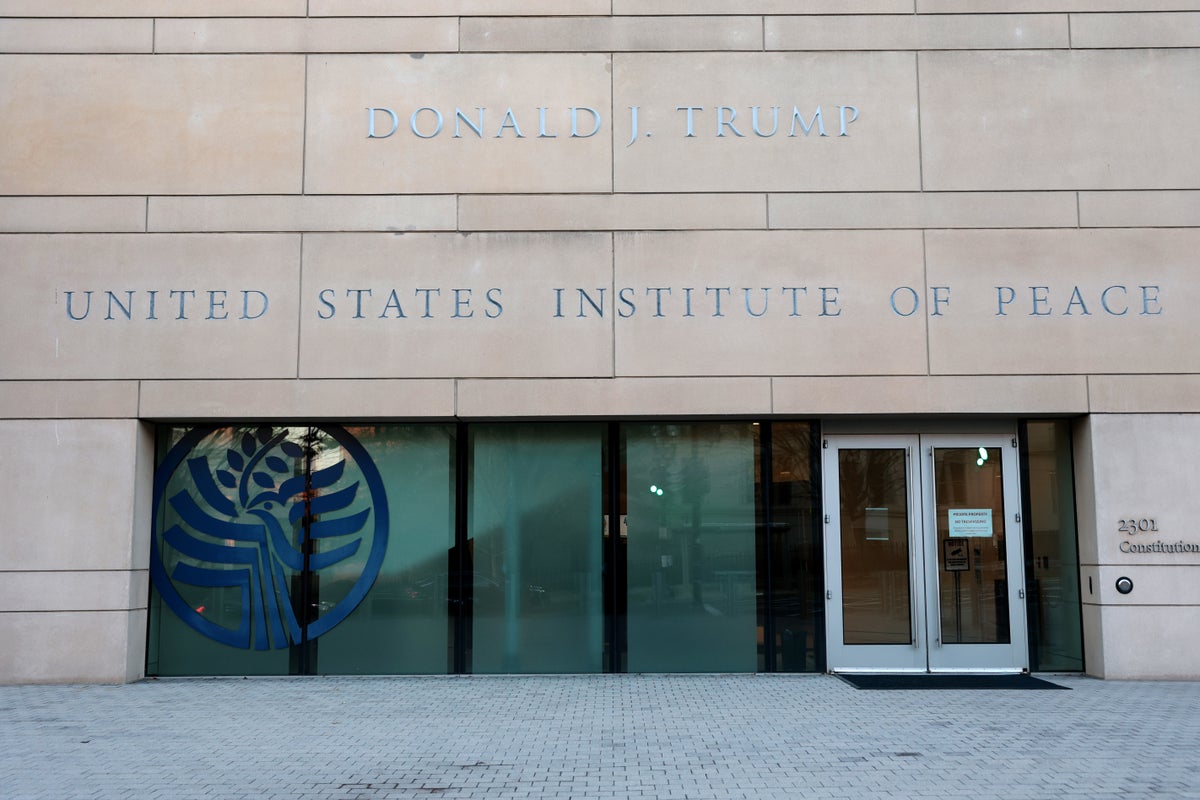
<p>On Wednesday, the State Department announced that the U.S. Institute of Peace, described as a non-profit independent think tank created in 1985 to promote conflict resolution, had been renamed the Donald J. Trump Institute of Peace. Photographs showed the president’s name placed above the entrance of the institute’s headquarters near the Lincoln Memorial in Washington, D.C.</p><p>The change followed earlier actions by Department of Government Efficiency officials who attempted to enter the building and later returned with a police escort. In March, more than 200 employees were fired and most of the board was replaced. Control of the institute has shifted multiple times due to lawsuits and court rulings, with former board members arguing the institute is outside presidential authority and the administration asserting it falls within executive control.</p><p>An attorney for the former leadership said a federal judge ruled the government’s armed takeover illegal, with that judgment stayed during appeal. A federal appeals court ruling is expected. The administration’s latest budget proposal seeks to eliminate all institute funding.</p>