Norms Impact
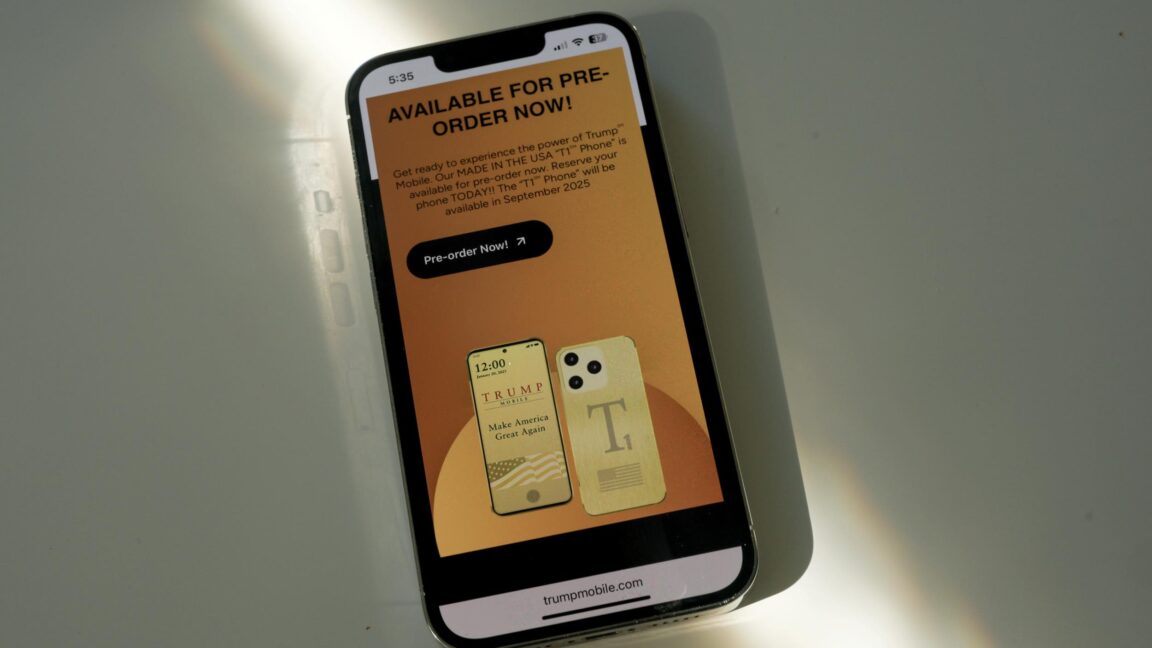
Six months later, Trump Mobile still hasn’t delivered preordered phones
Presidential influence over a historically independent FTC turns a consumer-protection probe into a test of whether federal law still binds companies tied to the President.
Jan 15, 2026
⚖ Legal Exposure
Sources
Summary
Democratic lawmakers urged the Federal Trade Commission to investigate Trump Mobile for taking $100 preorders while repeatedly missing promised delivery dates and for marketing claims implying the T1 phone is “made in the USA.”
The request lands as the White House asserts control over the FTC’s historically independent enforcement posture, with the chair backing presidential authority and the Supreme Court poised to expand presidential removal power.
In practice, consumer-protection enforcement becomes contingent on presidential interests, weakening equal treatment under law for deceptive marketing and preorder practices.
Reality Check
When the President’s business sits in the FTC’s enforcement lane while the White House asserts command over the agency, our consumer rights become discretionary—dependent on political favor rather than neutral law.
On the facts described, the conduct is plausibly actionable as deceptive marketing and unfair practices under Section 5 of the FTC Act, with potential civil penalties implicated by “Made in USA” misrepresentations under FTC rules and orders. Even without criminal charges, the structural harm is the normalization of conflicted enforcement: a regulator pressured to treat a presidentially connected firm differently, eroding equal protection of the marketplace and the public’s ability to rely on federal consumer law.
Legal Summary
The primary exposure is civil/unlawful consumer-protection risk: alleged deceptive “Made in USA”/origin marketing and repeated delivery-date promises while taking $100 deposits with no phones delivered as of January 2026. Separately, the described relationship to the President and asserted White House control over the FTC creates a serious investigative red flag for conflict-of-interest/undue influence if enforcement decisions are shaped to benefit the connected company. The article does not allege a concrete payment-for-official-act exchange sufficient to charge bribery-style structural corruption on this record.
Legal Analysis
<h3>15 U.S.C. § 45(a) — FTC Act (Unfair or Deceptive Acts or Practices)</h3><ul><li>Allegations describe potentially deceptive marketing: accepting $100 deposits for a phone repeatedly promised (Aug/Nov/Dec 2025) yet undisclosed as undelivered as of Jan 2026, with ordering text still implying release “later this year.”</li><li>Allegations of misleading origin claims (“Made in the USA” initially; later swapped for “American-Proud Design,” “brought to life right here in the USA”) while selling devices described as manufactured overseas could meet deception materiality (origin claims often material to consumers).</li><li>Contradictory customer-service explanations (e.g., blaming a government shutdown with “no apparent connection”) may support an inference of misleading representations about nonperformance/delivery.</li></ul><h3>15 U.S.C. § 45a & FTC “Made in USA” Labeling Rule / Enforcement Policy — Civil Penalties Exposure</h3><ul><li>The article states “Made in USA” claims must meet specific FTC standards and that violations can carry civil penalties; the reported quiet removal of the claim shortly after announcement can be probative of awareness of noncompliance.</li><li>Continued use of origin-adjacent phrasing (“brought to life right here in the USA”) for products alleged to be manufactured abroad raises continuing labeling-compliance risk.</li></ul><h3>18 U.S.C. § 208 — Federal Conflicts of Interest (Participation in Matters Affecting Personal Financial Interest) (investigative relevance)</h3><ul><li>Lawmakers allege Trump Mobile’s relationship to President Trump presents “inherent conflicts of interest,” and earlier correspondence asserted the business allows Trump “to profit off of his presidency” while he appoints regulators overseeing the marketplace.</li><li>The article indicates asserted White House control over the FTC and asks what happens “if the President were to intervene,” creating a potential conflict-of-interest/undue influence investigative vector if executive involvement affects enforcement decisions benefiting a connected private entity.</li><li>Gap: the article does not allege a specific, documented presidential directive or a discrete “particular matter” decision in which Trump personally participated; exposure is therefore presently an investigative red flag rather than satisfied elements.</li></ul><h3>18 U.S.C. § 201(b) — Bribery of Public Officials (quid pro quo) / § 1346 Honest Services Fraud (structural corruption theory)</h3><ul><li>The fact pattern in the article is primarily consumer-protection misconduct by a private company plus concern about regulatory capture; it does not allege any payment/thing-of-value provided to a public official in exchange for an “official act.”</li><li>Gap: no described financial transfer to officials, no identified official act taken to benefit Trump Mobile, and no access-for-benefit sequence tied to enforcement outcomes.</li></ul><b>Conclusion:</b> The article supports substantial civil consumer-protection exposure for deceptive advertising and failure-to-deliver representations, plus a serious investigative red flag regarding potential executive-branch conflicts/pressure on an independent regulator. It does not, on these facts alone, establish a prosecutable money-access-official-action quid-pro-quo pattern.</p>
Detail
<p>Sen. Elizabeth Warren and 10 other Democratic lawmakers sent a letter to FTC Chairman Andrew Ferguson requesting an FTC investigation into Trump Mobile’s advertising and preorder practices, including claims that its T1 phone was “made in the USA” and its repeated failure to deliver phones after collecting $100 deposits.</p><p>The lawmakers asked the FTC to apply the same standards used for other companies and requested information including whether the agency has opened an investigation, how many complaints it has received, and how the FTC would respond if the President sought to influence decisions involving Trump Mobile. The letter requested responses by February 15.</p><p>Trump Mobile announced in June 2025 that a gold phone would be designed and built in the United States and available by August 2025; days later, the website removed the “made in the USA” claim. The company began accepting deposits as early as August 2025 and shifted delivery projections from August to November to early December. As of January 2026, no T1 phones have been delivered while preorders remain available for a refundable $100 deposit and a stated $499 price.</p>