Norms Impact
‘Unchecked Corruption’: First US Sale of Venezuelan Oil Goes to Company of Trump Megadonor | Common Dreams
A $250 million oil deal tied to a major campaign donor—and proceeds routed offshore—turns presidential power over foreign resources into a pay-to-play channel with no democratic guardrails.
Jan 19, 2026
⚖ Legal Exposure
Sources
Summary
A roughly $250 million U.S. sale of Venezuelan crude—the first since the Trump administration’s early-month assault on Venezuela—went to Vitol, tied to a trader who donated $6 million via pro-Trump super PACs. The conduct collapses foreign-policy coercion, executive discretion over seized resources, and donor-linked access into a single pipeline of influence. The practical result is a high-value public-power decision that can be perceived as pay-to-play while proceeds are routed offshore with limited accountability.
Reality Check
This is the kind of donor-linked access-to-state-power arrangement that rots democratic stability from the inside, because it signals that public authority can be traded for private political money and offshore control. If a contribution was tied to an “official act” like steering a government-controlled oil sale, the facts described implicate federal bribery and honest-services fraud theories under 18 U.S.C. § 201, § 1346, and related conspiracy provisions. Even if prosecutors could not meet the criminal quid-pro-quo threshold from what is publicly described, the conduct still fits the classic abuse-of-office pattern: leveraging foreign-policy coercion and executive control to enrich connected insiders while moving proceeds into an offshore account beyond ordinary oversight.
Legal Summary
The article describes a high-risk money-to-access-to-official-action sequence: a $6M Trump campaign super PAC donor attended a White House meeting and the donor’s firm received the first U.S. Venezuelan oil sale (~$250M). Combined with reported statements about leveraging presidential “influence” and concerns about offshore proceeds in Qatar, the facts support a likely illegal, potentially criminal structural corruption theory pending corroboration of decisionmaking, communications, and intent.
Legal Analysis
<h3>18 U.S.C. § 201(b) — Bribery of public officials (quid pro quo)</h3><ul><li>Alleged facts show substantial political money ($6M via super PACs, including $5M to MAGA Inc.) by a Vitol senior trader closely followed by high-level access (White House meeting) and a major official-benefiting transaction (first U.S. sale of Venezuelan oil awarded to Vitol for ~$250M).</li><li>The reported statement that Vitol would attain “the best price possible” and that Trump’s “influence… will ensure that you get what you want” supports a structural inference of value exchanged for influence/official action (even if no explicit agreement is quoted).</li><li>Key evidentiary gap: the article does not specify the formal U.S. decisionmaker/contracting mechanism or a documented explicit bargain; however, timing + magnitude + access + award align with a prosecutable quid-pro-quo theory pending investigation.</li></ul><h3>18 U.S.C. § 1346 & § 1343 — Honest services wire fraud (corrupt deprivation of faithful services)</h3><ul><li>Steering a high-value government-controlled/initiated oil sale to a major campaign donor after donor access can constitute a scheme to deprive the public of honest services through bribery/kickback-like arrangements.</li><li>Use of super PAC channels does not neutralize the corruption theory where the payment/access/official-benefit sequence suggests influence purchased rather than policy merit.</li><li>Gap: the article does not identify specific interstate wire communications or internal directives, but the described transaction is the type routinely executed through wires and documents, supporting investigative exposure.</li></ul><h3>18 U.S.C. § 371 — Conspiracy to defraud the United States</h3><ul><li>Allegations of an “illegally and unconstitutionally” initiated action against Venezuela followed by a donor-favored disposition of seized/controlled oil and proceeds “stashed in Qatar” support a theory of impairing lawful governmental functions (transparent disposition of public-controlled assets) through deceitful/irregular means.</li><li>The Qatar offshore arrangement is described as lacking “accountability, oversight, or guardrails,” supporting an inference of concealment or evasion of normal controls.</li><li>Gap: article provides characterization by critics but limited operational details (entities, authorizations, and specific misrepresentations).</li></ul><h3>18 U.S.C. § 1956 — Money laundering (concealment/foreign proceeds movement) (investigative fit)</h3><ul><li>The proceeds being “stashed in Qatar” in an offshore account could implicate concealment or movement of funds to obscure ownership/control if tied to unlawful activity (e.g., bribery/honest services).</li><li>Current record in the article is insufficient to show laundering elements (specified unlawful activity proceeds + intent to conceal), but the offshore placement is a significant investigative red flag.</li></ul><b>Conclusion:</b> The alleged alignment of multimillion-dollar campaign support, privileged access, and a discrete high-value official transaction benefiting the donor’s firm presents a classic structural corruption pattern consistent with potentially criminal bribery/honest-services theories, warranting full investigation.
Detail
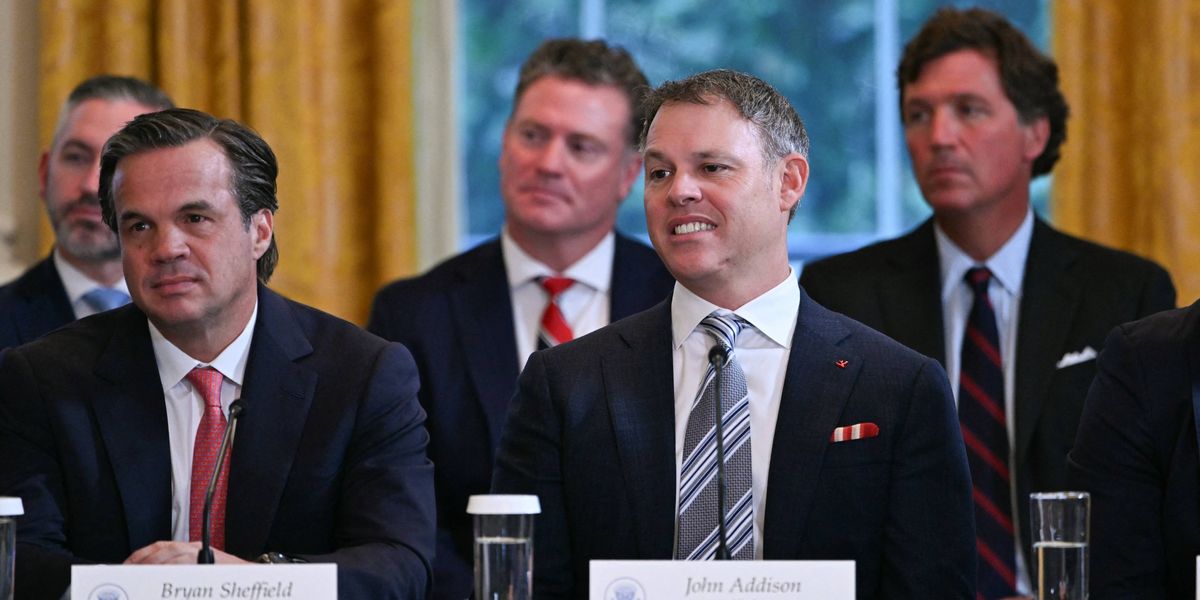
<p>The first U.S. sale of Venezuelan oil since the Trump administration’s early-month actions in Venezuela totaled roughly $250 million and went to Vitol, a Geneva-based energy and commodity trading firm whose U.S. arm is headquartered in Houston. The Financial Times reported that John Addison, a senior trader at Vitol, was involved in efforts to secure the deal.</p><p>Addison attended a recent White House meeting with top oil executives and donated $6 million total to President Donald Trump’s 2024 campaign through multiple super PACs, including $5 million to MAGA Inc. The Financial Times reported that Addison pledged at the White House event that Vitol would obtain the best price possible for Venezuelan oil for the United States, adding that U.S. influence over Venezuelans would ensure the administration “get[s] what you want.”</p><p>The Washington Post reported that proceeds from the sale are being stashed in Qatar, an arrangement critics argue creates corruption risk. Senators Chris Murphy and Cory Booker publicly condemned the deal and the offshore proceeds arrangement.</p>