Norms Impact
Grand jury declines to indict Democratic lawmakers who urged service members to disobey illegal Trump orders | CNN Politics
Federal prosecutors tried to criminalize lawmakers’ call to refuse illegal orders, testing whether the Justice Department can be used to intimidate political speech without a grand jury’s consent.
Feb 11, 2026
⚖ Legal Exposure
Sources
Summary
A federal grand jury declined to indict Democratic lawmakers targeted by the Justice Department over a video urging service members and intelligence officials to refuse illegal orders from the Trump administration. The attempt to charge elected officials over political speech about constitutional compliance signals a Justice Department posture willing to test prosecutions that chill dissent against the sitting president. The practical consequence is that prosecutors can still re-present the case, leaving lawmakers and would-be whistleblowers under a continuing threat of retaliatory criminal process.
Reality Check
This conduct weaponizes criminal process as a warning shot: if prosecutors can haul lawmakers before a grand jury for urging obedience to the law over illegal commands, our own right to criticize executive power becomes a prosecutable risk. The underlying speech—encouraging service members to refuse illegal orders—tracks lawful duties under the Constitution and the UCMJ, making a clean criminal theory hard to sustain on these facts; absent evidence of incitement to imminent lawless action, broad charges like 18 U.S.C. § 371 (conspiracy) or 18 U.S.C. § 2387 (advocating insubordination) would be legally fraught and prone to collide with core First Amendment protections. Even if not ultimately chargeable, using the Justice Department to chase “legally dubious” prosecutions against political opponents is a profound abuse-of-power precedent that chills oversight and erodes the independence we rely on to keep government from retaliating against dissent.
Legal Summary
Legal exposure is driven by the Justice Department’s apparent attempt to fit a short, public video urging refusal of “illegal orders” into military-disloyalty type offenses, but the conditional framing and constitutional protections create major gaps, reflected by the grand jury’s declination. On the reported facts, this is primarily a politicization/irregular prosecution risk rather than prosecutable structural corruption. Prosecutors could re-seek charges, but the article provides no transactional or coercive facts that would strengthen criminal elements.
Legal Analysis
<h3>18 U.S.C. § 2387 — Activities affecting armed forces generally (advocacy causing disloyalty/mutiny/refusal of duty)</h3><ul><li>Alleged conduct: lawmakers publicly urged service members and intelligence officials to “refuse illegal orders,” which prosecutors evidently attempted to frame as encouraging refusal of duty.</li><li>Key gap/defense-significant fact from context: the speech is explicitly conditioned on illegality (“illegal orders”), which strongly distinguishes it from encouraging disobedience to lawful command; grand jury declination suggests elements were not persuasively met on presented facts.</li></ul><h3>18 U.S.C. § 371 — Conspiracy (if charged in tandem with a substantive offense)</h3><ul><li>The article describes coordinated participation by six lawmakers in a single video, but provides no facts indicating an agreement to violate a specific federal law beyond protected political advocacy.</li><li>Absent evidence of intent to induce refusal of lawful duty (as opposed to unlawful orders), conspiracy theory appears structurally weak on the reported record.</li></ul><h3>18 U.S.C. § 1503 / § 1512 — Obstruction-related theories (pressure on officials)</h3><ul><li>The context does not allege interference with a proceeding, witness tampering, or corrupt persuasion tied to a specific investigation or adjudication; it describes generalized public messaging.</li><li>Without a nexus to an official proceeding and corrupt intent, obstruction exposure is not supported by the described facts.</li></ul><h3>First Amendment / Speech or Debate Clause (constitutional constraints on prosecution)</h3><ul><li>The conduct described is political speech urging adherence to the Constitution and refusal of “illegal orders,” which is presumptively protected and hard to criminalize without clear incitement or unlawful solicitation.</li><li>Grand jury declination is consistent with significant constitutional and mens rea hurdles to criminal liability on these facts.</li></ul><b>Conclusion:</b> The article describes an aggressive prosecutorial attempt to criminalize conditioned political speech rather than a money-for-official-action pattern; exposure is best characterized as a serious investigative/procedural red flag (politicized or legally dubious charging effort), not structural corruption.
Detail
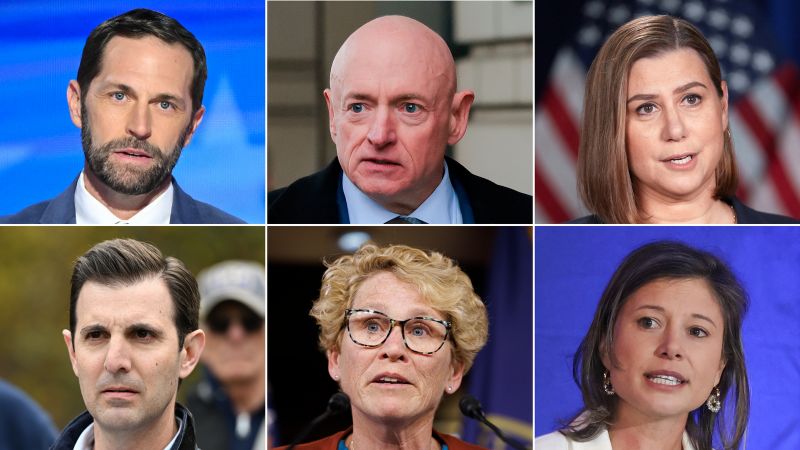
<p>A federal grand jury on Tuesday declined to approve indictments sought by the Justice Department against Democratic lawmakers who posted a 90-second video urging military service members and intelligence officials to disobey any illegal orders from the Trump administration, according to two people familiar with the matter.</p><p>The clip featured six Democrats, including Sens. Elissa Slotkin of Michigan and Mark Kelly of Arizona, and warned that “threats to our Constitution” are coming “from right here at home,” while repeatedly urging the military and intelligence community to “refuse illegal orders.” The video drew anger from the Trump administration, and the Justice Department pursued charges framing the lawmakers as undermining the president’s authority as commander in chief.</p><p>It was not clear which of the six lawmakers were facing indictments. CNN requested comment from the Justice Department. The grand jury’s refusal is notable because such declines are rare, though the context described includes another recent declination involving New York Attorney General Letitia James. Prosecutors can still seek indictments against the lawmakers.</p>