Norms Impact
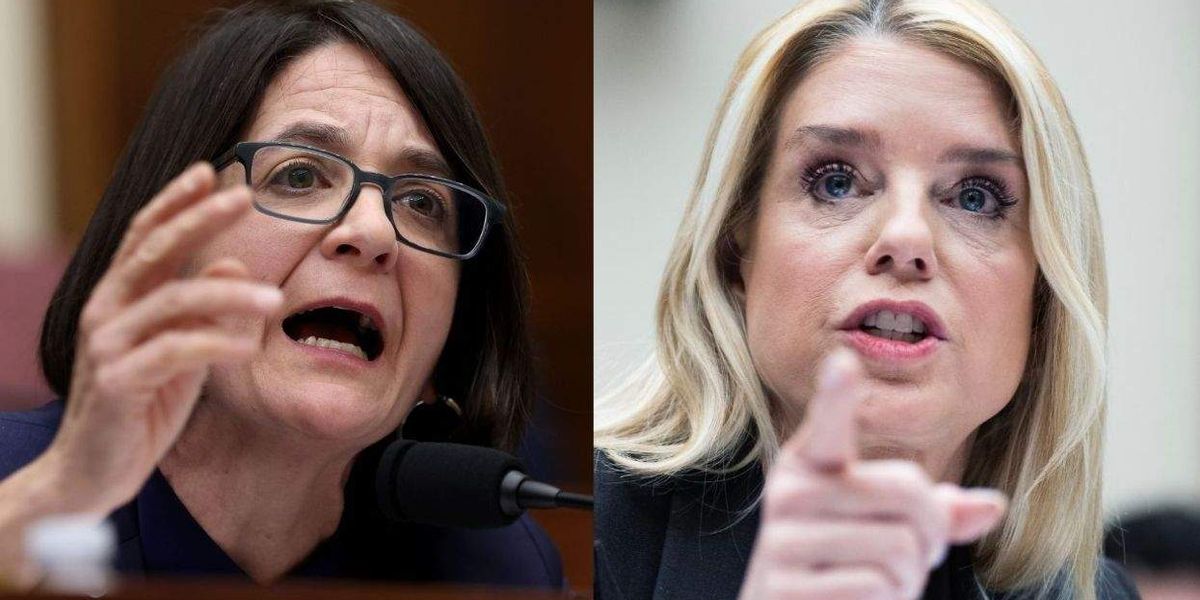
Pam Bondi suggests Jewish lesbian lawmaker is anti-Semitic in explosive hearing
In a congressional oversight hearing, the attorney general used her platform to personally brand a lawmaker as part of an “anti-Semitic culture,” eroding the norm of accountable, non-retaliatory testimony.
Feb 11, 2026
⚖ Legal Exposure
Sources
Summary
Attorney General Pam Bondi accused Rep. Becca Balint of fueling an “anti-Semitic culture” during a House Judiciary Committee hearing, prompting Balint to leave the room after invoking her family’s Holocaust loss.
The oversight session shifted into a personal and partisan confrontation as the attorney general used her response time to attack a member after questioning ended, while the chair repeatedly intervened on time and decorum.
The practical consequence is weakened congressional oversight of the Justice Department’s handling of the Epstein files, as public accountability is displaced by political combat and survivors’ demands go unanswered.
Reality Check
When the nation’s top law-enforcement official turns oversight into a personal attack, we normalize a Justice Department that treats accountability as combat—and that precedent can be used against any citizen demanding answers. Nothing in this record establishes a clear federal crime on these facts alone, but it squarely violates bedrock governance norms: independence from political retaliation, good-faith cooperation with congressional oversight, and the anti–weaponization principle that keeps prosecutorial power from being used as a partisan cudgel. The lasting damage is institutional: if oversight hearings become venues for smears instead of answers on matters like redactions, survivor engagement, and questioning of powerful officials, the public’s ability to check executive power collapses in real time.
Legal Summary
The article primarily alleges partisan conduct, deflection, and an inflammatory personal accusation during a House oversight hearing. That supports an ethics/impartiality concern, but the narrative does not describe a transactional structure, personal enrichment, or specific obstructive acts that would elevate this into likely civil or criminal exposure. Further exposure would require evidence of false statements, corrupt interference, or misuse of authority tied to a tangible benefit.
Legal Analysis
<h3>5 C.F.R. § 2635 (Standards of Ethical Conduct) — Impartiality / Misuse of Position</h3><ul><li>The article describes the Attorney General using an oversight hearing response to personally accuse a member of Congress of fostering an “anti-Semitic culture,” characterizing the exchange as a political counterattack rather than a substantive answer about DOJ actions.</li><li>If accurate, this implicates ethical concerns about politicized conduct and misuse of the prestige of office in an official setting, but the facts presented do not show a concrete personal benefit or transactional exchange.</li></ul><h3>18 U.S.C. § 1505 — Obstruction of Proceedings Before Departments/Congress</h3><ul><li>Democrats accuse the Attorney General of “stonewalling” and deflecting during the hearing; however, the article does not allege destruction of evidence, corrupt persuasion, or other acts that would satisfy obstruction elements beyond political non-responsiveness.</li><li>Key gap: no specific corrupt act (e.g., withholding subpoenaed materials, false statements, or interference with witnesses) is alleged in the described exchange.</li></ul><h3>18 U.S.C. § 1001 — False Statements</h3><ul><li>The article does not identify a specific materially false factual statement by the Attorney General; it describes evasive/noncommittal answers and political attacks.</li><li>Key gap: no clear falsity, materiality, and knowing/willful misrepresentation is alleged.</li></ul><b>Conclusion:</b> The described conduct reads primarily as politicized, disrespectful, and potentially improper use of office in a congressional setting, but it lacks money-access-official-action alignment or concrete obstructive acts indicative of prosecutable structural corruption.</p>
Media
Detail
<p>During a House Judiciary Committee hearing on Attorney General Pam Bondi and the Justice Department’s handling of the Jeffrey Epstein files, Democrats pressed Bondi on redactions, survivor engagement, and whether the department had questioned officials whose names appear in newly released, unredacted materials. Rep. Becca Balint questioned Bondi about whether the department had scrutinized Commerce Secretary Howard Lutnick, Navy Secretary John Phelan, and Deputy Defense Secretary Steven Feinberg regarding any ties to Epstein.</p><p>After Balint’s allotted time expired and she yielded back, Bondi asked to respond and said Balint “didn’t ask Merrick Garland anything about Epstein.” Balint replied, “Weak sauce.” Bondi then added, “And with this anti-Semitic culture right now, she voted against a resolution ...” Balint interrupted, cited her grandfather’s death in the Holocaust, then stood and left the room.</p><p>Chairman Jim Jordan repeatedly managed time and decorum as the hearing continued amid partisan clashes over the Epstein disclosures and the department’s responses to questions.</p>