Norms Impact
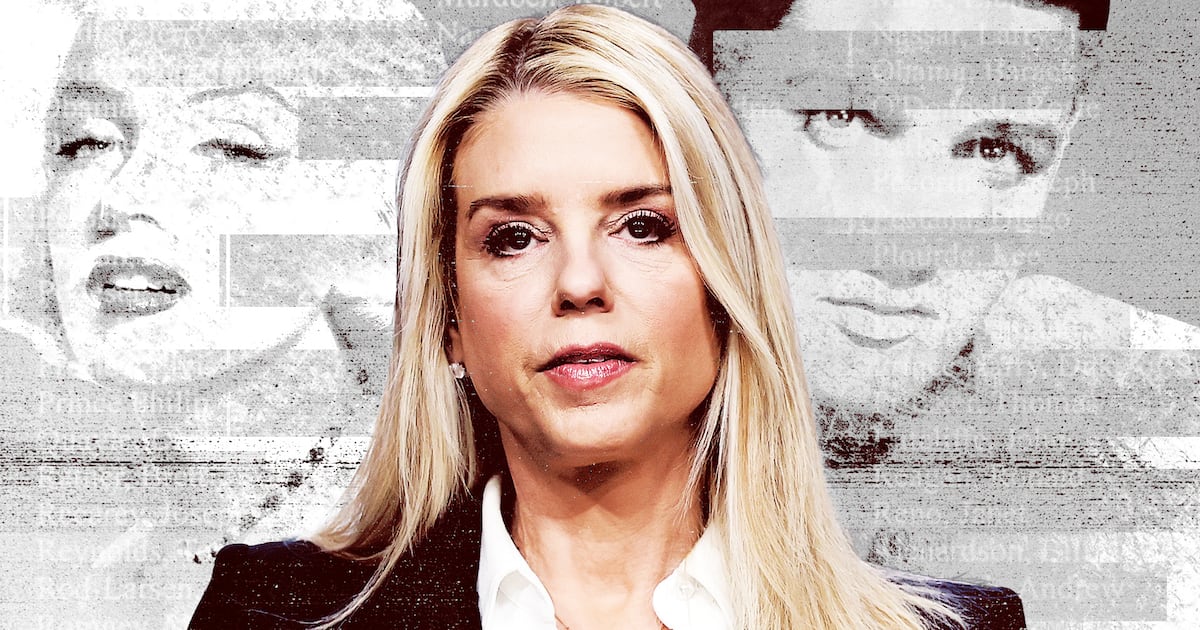
Bondi Blasted for Putting Long-Dead Celebs on Epstein Email List
By flooding Congress with an undifferentiated “name list” that lumps irrelevant mentions with serious allegations, DOJ leadership normalizes information laundering that weakens transparency mandates into a shield for power.
Feb 16, 2026
⚖ Legal Exposure
Sources
Summary
The Department of Justice sent Congress a six-page letter listing 130 “government officials and politically exposed persons” mentioned in the Epstein files, including long-dead celebrities like Marilyn Monroe, Elvis Presley, and Janis Joplin. DOJ leadership then declared its obligations under the Epstein Files Transparency Act satisfied and treated the matter as resolved despite ongoing disputes over what was released, redacted, or withheld. The practical consequence is a public record that blurs meaningful accountability while intensifying distrust after a delayed, partial disclosure process that has already exposed victim identities.
Reality Check
This kind of mass, context-free naming exercise trains government to launder accountability through confusion, leaving our rights hostage to selective disclosure and reputational weaponization. The most immediate legal exposure is not “names on a list,” but whether federal officials misled Congress or impaired lawful oversight—conduct that can implicate 18 U.S.C. § 1001 (false statements) and 18 U.S.C. §§ 1505 and 1519 (obstruction of congressional inquiries and concealment/impairment of records) depending on what was known, what was withheld, and how the reporting was framed. Even if prosecutors never reach criminal proof, declaring the Epstein matter “resolved” after delayed, partial release and acknowledged errors that exposed victims collapses core governance norms: transparency laws are not optional, and agencies cannot substitute a spectacle of names for accountable disclosure.
Legal Summary
The article describes alleged procedural and compliance irregularities in DOJ’s handling of Epstein-file disclosures, including delayed release, questionable redaction outcomes, and a congressional letter that critics say “muddied the waters” by including irrelevant names. These facts create obstruction/compliance investigative exposure pending evidence of intent, but the context provided does not show a transactional corruption structure (money, access, and official action) or clearly satisfied criminal elements.
Legal Analysis
<h3>18 U.S.C. § 1505 — Obstruction of proceedings before departments, agencies, and committees</h3><ul><li>DOJ sent Congress a letter purporting to list 130 “government officials and politically exposed persons” mentioned in Epstein files, allegedly mixing irrelevant names (including deceased celebrities) with potentially material actors, which critics characterize as “muddying the waters.”</li><li>If the DOJ’s communication to Congress was knowingly misleading in a way that impeded a congressional inquiry or oversight function, it raises obstruction exposure; the article does not allege an affirmative act like destruction of evidence or explicit intent, leaving key elements unproven on these facts.</li></ul><h3>18 U.S.C. § 1512(c)(2) — Obstruction by impairing the availability or integrity of information (catchall)</h3><ul><li>The article describes a statutory duty to release Epstein records and report categories released/withheld; it alleges the DOJ released only about half the reviewed documents and used a broad, non-clarified name list that may dilute identification of perpetrators.</li><li>Potential theory: actions that “muddy” identification of wrongdoers and/or fail to timely release required records could be framed as impairing the integrity of information provided to Congress/public; however, the context provided lacks specific proof of corrupt intent or concrete steps to conceal particular evidence.</li></ul><h3>Epstein Files Transparency Act (as described) — Compliance/timeliness and redaction limits</h3><ul><li>The article alleges the release occurred 42 days after the legal deadline and that redaction practice allegedly protected perpetrators while exposing victims, contrary to the law’s stated allowance (victim-identity protection only).</li><li>This is primarily a compliance/administrative law exposure on the described facts; it supports investigative scrutiny and potential contempt/oversight consequences but does not, by itself, establish a criminal quid-pro-quo or personal enrichment pattern.</li></ul><b>Conclusion:</b> The described conduct most strongly presents a serious investigative red flag involving potential misleading communications and statutory-compliance irregularities in a high-profile disclosure process, not a money-access-official-act quid-pro-quo pattern on the facts provided.
Media
Detail
<p>The Department of Justice transmitted a six-page letter to Congress identifying 130 names of “all government officials and politically exposed persons” mentioned in the Epstein files. The list included Elvis Presley, Marilyn Monroe, and Janis Joplin, alongside figures already publicly linked to Epstein such as President Donald Trump, Les Wexner, and Steve Bannon, and also included Trump adversaries such as Barack Obama, Joe Biden, George Clooney, and lawmakers Thomas Massie and Ro Khanna.</p><p>DOJ officials said names appeared for varied reasons, ranging from frequent correspondence to being mentioned in conversation without meeting Epstein. Attorney General Pam Bondi and Deputy Attorney General Todd Blanche stated the DOJ had fulfilled requirements under the Epstein Files Transparency Act and considered the Epstein matter resolved. The letter followed Bondi’s House hearing appearance on DOJ disclosures and after DOJ removed thousands of documents that may have identified victims, citing “technical or human error.”</p><p>On Jan. 30, DOJ released more than 3.5 million documents, 42 days after a legal deadline, representing about half of roughly 6 million reviewed.</p>