Norms Impact
Elon Musk Is Demolishing the Rationale for Citizens United
A private donor’s $288 million spend is followed by direct leverage over agencies, data, and payments—shattering the core democratic norm that public power cannot be rented through election money.
Mar 24, 2025
⚖ Legal Exposure
Sources
Summary
Elon Musk spent $288 million to help reelect President Donald Trump and then received sweeping leverage inside the federal government, including access to sensitive data and influence over payments and staffing. This collapses the post–Citizens United premise that massive outside spending does not translate into corrupting access, while enforcement and coordination barriers remain functionally hollow. The practical result is a federal apparatus that can be bent toward a single private individual’s interests, weakening public trust and constricting democratic accountability.
Reality Check
A government that grants a major election financier operational control over agencies, sensitive databases, and payment flows is building a template for privatized rule that will be used against our rights when political winds shift. On these facts, the clearest legal exposure is not “speech” but misuse of public authority: the Treasury payment interference and personnel purges described implicate abuse-of-office and anti-corruption principles even where campaign-finance doctrine narrows “quid pro quo.” The conduct as described raises serious federal concerns under 18 U.S.C. § 201 (bribery/gratuities) and honest-services fraud theories tied to 18 U.S.C. §§ 1341, 1343, 1346 if official acts were taken in exchange for the spending, and it spotlights how the collapse of coordination enforcement turns nominally “independent” money into functional purchase of access and action.
Legal Summary
The alleged sequence of massive election spending followed by extraordinary access/authority and multiple government actions that appear to benefit the spender presents a structural quid-pro-quo corruption risk. While the article does not provide direct evidence of an explicit agreement or specific coordinated acts, the magnitude and timing described support Level 3 exposure and warrant a bribery/honest-services-focused investigation.
Legal Analysis
<h3>18 U.S.C. § 201 (Bribery of public officials and witnesses)</h3><ul><li>Alleged facts describe an unusually large political spend ($288 million) followed by extraordinary government power for a private individual and government actions that appear to advance the spender’s interests (e.g., presidential Tesla promotion; DOJ posture treating Tesla vandalism as “domestic terrorism”; Commerce Secretary urging viewers to buy Tesla stock).</li><li>Structural inference: money → access/authority → official actions benefiting the payer aligns with the classic quid-pro-quo risk profile, even without an explicit agreement alleged in the article.</li><li>Gap: the article does not specify a particular “official act” promised/accepted in exchange for the expenditure or direct evidence of an agreement; proof would turn on coordination/intent and linkage to specific decisions.</li></ul><h3>18 U.S.C. § 1346 / § 1343 (Honest services wire fraud)</h3><ul><li>Allegations that federal power and resources were used in ways that bend government toward “one man’s personal interests” support a theory of deprivation of the public’s right to honest services if tied to a bribery/kickback scheme.</li><li>The same sequencing—massive election spending followed by preferential governmental treatment—supports an inference of a corrupt exchange under an honest-services framework.</li><li>Gap: article does not allege use of wires, specific communications, or a defined bribery agreement; those would be developed via investigation.</li></ul><h3>52 U.S.C. § 30116 / § 30118 and coordination concepts (campaign finance limits; corporate contributions; coordinated expenditures)</h3><ul><li>The piece asserts that post-Citizens United enforcement is “virtually nonexistent” and that campaigns coordinate with outside spenders; if the $288 million involved impermissible coordination, the spending could be treated as an in-kind contribution implicating contribution limits and reporting rules.</li><li>Gap: the article does not allege specific coordinated communications, intermediaries, or reporting failures tied to Musk’s spending.</li></ul><h3>18 U.S.C. § 641 / § 1030 / Privacy Act concepts (misuse of government systems/data) — investigative concern</h3><ul><li>Claims that Musk “gained access to private data on millions of Americans” from SSA/IRS and used Treasury’s payment system to cut off funds raise potential unlawful access/misuse issues depending on authorization and purpose.</li><li>Gap: the article does not provide details on how access was obtained, the legal authority for access, or specific unauthorized exfiltration/alteration conduct.</li></ul><b>Conclusion:</b> The article alleges a strong money-to-access-to-official-action alignment consistent with a prosecutable structural corruption risk (bribery/honest-services) pending evidence of agreement, coordination, and linkage to specific official acts, rather than mere procedural irregularity.
Detail
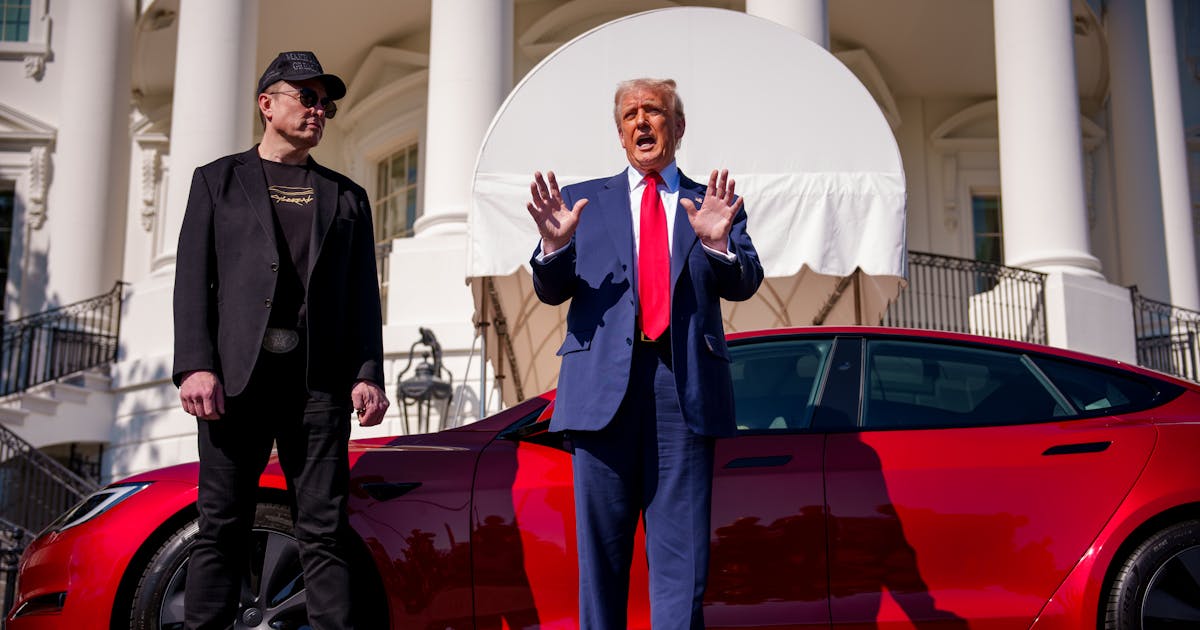
<p>Elon Musk spent $288 million to support Donald Trump’s reelection campaign. After the election, Musk was given significant power over federal government functions, described as exceeding that of any private individual since the founding.</p><p>Using this authority, Musk and associates dismantled federal agencies and directed the dismissal of thousands of civil servants. He obtained access to private data on millions of Americans held by the Social Security Administration, the IRS, and other federal entities. He also used the Treasury payment system to cut off funds to programs authorized by Congress and to recipients he disfavored.</p><p>Senior administration actions aligned publicly with Musk’s corporate interests: Trump participated in a Tesla car event on the White House lawn; Attorney General Pam Bondi announced DOJ would treat vandalism of Tesla vehicles and dealerships as “domestic terrorism”; and Commerce Secretary Howard Lutnick urged Fox News viewers to buy Tesla stock.</p><p>The account situates these developments within the Supreme Court’s campaign finance framework from <em>Buckley v. Valeo</em> through <em>Citizens United</em>, emphasizing weakened practical constraints on outside spending and coordination.</p>