Norms Impact
‘So Much for America First’: Trump Admin Says Argentina Bailout Doubling to $40 Billion | Common Dreams
A U.S.-backed $40 billion Argentina lifeline was publicly conditioned on one candidate staying in power, turning financial statecraft into overt electoral leverage.
Oct 15, 2025
⚖ Legal Exposure
Sources
Summary
The Trump administration said it is working to double a $20 billion private-sector currency swap for Argentina to a total of $40 billion. The U.S. president explicitly tied continued U.S. generosity to whether Argentina’s president stays in power. The practical effect is U.S.-linked financial leverage being used to influence a foreign electorate while steering large-scale financing toward stabilizing an ally’s government ahead of an election.
Reality Check
Conditioning U.S. support on a foreign leader “remaining in power” normalizes using American financial leverage as a political weapon, a precedent that rebounds on our own rights by making elections—anywhere—fair game for transactional coercion. This conduct is not clearly a prosecutable U.S. election crime because the relevant federal bans—52 U.S.C. § 30121 (foreign national contributions) and 18 U.S.C. § 201 (bribery of U.S. officials)—do not neatly fit a president threatening to withhold generosity from a foreign country based on that country’s vote, as described here. The danger is institutional: it erodes anti–quid-pro-quo norms in foreign policy and trains the public to accept elections as leverage points for executive favors, rather than sovereign choices protected from intimidation.
Legal Summary
The article describes a large Argentina bailout/currency-swap expansion and quotes the President conditioning continued U.S. support on Javier Milei “remaining in power,” creating a serious appearance of politicized foreign-policy leverage tied to a foreign election. However, the context provides no allegations of payments, kickbacks, self-enrichment, or a domestic quid pro quo that would satisfy core public-corruption bribery elements. On the stated facts, exposure is best characterized as a serious investigative red flag rather than clearly criminal structural corruption.
Legal Analysis
<h3>52 U.S.C. § 30121 — Foreign national contributions/solicitations (election-related thing of value)</h3><ul><li>Article alleges the President publicly conditioned U.S. government “generosity” (a $40B bailout structure involving U.S.-facilitated financing) on a foreign leader “remaining in power,” i.e., an electoral outcome in Argentina; this reflects potential foreign-election interference concerns but not a U.S. federal-election contribution.</li><li>Key gap: the conduct is tied to Argentina’s midterm elections, not a U.S. election; the article does not allege any foreign national provided anything of value to a U.S. campaign or that Trump solicited such a benefit for a U.S. election.</li></ul><h3>18 U.S.C. § 201(b) — Bribery of public officials (quid pro quo official act)</h3><ul><li>The article describes leverage of U.S. executive action (bailout support) for political alignment/continuity of a foreign ally, but does not allege any personal benefit to U.S. officials, payments, gifts, or anything of value flowing to the decision-maker.</li><li>Structural corruption indicator (money/access/benefit alignment) is incomplete here because the “benefit” described is geopolitical/political and directed to the foreign leader, not personal enrichment or a domestic transactional exchange.</li></ul><h3>18 U.S.C. § 1343 / § 1346 — Wire fraud & honest services fraud</h3><ul><li>Article allegations center on politicized use of executive influence over a large financing initiative; however, it does not allege deception, kickbacks, or self-dealing to deprive the public of honest services.</li><li>Key gap: no alleged scheme to obtain money/property by fraud, no alleged bribe/kickback, and no personal enrichment facts.</li></ul><h3>31 U.S.C. § 1341 — Antideficiency Act (improper federal spending obligation)</h3><ul><li>Critics characterize the bailout as “taxpayer money,” but the article frames it as a currency swap/loan and later as funding from “banks and sovereign wealth funds,” creating uncertainty about whether federal appropriations were obligated improperly.</li><li>Key gap: no described appropriation violation, contractual obligation, or unauthorized expenditure by an agency.</li></ul><b>Conclusion:</b> The conduct described most strongly reflects politicized foreign-policy leverage and election-adjacent pressure rather than a money-for-official-act transactional structure; on this record it is an investigative red flag, not clearly prosecutable public-corruption bribery.
Media
Detail
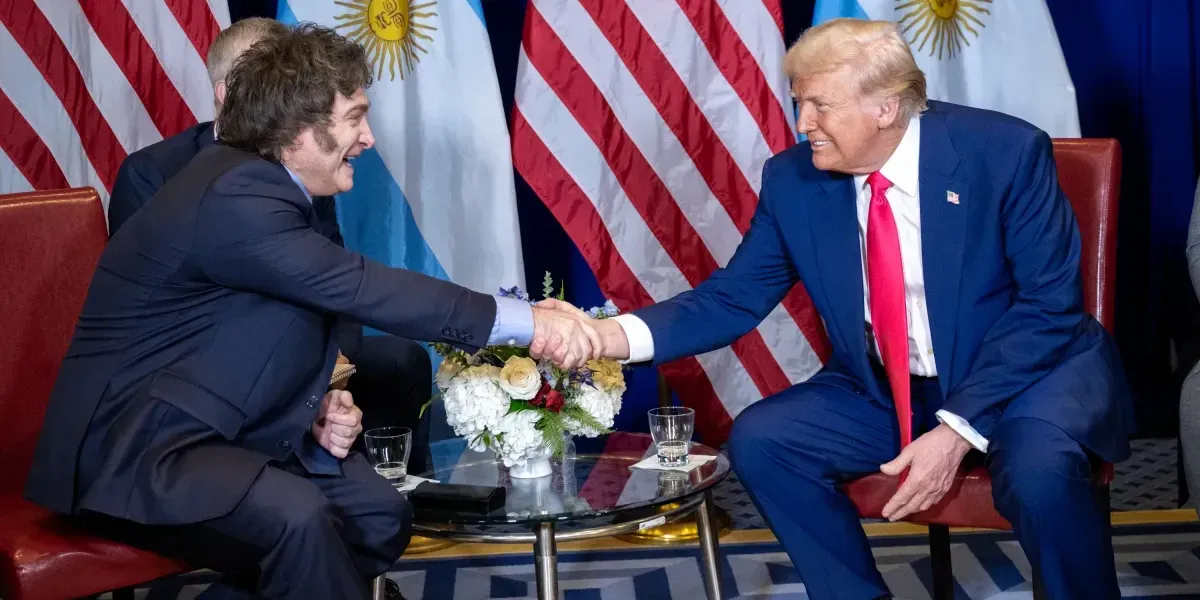
<p>U.S. Treasury Secretary Scott Bessent told reporters in Washington, D.C. that a $20 billion currency swap for Argentina announced the prior month “would be a total of $40 billion,” with funding coming from banks and sovereign wealth funds. The swap was described as a loan intended to support Argentina’s peso and help the country manage more than $300 billion in external debt.</p><p>The announcement came days before Argentina’s October 26 midterm elections and after President Donald Trump met Argentine President Javier Milei at the White House. During that meeting, Trump said U.S. generosity would depend on Milei remaining in power, stating that if Milei loses, the United States would not be generous and “we’re gone.” The peso has fallen nearly one-quarter against the U.S. dollar this year and has lost more than 99% of its value over the past decade. Domestic political criticism in the United States focused on the scale of financing and its implications for U.S. lending and priorities.</p>