Norms Impact
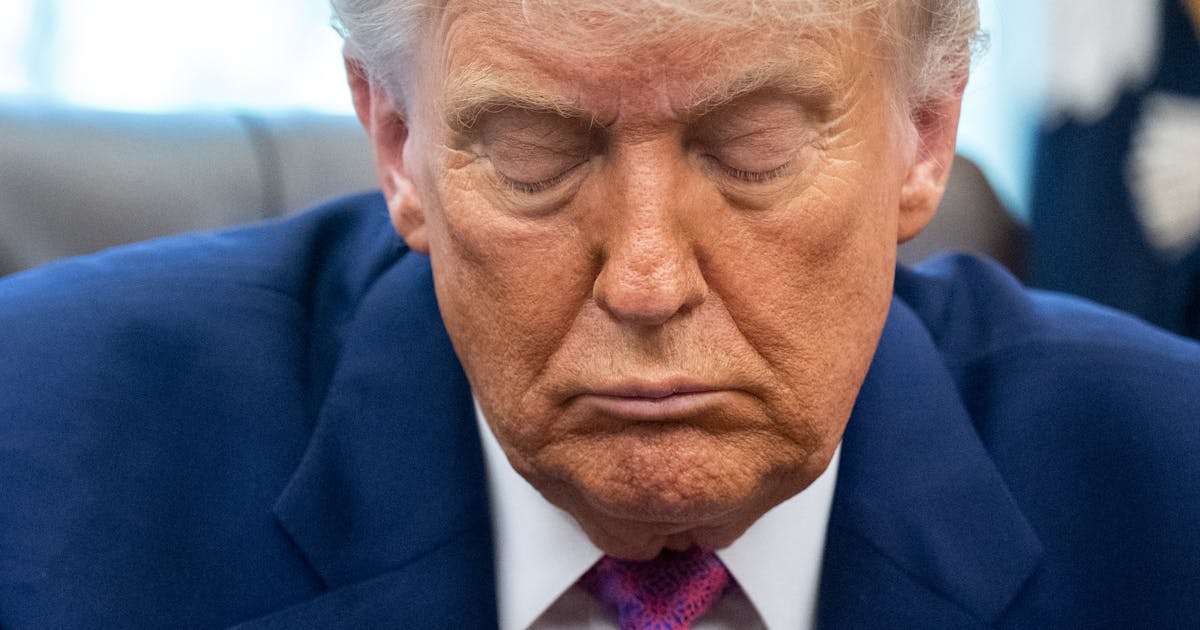
Trump, 79, Falls Asleep Again During Peace Agreement Signing
A president visibly dozing at a peace-signing inside a seized-and-rebranded U.S. institution turns diplomatic ceremony into evidence of executive incapacity and institutional capture.
Dec 4, 2025
⚖ Legal Exposure
Sources
Summary
Donald Trump, 79, fell asleep during a public ceremony marking the signing of a peace agreement between Rwanda and the Democratic Republic of the Congo. The presidency is being publicly defined by visible incapacity at formal diplomatic events held inside a federal peace institution the president reportedly took over and rebranded. The practical consequence is an executive branch that projects diminished seriousness and impaired stewardship during moments meant to signal U.S. credibility abroad.
Reality Check
A presidency that cannot reliably remain alert in public proceedings risks turning core state functions into performative drift, and that erosion lands on our rights when decision-making is reduced to optics over competence. The conduct described is not, on these facts, likely criminal under federal law; it presents no clear fit for statutes like 18 U.S.C. § 201 (bribery) or 18 U.S.C. § 371 (conspiracy). The deeper danger here is governance by personal branding and “questionable legality” in taking over a federal peace institution—normalizing executive misuse of public facilities for private image-making and weakening the institutional restraints that keep power accountable.
Legal Summary
The article’s main legal exposure is the allegation that Trump “took over” the U.S. Institute of Peace building with “questionable legality” and put his name on it, suggesting possible unauthorized use/conversion of government property or misuse of public office. The piece provides no transactional (money-for-official-action) structure, so this reads as an investigative/administrative red-flag scenario pending facts about the authority for the takeover and branding.
Legal Analysis
<h3>18 U.S.C. § 641 — Theft/Conversion of Government Property</h3><ul><li>The article alleges Trump "took over" the U.S. Institute of Peace building and "plastered his name on" it; if true, this could implicate unauthorized use/conversion of a federal facility or property interests for personal/branding purposes.</li><li>Key evidentiary gaps: the article does not state what legal authority, lease, executive order, or transfer instrument (if any) was used, nor whether any property was actually taken or converted within the meaning of the statute.</li></ul><h3>5 C.F.R. § 2635.702 / 5 U.S.C. § 7353 — Misuse of Public Office / Improper Use of Government Property</h3><ul><li>Using a government building for personal promotion ("plastered his name on")—if done in an official capacity—fits an ethics/administrative misuse-of-office theory even absent any payment or third-party benefit.</li><li>No facts are provided about expenditures, who directed the naming/branding, or whether it was authorized under applicable rules.</li></ul><h3>18 U.S.C. § 371 — Conspiracy (if coordinated unlawful takeover/use occurred)</h3><ul><li>If multiple officials coordinated to seize/control the building without lawful authority, a conspiracy theory could be investigated; the article, however, provides no detail on participants, acts, or legal instruments.</li></ul><b>Conclusion:</b> The described conduct primarily presents a serious investigative red flag and potential misuse-of-office/government property issue based on the alleged questionable takeover and personal branding of a federal building, not a money-access-official-action quid pro quo structural corruption pattern on the facts provided.</p>
Media
Detail
<p>On Thursday, President Donald Trump appeared to fall asleep during a ceremony at the U.S. Institute of Peace building commemorating the signing of a peace agreement between Rwanda and the Democratic Republic of the Congo.</p><p>Trump was seated at a table to the left of the podium while Rwandan President Paul Kagame spoke. During Kagame’s remarks, Trump was visibly closing his eyes with his hands clasped and his head drooping. He continued to doze after Kagame finished speaking and as DRC President Félix Tshisekedi approached and began remarks.</p><p>The leaders’ remarks lasted less than 15 minutes. The event occurred days after Trump fell asleep during a televised Cabinet meeting that lasted about two hours.</p><p>The setting was a building that Trump is described as having taken over with questionable legality and rebranded with his name.</p>