Norms Impact
Training for New ICE Agents Is ‘Deficient’ and ‘Broken,’ Whistle-Blower Says
Racing to expand ICE while cutting core training invites an armed federal workforce to operate in our cities without the instruction needed to honor constitutional limits and lawful orders.
Feb 23, 2026
⚖ Legal Exposure
Sources
Summary
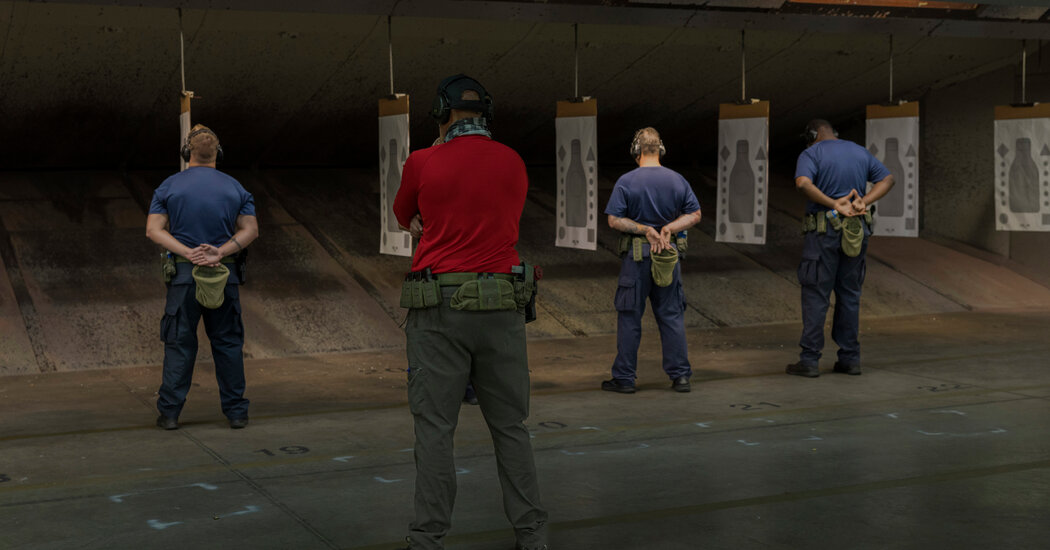
An ICE official who instructed new recruits resigned this month and plans to testify as a whistle-blower that ICE’s training program has been reduced and is “deficient, defective and broken.”
As the Trump administration accelerates a hiring surge and deploys immigration officers into major American cities, internal records released by Senate Democrats describe a pared-back curriculum and fewer training hours for new officers.
The practical consequence is a larger armed federal workforce operating in public with diminished preparation on constitutional limits, use-of-force judgment, and the agency’s legal authorities.
Reality Check
Building a larger armed federal force while stripping down use-of-force and legal-authority training is a direct threat to our civil liberties, because it predictably increases unconstitutional stops, searches, and violent encounters in public. The conduct described is not, on this record, a clear standalone federal crime; the legal exposure comes when undertrained officers commit rights-violating acts—triggering 18 U.S.C. § 242 (deprivation of rights under color of law) and, in extreme cases, 18 U.S.C. § 241 (conspiracy against rights). Even without a proven criminal scheme at the top, curtailing training as deployments expand violates core governance norms by tolerating foreseeable constitutional injury as an operational cost paid by the public.
Legal Summary
Exposure is Level 2 because the allegations describe procedural and operational irregularities (curtailed ICE training, reduced hours/removed modules) that could foreseeably lead to unlawful conduct by agents, and a whistleblower posture that can implicate prohibited personnel practice rules if retaliation occurs. The article does not allege bribery, personal enrichment, or a transactional quid-pro-quo, and it does not provide facts establishing willful criminal deprivation of rights by specific officials.
Legal Analysis
<h3>5 U.S.C. § 2302(b)(8) — Prohibited personnel practices (whistleblower retaliation)</h3><ul><li>Article describes a resigning ICE training official planning to speak as a whistle-blower about allegedly “deficient, defective and broken” training and curtailed curriculum; this is the type of disclosure that can trigger protected-status analysis.</li><li>No retaliation, threat, discipline, or adverse personnel action is alleged in the article; exposure is therefore contingent on subsequent or related management actions not described.</li></ul><h3>18 U.S.C. § 242 — Deprivation of rights under color of law (risk pathway, not charged on these facts)</h3><ul><li>Allegations that training removed/curtailed instruction on constitutional limits, legal authorities, and use-of-force simulation, coupled with shootings of U.S. citizens, describe conditions that could increase risk of unconstitutional searches/seizures or excessive force by agents acting under color of law.</li><li>The article does not allege a specific willful deprivation by identifiable officials, nor a particular incident tied to deliberate policy intent; elements are not met on the described facts, but the policy/curriculum changes raise investigative concerns.</li></ul><h3>18 U.S.C. § 371 — Conspiracy (not supported on these facts)</h3><ul><li>While internal records allegedly show curtailed training as the administration “races to expand the agency,” the article does not allege an agreement to violate law or an overt act aimed at unlawful deprivation, only procedural/training changes.</li></ul><b>Conclusion:</b> The article presents a serious investigative red flag about potentially unsafe or legally inadequate training and a likely protected whistleblower disclosure context, but it does not describe a money-for-action structure or facts sufficient to allege prosecutable public-corruption or criminal-rights violations as stated.</p>
Detail
<p>Ryan Schwank, a former ICE lawyer who worked as an instructor at the federal government’s law enforcement training academy, resigned this month and plans to speak on Monday as a whistle-blower alongside congressional Democrats in Washington. In prepared remarks, he says ICE’s training is “deficient, defective and broken” and warns that, without reform, ICE will graduate thousands of officers who do not know their constitutional duties, the limits of their authority, or how to recognize unlawful orders.</p><p>Senate Democrats released several dozen pages of internal ICE records that they say show the Trump administration curtailed basic training as it moved to expand the agency. The documents indicate new ICE officers are training for significantly fewer hours than before the hiring surge and suggest multiple classes were cut from the required syllabus, including “Use of Force Simulation Training” and courses on immigration law and ICE’s legal authorities.</p><p>A Homeland Security Department spokeswoman disputed that training hours were reduced and said officers receive firearms training, de-escalation tactics, and Fourth and Fifth Amendment instruction.</p>