Norms Impact
Democrats demand war powers vote after U.S. strikes Iran
Launching strikes on Iran without a congressional vote pushes war-making power deeper into the presidency, treating Congress’ constitutional authority as optional once force is already used.
Feb 28, 2026
⚖ Legal Exposure
Sources
Summary
President Trump ordered overnight U.S. strikes on Iran without congressional approval. The executive branch again asserted unilateral war-making authority while Congress is being asked to react after the fact through War Powers resolutions. The practical consequence is an expanded precedent for initiating hostilities without a vote, weakening Congress’ constitutional check on the use of force.
Reality Check
Unilateral initiation of hostilities by the president normalizes war by executive discretion, hollowing out Congress’ constitutional role before the public can see or debate the stakes.
When briefings replace authorization, oversight becomes a post-strike formality and the boundary between defense and undeclared war collapses. Over time, this precedent conditions our institutions to accept armed conflict as an executive tool, eroding separation of powers and the democratic requirement that war be publicly authorized.
Legal Summary
The article describes U.S. strikes on Iran conducted without prior congressional approval and resulting demands for an immediate War Powers vote, creating a substantial legal and oversight issue under the War Powers framework. There is no transactional alignment (money/access/personal benefit) or other facts indicating prosecutable public-corruption conduct; exposure is best characterized as a serious procedural/constitutional red flag pending fuller reporting and consultation details.
Legal Analysis
<h3>50 U.S.C. §§ 1541–1548 (War Powers Resolution) — use of forces absent congressional authorization</h3><ul><li>Alleged facts indicate the President ordered “overnight strikes on Iran” without Congress’ approval, prompting members to demand an immediate War Powers vote—suggesting a serious separation-of-powers and statutory compliance issue.</li><li>The article reflects congressional concern that the action constitutes “hostilities”/“acts of war” unauthorized by Congress; the described remedy sought is legislative (War Powers Resolution to block/curb hostilities).</li><li>Gap: The context does not provide facts about any War Powers reporting/consultation steps beyond a call briefing the House Speaker, so definitive statutory noncompliance cannot be fully assessed on this record.</li></ul><h3>18 U.S.C. § 371 (Conspiracy) / 18 U.S.C. § 242 (Deprivation of rights) — not supported on stated facts</h3><ul><li>No allegations of agreement with private actors, bribery, kickbacks, or personal enrichment; no facts suggesting targeted unlawful deprivation of constitutional rights.</li><li>The dispute presented is primarily constitutional/statutory process (authorization/oversight), not a transactional corruption scheme.</li></ul><b>Conclusion:</b> The described conduct presents a serious investigative and oversight red flag centered on War Powers/authorization procedure rather than a money-access-official-act corruption pattern; the record supports heightened scrutiny but not a fully charged criminal theory on these facts alone.</p>
Media
Detail
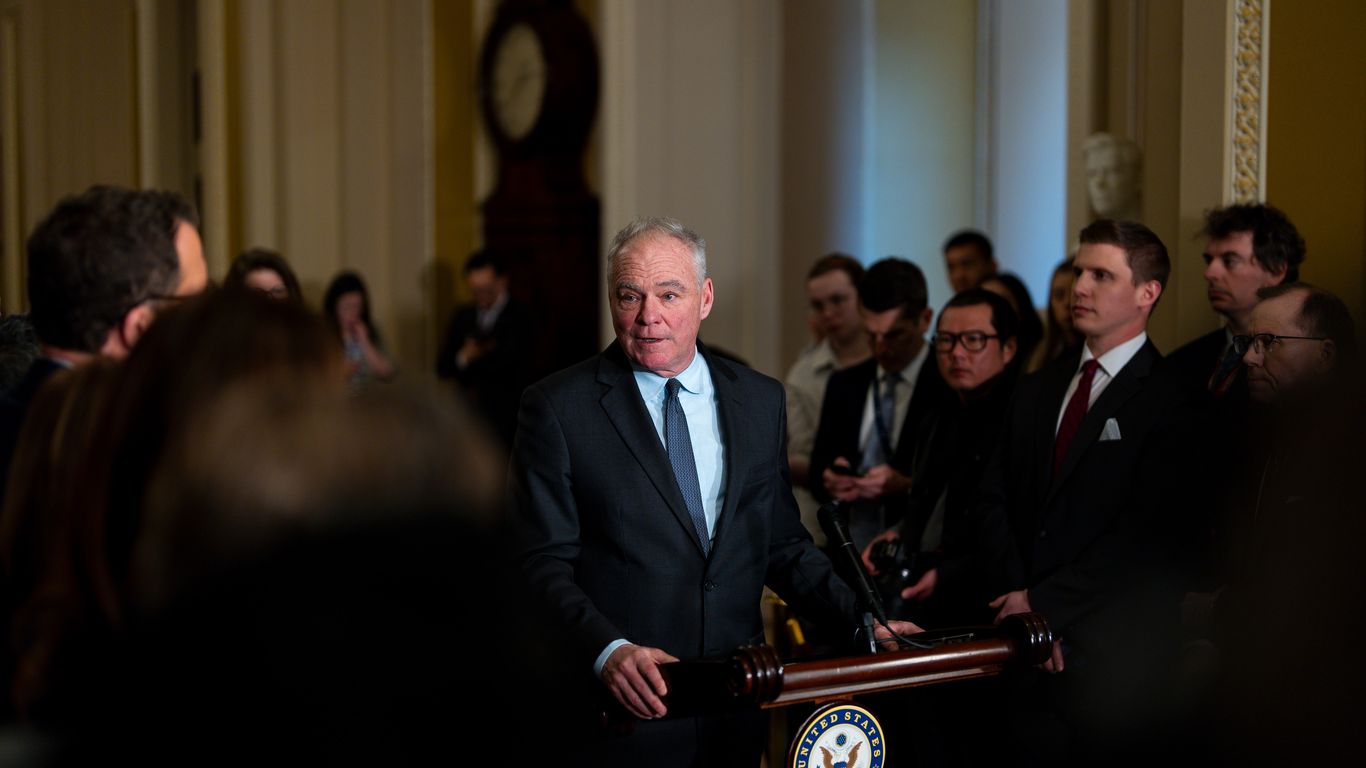
<p>Democrats urged Congress on Saturday to vote quickly on War Powers resolutions after the Trump administration launched overnight strikes on Iran without prior approval from Congress.</p><p>Sen. Tim Kaine (D-Va.) called for the Senate to return to session and vote on his War Powers Resolution to block the use of U.S. forces in hostilities against Iran. Secretary of State Marco Rubio briefed House Speaker Mike Johnson (R-La.) before the strikes. Rep. Jim Himes (D-Conn.), the top Democrat on the House Intelligence Committee, criticized the decision, while Sen. Lindsey Graham (R-S.C.) praised the operation. Rep. Thomas Massie (R-Ky.) described the strikes as acts of war unauthorized by Congress.</p><p>Senate Majority Leader John Thune (R-S.D.) said he expects administration officials to brief all senators on the strikes. A prior war powers resolution aimed at curbing an administration operation in Venezuela failed in January in both the House and Senate.</p>