Norms Impact
ICE agents said to have posed as police, a tactic some fear could erode trust in real cops
Federal agents allegedly impersonated police to enter a campus residence, normalizing deception that blurs law-enforcement identity and undermines public trust in emergency authority.
Feb 28, 2026
⚖ Legal Exposure
Sources
Summary
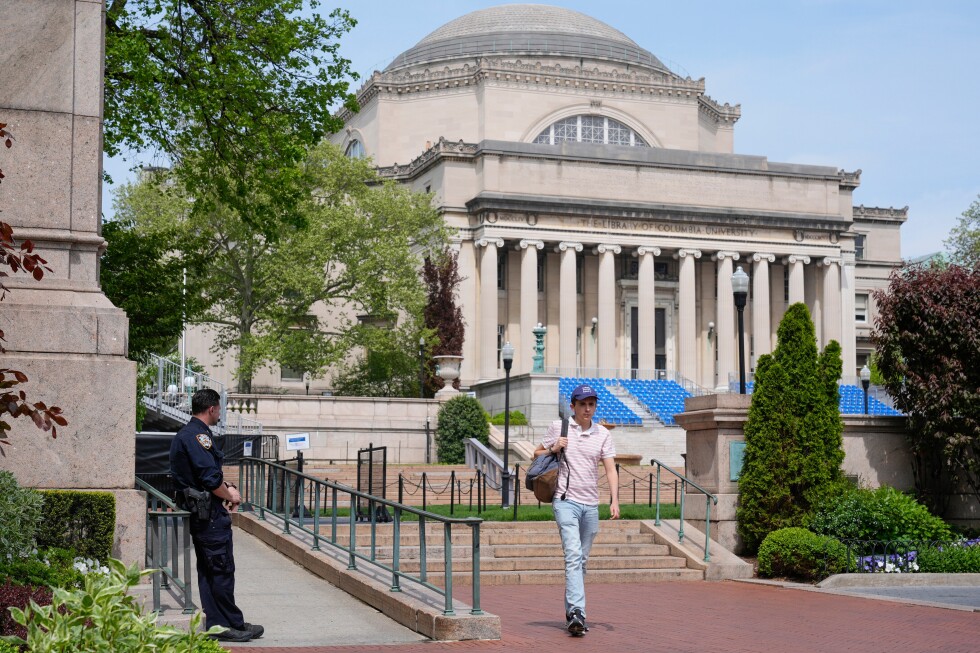
ICE agents gained entry to a Columbia University residential building by posing as police searching for a missing 5-year-old and then entered an international student’s apartment. The episode reflects federal immigration enforcement using impersonation tactics that bypass ordinary transparency and local-law-enforcement boundaries. The practical consequence is a corrosive precedent that can weaken public trust in legitimate police and campus safety responses during emergencies.
Reality Check
When federal agents normalize impersonating police to gain entry, we erode a core guardrail: the public’s ability to trust that a uniformed claim of authority is real and accountable. That precedent makes it easier for government power to operate through deception rather than transparent legal process, weakening due-process expectations in routine enforcement.
Over time, this conduct conditions communities and institutions to doubt legitimate police and safety officers, degrading emergency response and compliance with lawful orders. The long-term damage is institutional: blurred authority lines and diminished trust become a standing advantage for coercive power and a liability for democratic policing.
Legal Summary
The article describes ICE agents allegedly posing as police and using a “missing child” flyer to obtain entry, raising potential impersonation and unlawful-entry/rights-deprivation concerns that warrant investigation. The key legal exposure hinges on whether the deception resulted in unlawful access or seizure and what legal process (warrant/consent) existed, which the article does not provide. This is an investigative red-flag scenario rather than a money-for-official-action corruption pattern.
Legal Analysis
<h3>18 U.S.C. § 912 — Impersonation of a federal officer/employee</h3><ul><li>The article alleges ICE agents gained entry by “posing as police,” presenting a “missing child” flyer to a campus safety officer; this could constitute falsely assuming the identity of an officer to obtain a thing of value (access/entry).</li><li>Key gap: the conduct described is posing as local police, not explicitly as a “federal officer”; § 912 may not fit if they did not claim federal status.</li></ul><h3>New York Penal Law § 190.25 — Criminal impersonation (state offense)</h3><ul><li>Alleged tactic: representing themselves as “police” to induce reliance by campus security and obtain entry into a residential building.</li><li>Elements potentially implicated include impersonation plus an act in such assumed character; however, federal agents’ authority and potential preemption/authorization issues would require fact development.</li></ul><h3>18 U.S.C. § 242 — Deprivation of rights under color of law</h3><ul><li>The operation involved entry into a student’s apartment after gaining access via alleged deception; if this led to an unlawful entry/seizure, it could implicate constitutional rights (e.g., Fourth Amendment) under color of law.</li><li>Key gaps: the article does not state whether there was a warrant, consent, exigency, or any specific deprivation beyond the deceptive entry method.</li></ul><b>Conclusion:</b> The described conduct presents serious investigative red flags around deceptive impersonation tactics used to gain building/apartment access, but the article lacks warrant/consent details and clear statutory fit for a definitive criminal charge, making this more than mere political irregularity but not yet a fully chargeable structural corruption case.</p>
Detail
<p>On Thursday at 6:32 a.m., a 911 call reported two “suspicious” men in dark clothing inside a Columbia University residential building in New York City.</p><p>NYPD officers responding encountered U.S. Immigration and Customs Enforcement agents conducting an operation, according to accounts from the university and police. Columbia said the agents gained access by posing as police searching for a missing 5-year-old, presenting a flyer about the purported “missing child” to a campus safety officer.</p><p>Columbia said the agents used that access to reach the apartment of Ellie Aghayeva, an international student from Azerbaijan. Immigration officials asserted she overstayed her visa. An NYPD spokesperson said responding officers arrived after the men had entered her apartment, confirmed they were federal agents, and then left the building.</p>