Norms Impact
Hegseth says Iran won’t be a ‘politically correct’ war as he lays out US objectives
A major war operation was launched and defended while the Pentagon withheld core facts from public scrutiny, normalizing executive war-making without clear, answerable limits.
Mar 2, 2026
Sources
Summary
Defense Secretary Pete Hegseth defended President Donald Trump’s strikes on Iran as “Operation Epic Fury,” which triggered an ongoing exchange of fire and has already killed four U.S. service members. In a press conference, Hegseth asserted expansive presidential discretion and declined to answer basic questions about troop presence, scale, objectives, or timeline while framing media inquiry as adversarial. The practical consequence is a major use of force presented with limited public accountability, leaving Congress and the public without clear parameters for duration, escalation, or end-state.
Reality Check
When the executive branch treats basic questions about scope, duration, and objectives as illegitimate, democratic control over war collapses into discretionary power. Refusing to define boundaries while invoking sweeping presidential “latitude” conditions the public to accept open-ended escalation without measurable standards for success or an accountable end-state. This precedent weakens separation-of-powers guardrails by shifting war decisions toward unilateral execution and away from sustained, verifiable public oversight. Over time, normalized secrecy and contempt for scrutiny make it easier to expand conflicts without a durable mandate or enforceable limits.
Detail
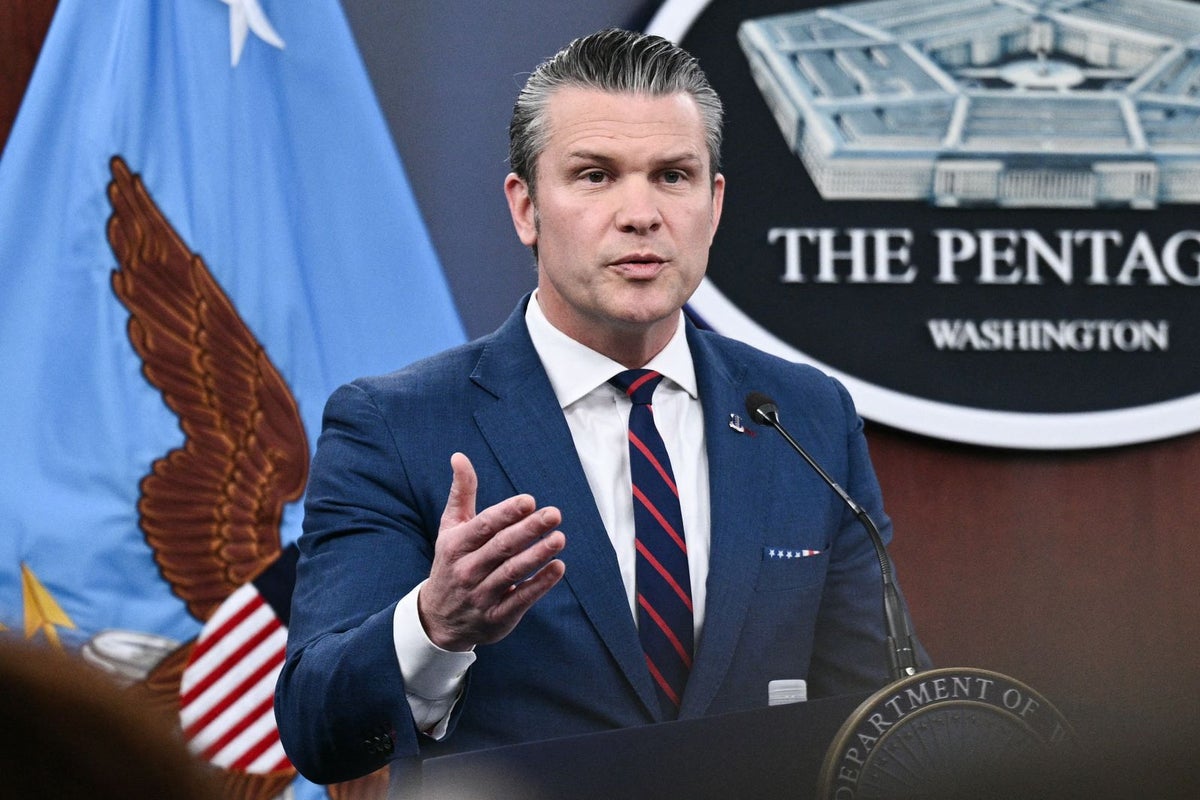
<p>At a Monday morning press conference, Defense Secretary Pete Hegseth defended President Donald Trump’s strikes on Iran and rejected warnings that the conflict could become an “endless war.” Hegseth said the operation would prevent Iran from developing a nuclear weapon and harming Americans, while acknowledging the operation has already killed four U.S. service members.</p><p>Hegseth criticized media questions about the goal, the number of U.S. troops involved, and anticipated end dates, declining to provide specifics. Asked whether U.S. troops were on the ground in Iran, he refused to answer directly, arguing that disclosing such information would inform “the enemy.”</p><p>Joint Chiefs of Staff Chairman Gen. Dan Caine provided operational details, stating Trump gave final approval around 3:30 p.m. Friday with an order to proceed. Caine said thousands of U.S. troops across branches supported the operation, including more than 100 aircraft launched from land, sea, and tankers. He said strikes began at 9:45 a.m. Tehran time and warned additional U.S. casualties were likely.</p><p>Officials said the stated objective was to eliminate Iran’s ability to build a nuclear weapon, and the operation also resulted in the death of Iran’s Supreme Leader, Ayatollah Ali Khamenei. Hegseth encouraged Iranians to seize the moment for regime change while saying it was not a “regime change war.”</p>