Trump Team Scrambles Over Rubio’s Admission About Israel and Iran
When war rationales change overnight and senior officials contradict each other in public, democratic accountability for the use of force collapses into message control.
Mar 4, 2026
Sources
Summary
Secretary of State Marco Rubio publicly said the United States entered the Iran war based on intelligence that Israel was going to strike Iran and that U.S. action was meant to preempt retaliation on American forces. Within a day, President Donald Trump rejected that rationale and Rubio contested his own prior remarks while the administration sought to reframe the justification. The result is an official record of shifting war rationales as U.S. casualties mount and the conflict expands across multiple countries.
Reality Check
Allowing the executive branch to present shifting justifications for military action weakens Congress’s and the public’s ability to evaluate the lawful basis, necessity, and scope of war. When top officials publicly reverse or deny their own statements under pressure, the government trains the country to accept war-making as a branding exercise rather than a constitutional decision. Over time, that precedent concentrates power inside the White House and erodes the expectation that lethal force requires stable, testable claims that can be scrutinized before lives are committed.
Media
Detail
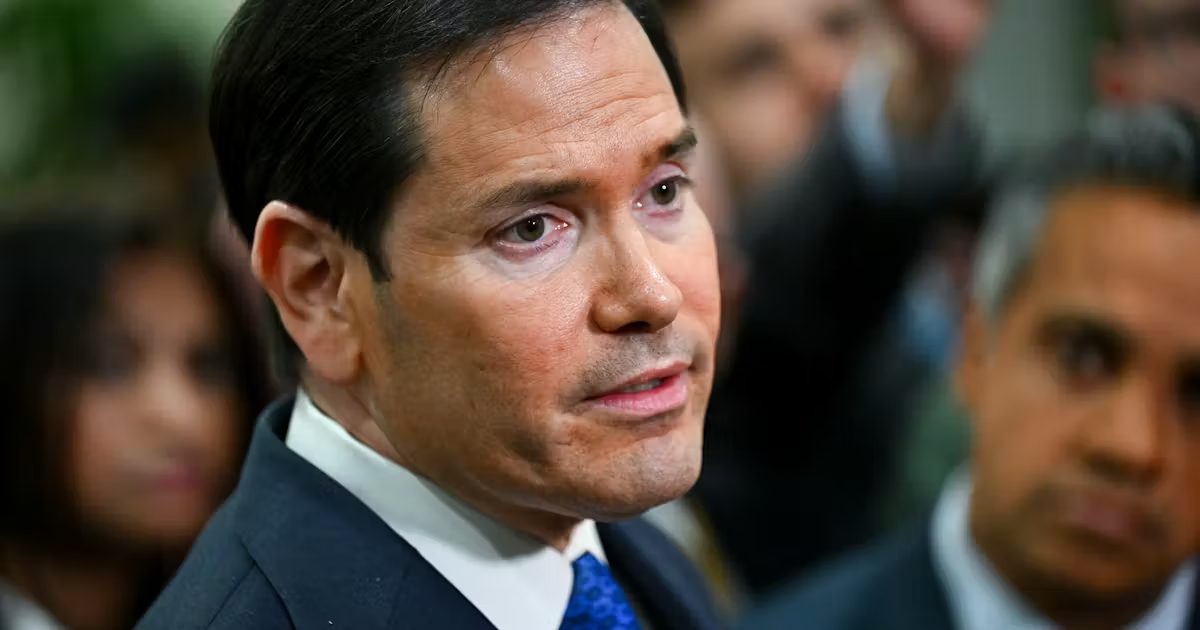
<p>On Monday on Capitol Hill, Secretary of State Marco Rubio said U.S. involvement in the Iran war followed intelligence indicating Israel was going to strike Iran and that Iran would retaliate against U.S. interests, prompting what he described as a preemptive U.S. strike to reduce American casualties. On Tuesday at the White House, President Donald Trump rejected the idea that Israel pushed U.S. action, saying he believed Iran would attack first and that he “might have forced their hand.”</p><p>Hours later, Rubio disputed a reporter’s characterization of his Monday remarks, calling it “false,” before stating the White House “knew the attack was going to happen anyway.” U.N. Ambassador Mike Waltz told CNN that Rubio’s comments were being taken out of context and said Rubio had been answering a narrow operational question.</p><p>The context described includes six U.S. soldiers killed and eighteen seriously injured, more than twenty Iranian officials killed including Ayatollah Ali Khamenei, and more than 1,000 Iranian civilians killed, including 176 children. The conflict has expanded to involve more than a dozen countries and has disrupted global markets and oil production.</p>