Trump voters who believed conspiracy theories were the most likely to justify the Jan. 6 riots
When election-fraud conspiracies are fed to politically mobilized groups, they can harden into moral permission slips for attacks meant to stop lawful democratic outcomes.
Mar 5, 2026
Sources
Summary
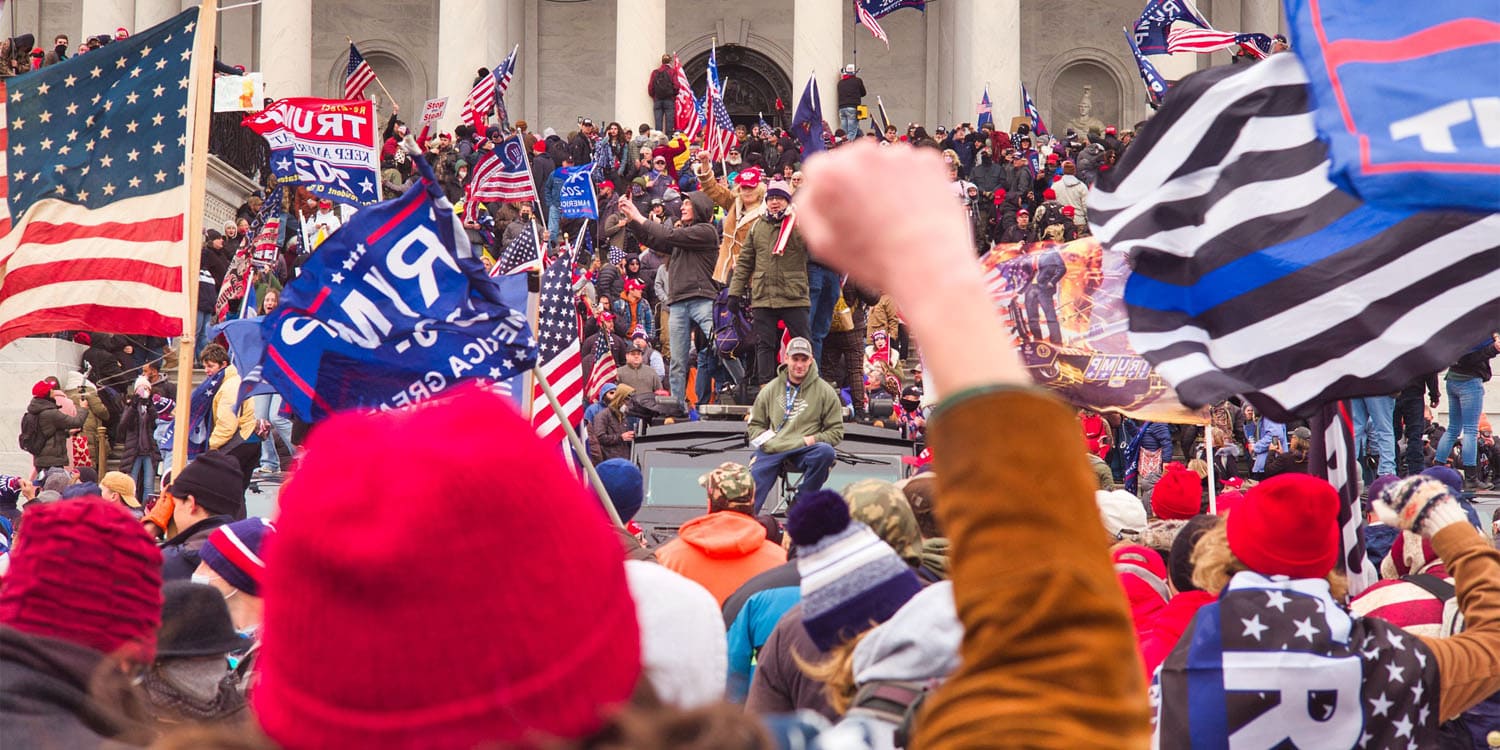
A peer-reviewed study found that Trump voters who combined high political activity with strong conspiracy beliefs were most likely to justify violence connected to the January 6 attack on the U.S. Capitol. The evidence maps how unverified election-fraud narratives can become a mobilizing force inside already engaged political constituencies. The practical consequence is a measurable pathway by which conspiracy messaging can normalize acceptance of anti-democratic violence among politically active citizens.
Reality Check
A democracy cannot function when citizens are primed to treat violent obstruction of lawful electoral certification as acceptable political participation. Normalizing conspiracy narratives inside mobilized factions weakens the shared factual baseline that elections and peaceful transfers of power require. Over time, that erosion turns routine civic engagement into a channel for justifying coercion against institutions that count votes, certify results, and enforce the law.
Detail
<p>Researchers published findings in <strong>Social Psychological and Personality Science</strong> examining when conspiracy beliefs predict support for political violence, using January 6, 2021 as the focal case. Study 1 surveyed 372 U.S. citizens who voted for Donald Trump in 2020, measuring general conspiracy mentality, belief that the 2020 election was rigged to favor Democrats, past-year political participation (e.g., rally attendance, contacting politicians), and justification of Capitol-attack violence (including whether it was acceptable for rioters to arm themselves). Analyses controlled for age, gender, education, and political orientation; both political participation and conspiracy beliefs predicted justification, with the highest justification among those high on both.</p><p>Study 2 recruited 751 additional Trump 2020 voters. Participants reported baseline participation, then were randomly assigned to read a fabricated blog post either supporting or denying widespread election fraud, completed a comprehension check, and then reported current fraud beliefs and views on the Capitol attack. Exposure slightly shifted fraud beliefs, and an interaction showed the participation–violence-justification link was stronger among those exposed to the pro-fraud text.</p>