Norms Impact
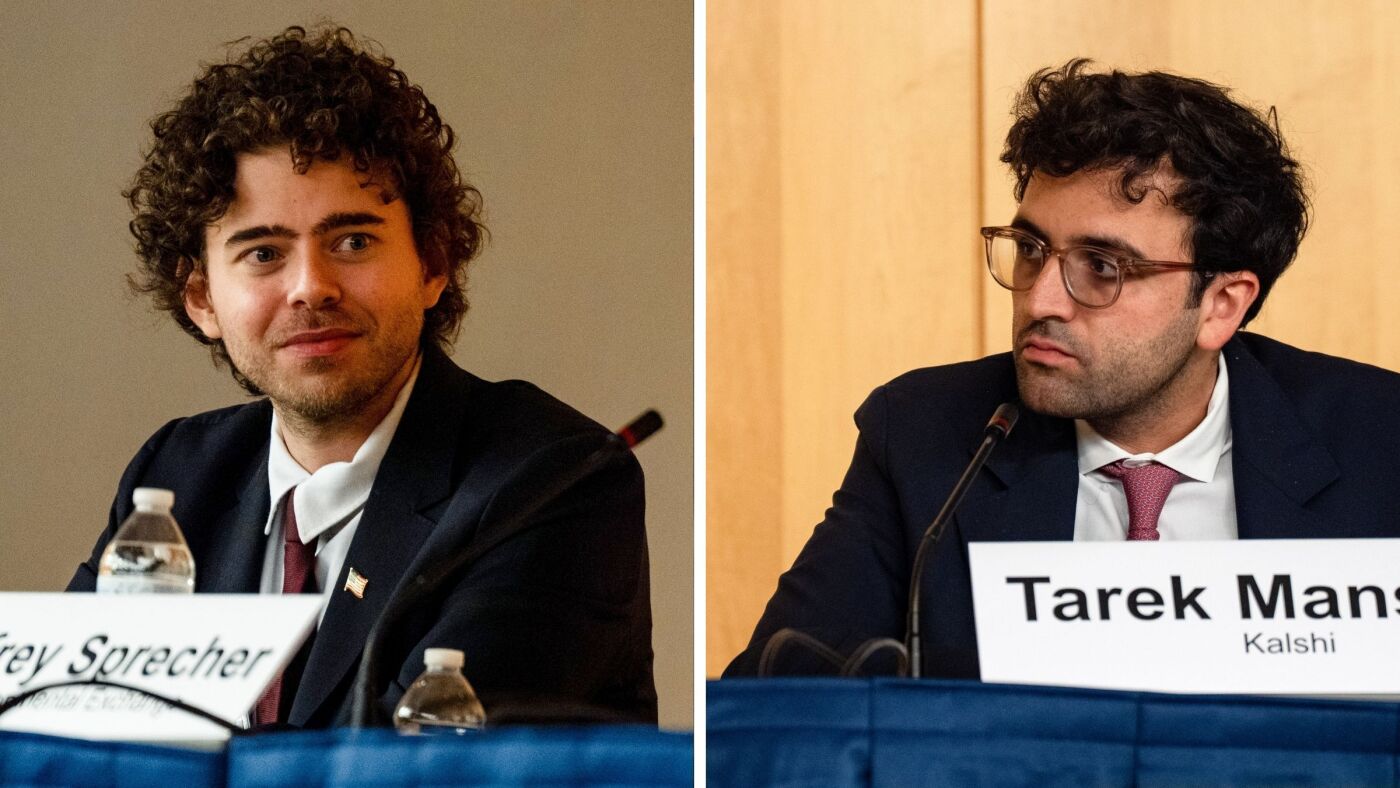
2 young billionaires are behind the prediction market boom. They hate each other
Federal regulators are signaling self-policing for prediction markets even as presidential-family influence spans rival platforms, weakening anti-corruption guardrails and normalizing conflicted governance.
Mar 6, 2026
⚖ Legal Exposure
Sources
Summary
Two rival executives, Kalshi CEO Tarek Mansour and Polymarket CEO Shayne Coplan, are driving a boom in prediction markets while publicly and operationally escalating a feud over legitimacy and scale. Federal posture has shifted as the Commodity Futures Trading Commission chairman has affirmed prediction markets should flourish and largely police themselves, while the Trump administration cleared the way for Polymarket to open a U.S.-based exchange after dropping a prior probe. The practical consequence is rapid expansion of high-stakes political and geopolitical wagering under contested oversight, with industry power consolidating around firms aligned with presidential family influence.
Reality Check
Allowing a fast-growing, politically sensitive financial wagering industry to “largely police” itself while presidential-family influence touches competing market leaders weakens our basic anti-corruption expectations for federal governance. When enforcement and regulatory access appear to track proximity to power, the public is trained to accept a two-tier system where legitimacy is negotiated rather than earned through consistent rules. This is prosecutable corruption risk territory in practice: normalization of conflicted influence and selective clearance corrodes rule-of-law discipline and invites future administrations to trade regulatory outcomes for loyalty. Over time, that precedent undermines regulatory independence and turns market oversight into a political asset rather than a public duty.
Legal Summary
The article supports Level 2 exposure because it describes Polymarket as operating offshore and unregulated while being accessible to U.S. users via VPN, plus an FBI raid tied to a money-laundering investigation (later dropped). It also notes a politically connected advisor/investor (Donald Trump Jr.) and subsequent administrative “cleared the way” language, but without facts showing a payment-to-official-action exchange, the corruption theory is an investigative red flag rather than a chargeable quid pro quo on this record.
Legal Analysis
<h3>7 U.S.C. § 6c & CFTC regulatory framework (prohibited commodity event contracts / unlawful off-exchange derivatives)</h3><ul><li>Article describes Polymarket as an “unregulated, offshore prediction market,” accessible in the U.S. via VPN, and historically operating “without the blessing of any regulators,” which is a structural red flag for CFTC jurisdiction and unlawful event-contract offerings if made available to U.S. persons.</li><li>Kalshi is described as CFTC-regulated and having negotiated with regulators for years; by contrast, Polymarket’s conduct (offshore access + U.S. reach) raises compliance exposure even though the piece does not detail specific CFTC charges or orders.</li><li>Gap: The article does not specify the contract structure, the legal classification of each market, or any final CFTC enforcement findings.</li></ul><h3>18 U.S.C. § 1956 (money laundering) / federal financial crime exposure</h3><ul><li>The FBI raid of Polymarket CEO Shayne Coplan’s home is described as part of a “Biden-era money-laundering investigation,” indicating serious investigative scrutiny of financial flows.</li><li>Gap: The article does not allege specific laundering transactions, proceeds, predicate offenses, or intent; it also states “Trump has since dropped the probe,” suggesting no current prosecution on the stated record.</li></ul><h3>State gambling law exposure (general)</h3><ul><li>The article notes states suing Kalshi for allegedly violating state gambling laws and describes federal posture shifting toward allowing prediction markets to “largely police themselves,” indicating ongoing legal friction in the sector.</li><li>Gap: No specific state statutes, venues, or fact patterns are provided as to Polymarket’s U.S. operations beyond VPN accessibility.</li></ul><h3>Public corruption / quid pro quo statutes (18 U.S.C. §§ 201, 1346, 666)</h3><ul><li>The article states Donald Trump Jr. advises both companies and that his venture capital firm invested “millions of dollars” into Polymarket, alongside a statement that the “Trump administration just months ago cleared the way for Polymarket to open a U.S.-based exchange.”</li><li>However, the article provides no allegation of payments to a public official, no identified official act tied to a payer, and no described agreement or intermediated exchange linking the investment/advisory role to governmental action.</li></ul><b>Conclusion:</b> The described conduct presents serious investigative red flags centered on regulatory compliance and prior federal financial-crime scrutiny, but the record in the article does not supply the transactional elements needed to charge a prosecutable public-corruption quid pro quo; it reads primarily as regulatory/industry irregularity rather than demonstrated bribery.
Media
Detail
<p>Kalshi CEO Tarek Mansour has publicly differentiated Kalshi from Polymarket, describing an “unregulated, offshore prediction market” that users confuse with Kalshi. After the FBI raided Polymarket CEO Shayne Coplan’s home in November 2024, Mansour said in December that Kalshi staffers coordinated with influencers to circulate memes mocking Coplan.</p><p>Both firms have pending U.S. Patent and Trademark Office applications for “the world’s largest prediction market,” and both have announced competing media partnerships and promotional efforts, including temporary grocery giveaways in New York City.</p><p>Kalshi pursued federal regulation and operates under Commodity Futures Trading Commission oversight. Polymarket launched without regulator approval and operates its most popular exchange overseas, accessible in the U.S. via VPN. The FBI raid was tied to a Biden-era money-laundering investigation that was later dropped under President Trump, and the Trump administration “cleared the way” for Polymarket to open a U.S.-based exchange.</p><p>CFTC Chairman Michael Selig has said prediction markets should largely police themselves and has vowed to defend Kalshi in court against states suing under state gambling laws. Donald Trump Jr. advises both companies, and his firm 1789 Capital has invested in Polymarket.</p>