Norms Impact
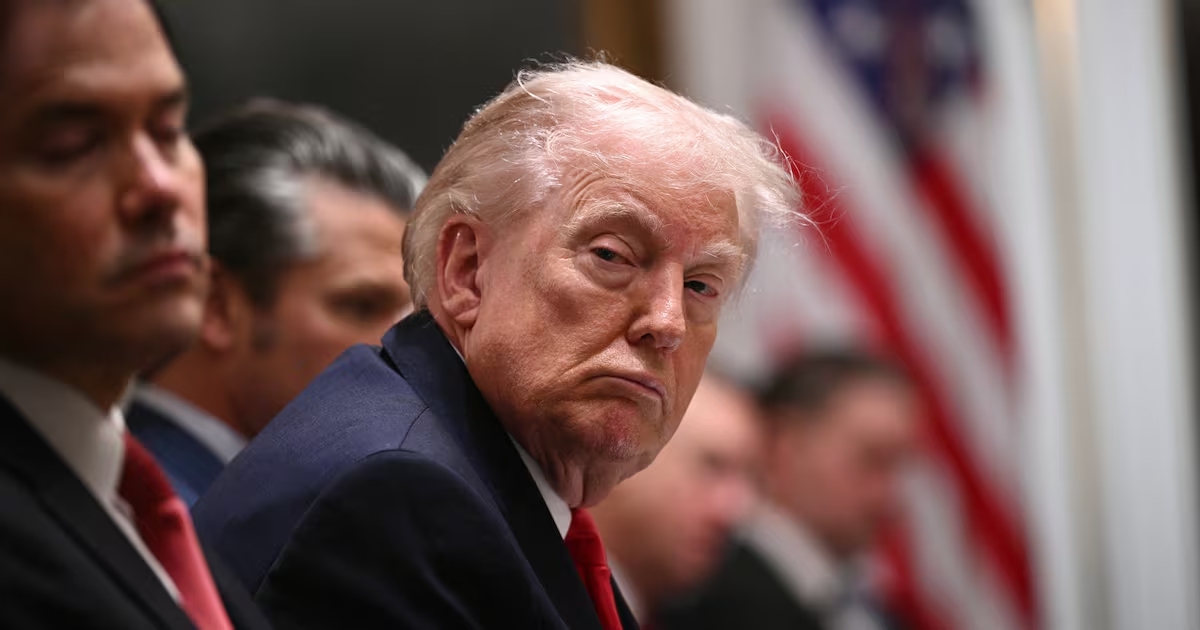
Trump, 79, Admits He Was Falling Asleep During War Planning
A president admitting he slept through war-planning normalizes a commander-in-chief standard where lethal executive power operates without basic attentiveness or accountability.
Mar 12, 2026
Sources
Summary
President Donald Trump said he fell asleep during a meeting where officials and generals discussed a codename for U.S. attacks on Iran. The presidency’s war-planning function is being described as proceeding amid visible lapses in attentiveness by the commander in chief. Our practical consequence is a national-security decision pipeline that can be shaped by inattention, spectacle, and arbitrary preference while U.S. forces and civilians bear lethal costs.
Reality Check
The democratic danger is the normalization of life-and-death executive war powers being exercised without a minimum standard of competence, attentiveness, and transparent accountability. When war planning can be publicly framed as something the president dozes through, our system drifts toward personality rule—where arbitrary preference replaces disciplined process and documented judgment.
This precedent weakens civilian control by hollowing out its core premise: informed decision-making by an accountable elected leader. Over time, it conditions the public to accept degraded stewardship of the military and makes catastrophic error more likely without any clear institutional trigger for oversight or restraint.
Media
Detail
<p>At a rally Wednesday in Kentucky, President Donald Trump, 79, told supporters he was “falling asleep” during a planning meeting about naming the U.S. attack on Iran. He described being presented with about 20 potential codenames by officials and generals and said he selected “Epic Fury” after seeing it on the list.</p><p>Trump announced “major combat operations” against Iran beginning Feb. 28, carried out with joint U.S.-Israeli airstrikes. Iran’s supreme leader, Ayatollah Ali Khamenei, and dozens of top officials were killed in the opening strikes. The context states more than 1,200 people have been killed in Iran since the start of operations, including dozens of children at an elementary school reportedly struck by a U.S. Tomahawk missile.</p><p>The context also states Iran retaliated with strikes across the region, killing seven U.S. service members and wounding more than 140. A Pentagon briefing to Congress cited a first-week U.S. cost of $11.3 billion.</p>