Conservative Spin
Mojtaba Khamenei regime executes champion wrestler as Iran intensifies brutal crackdown during war
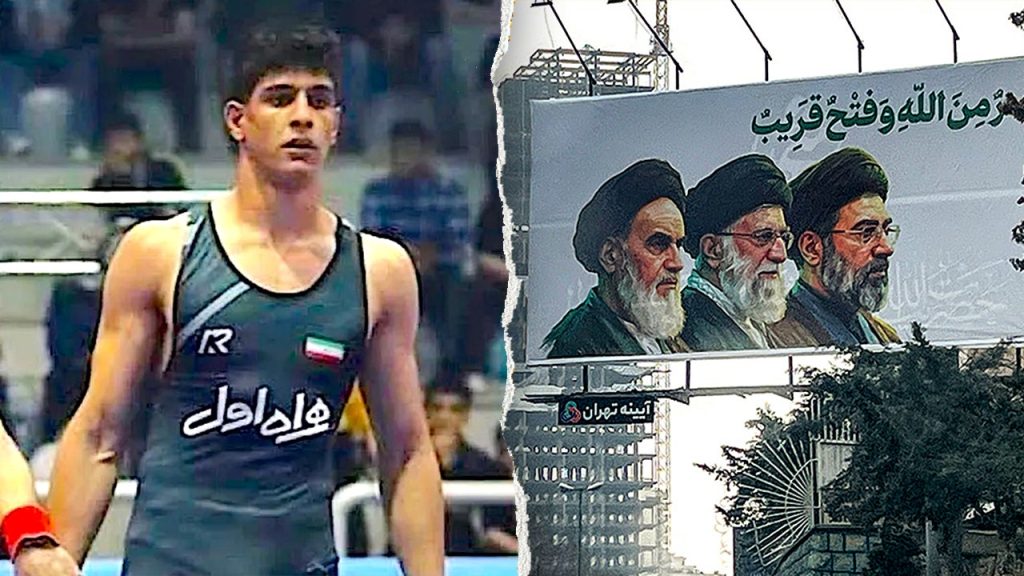
Source
Fox News
Mojtaba Khamenei regime executes champion wrestler as Iran intensifies brutal crackdown during war
Claim
Iran executed a teen wrestler purely for protesting, proving the Mojtaba Khamenei regime is waging a war-time terror campaign that demands a sweeping global sports boycott.
Facts
Fox News reports Iran executed 19-year-old wrestler Saleh Mohammadi on Thursday, March 19, 2026, in Qom.
The article says the U.S. State Department publicly urged Iran to halt the execution before it occurred.
Iran International is cited saying the judiciary-linked Mizan news agency reported Mohammadi and two others were executed after being accused of killing two police officers during protests.
Human-rights activists quoted in the piece described the case as politically motivated and criticized the IOC and United World Wrestling for not intervening more forcefully.
The story reports Mohammadi won a bronze medal in September 2024 at the Saytiyev International Cup in Russia.
Spin
The story’s central move is to present a disputed, politically charged legal case as an unambiguous morality play: a “champion wrestler” executed solely for dissent by a newly installed “Mojtaba Khamenei regime,” with the conclusion (boycott and bans) implied as the only sane response.
It leans on emotionally loaded language (“barbaric,” “political murder,” “sham trial”) and stacks activist quotes, social-media posts, and past-reference examples (e.g., other athlete cases) to create a pattern-of-evil narrative, while giving the government’s stated accusations only a brief, late, and mostly dismissive mention.
That combination steers readers away from the narrower, verifiable core—an execution reported by multiple outlets amid competing claims about the underlying charges—and toward a broader, pre-selected political takeaway about regime illegitimacy and international sports punishment, without doing the harder work of evidentiary separation.
Active Tactic Breakdowns
Misleading Framing
7/10
The headline and structure treat the event as a clean “regime executes protester-athlete” story, even though the piece itself later cites a judiciary-linked report alleging the men killed two police officers. By foregrounding “protesting” and backgrounding the state’s stated charges, it narrows the reader’s interpretation before the competing account appears.
Omitted Context
6/10
The article asserts or relays claims of torture, forced confessions, lack of counsel, and no appeal, but doesn’t provide verifiable case documentation (indictment details, trial record, defense account, procedural timeline) that would let readers distinguish confirmed procedural abuses from allegations. It also doesn’t clarify what is independently confirmed versus what comes from activists’ reporting.
A sports story is used as a launchpad for a sweeping political program—ban Iran from international sport, punish the regime broadly—built from a single high-salience case and a small set of aligned voices. The presentation amplifies one storyline into an implied representative snapshot of the entire system.
Emotional Loading
8/10
The copy repeatedly uses moral-emotive descriptors and certainty language (“barbaric,” “political murder,” “sham trials,” “targeted killing”) delivered largely through advocates and commentators. That word choice does persuasive work that the evidentiary detail in the story doesn’t fully cash out.
Narrative Stacking
7/10
It chains together the execution, references to prior athlete executions, claims about the regime’s typical propaganda (Israel/U.S. blame), and a broader “crackdown during war” theme to build a single villain arc. The accumulated associations make the conclusion feel inevitable even when the case-specific facts remain contested.
What's Missing
Clear separation of what’s confirmed by primary or on-the-record judicial documentation versus what’s alleged by activists, dissidents, or social-media posts. Readers aren’t given enough case-level detail (charges, evidence, counsel status, appeal posture, timeline) to evaluate the claims.
Any meaningful attempt to reconcile conflicting accounts: the story cites a judiciary-linked report alleging the killing of police officers, but doesn’t explain what that allegation is based on, how it was adjudicated, or what independent reporting says about it.
Reality Check
Even accepting that Iran’s judiciary is often politicized, the article doesn’t establish—on its own evidence—that the execution was “purely” for protest rather than tied to the state’s claimed violent-crime allegations. It mainly uses aligned advocates to assert the most damning interpretation.
The solid takeaway is narrower: multiple reports describe an execution of a young athlete amid protests and intense political pressure, alongside competing claims about the underlying case. The bigger leap—this single case decisively proves a regime-wide “war-time terror campaign” that mandates blanket sports bans—is an argument the piece advances more through narrative and emotion than documented proof.