Conservative Spin
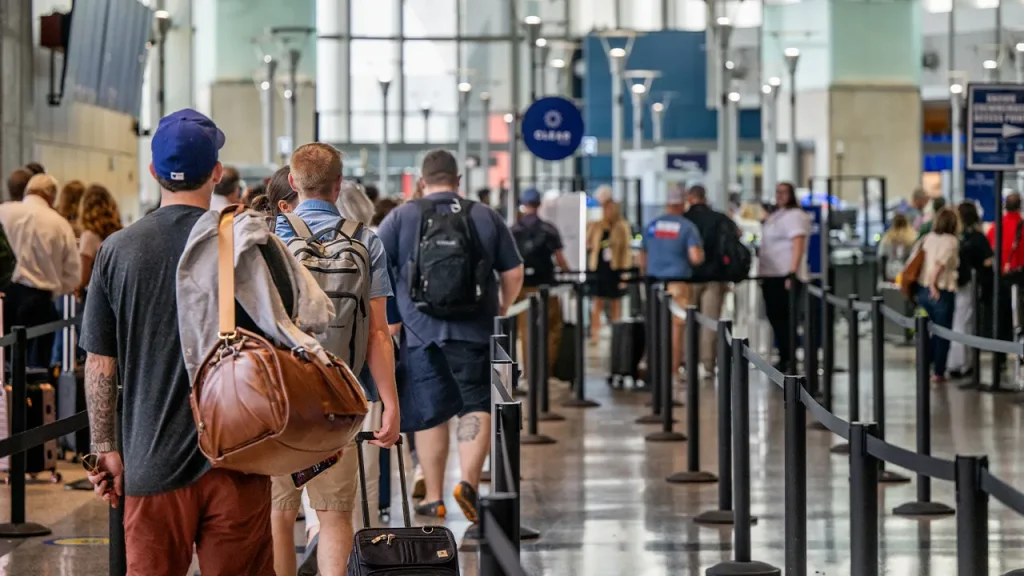
EXCLUSIVE: House Republicans to hold hearing on DHS shutdown risks amid travel surge
Source
Fox News Digital
EXCLUSIVE: House Republicans to hold hearing on DHS shutdown risks amid travel surge
Claim
Democrats are prolonging a dangerous DHS shutdown for political reasons, undermining national security and airport screening during a major travel surge.
Facts
The House Homeland Security Committee plans to hold a hearing next Wednesday on the DHS funding lapse and its operational and personnel impacts.
Officials from TSA, FEMA, the U.S. Coast Guard, and CISA are expected to testify.
The article says the partial shutdown has lasted 34 days and that TSA employees are working without pay.
It reports that more than 50,000 TSA employees have not received salaries, that more than 360 resigned during the shutdown, and that TSA said roughly 10% did not report to work on Sunday.
House Democrats are proposing a bill to fund DHS components that do not handle immigration enforcement, and they intend to pursue a vote via a discharge petition; the article says Senate Republicans have blocked similar legislation.
Spin
The piece uses real, concrete shutdown pain (unpaid screeners, long lines, disaster readiness worries) as a launchpad to pin the entire situation on Democrats, presented as the lone actors “blocking” DHS funding.
It leans on emotionally loaded threat talk (“heightened threat environment,” “state sponsor of terrorism”) and pairs it with travel-season numbers to imply immediate danger, while skipping over the core procedural reality: shutdowns happen because Congress and the White House can’t agree, and both sides are making demands.
By stacking selective staffing anecdotes with worst-case security language, the story nudges readers toward a simple conclusion—Democrats are choosing insecurity—without showing the specific negotiating positions, tradeoffs, and shared responsibility that would let readers judge causation fairly.
Active Tactic Breakdowns
Misleading Framing
8/10
The article treats the funding lapse primarily as Democrats “withholding support” and “political games,” turning a multi-actor budget standoff into a one-sided sabotage story. That choice guides readers to blame one party before they’ve seen the actual negotiating terms driving the impasse.
Omitted Context
7/10
Key context is left thin: what the White House offered, what reforms were demanded, what each side would accept, and why talks failed. Without those specifics, readers can’t assess whether the shutdown is mainly about immigration policy riders, spending levels, or something else—or who is actually refusing what.
Security fear is amplified by linking the shutdown to a “heightened threat environment” and a major travel surge, creating the impression of acute danger even where the cited evidence is mixed (some airports reportedly moving quickly). The most alarming backdrop becomes a narrative accelerant, not a demonstrated shutdown-caused security breakdown.
Causal Leap
6/10
Unpaid workers, resignations, and long lines are presented in close proximity to claims that Democrats are “undermining” DHS’s mission, encouraging a direct line from one party’s motives to public danger. The article doesn’t establish that the cited operational issues are caused by a single side’s decisions rather than the broader budget deadlock.
Emotional Loading
6/10
Phrases like “jeopardizes the safety of Americans,” “undermined,” and references to terrorism and adversaries are used to raise stakes and moralize the dispute. That language primes outrage and fear more than it clarifies what has concretely changed in security posture or DHS operations.
Narrative Stacking
6/10
The story layers travel numbers, threat talk, unpaid worker anecdotes, disaster-response worries, and partisan quotes into one overarching conclusion: Democrats are recklessly endangering the country. The cumulative pile-up substitutes for a clean, evidence-based explanation of the budget mechanics and the specific points of disagreement.
What's Missing
The article doesn’t lay out the specific terms of the “full-year DHS measure,” the White House counteroffer, or the exact immigration-enforcement reforms at issue—so readers can’t evaluate which demands are driving the stalemate.
It also gives little concrete operational detail on what functions are reduced, what contingency measures exist, and how representative the worst delays are across airports, beyond a brief note that some major airports had short waits.
Reality Check
A shutdown is a legislative failure involving multiple decision-makers; assigning near-total blame to one side is a political argument, not an established fact. The real question is which concrete funding and policy terms each side is willing to accept to reopen DHS.
The reported impacts on TSA staffing and passenger wait times are newsworthy, but tying them to sweeping claims of Democrats “undermining” homeland security relies on heightened-threat rhetoric and selective examples rather than a fully specified causal case.