‘People Can’t Afford Healthcare’: Sanders Rips Pentagon Request for Another $200 Billion | Common Dreams
A reported Pentagon push for a $200 billion Iran-war funding supplemental is being framed as fiscal necessity, but the core missing story is Congress’ war-powers and oversight role before the price tag grows further.
Mar 20, 2026
Sources
Summary
Bernie Sanders attacked reports that the Pentagon is preparing a roughly $200 billion additional request to fund the U.S. military campaign tied to the Iran war. The source frames the number mainly as moral budget tradeoffs (healthcare vs. bombs) while treating key oversight questions—what exactly the request covers, who authorized the war, and what Congress can still stop—as secondary. This matters because once a supplemental becomes “inevitable,” the public debate shifts from whether the war should continue to how much more the country will spend on it.
Reality Check
The most solid, checkable claim here is that senior administration officials and Defense Secretary Pete Hegseth have discussed an Iran-war supplemental in the neighborhood of $200 billion, with reporting that the request has been sent from the Pentagon to the White House and could still change.
What’s less settled in the source text is the legal and congressional posture: calling the war "illegal" is a serious allegation that requires a specific claim about authorization (AUMF/War Powers/Article II) and the timeline of congressional action or inaction.
Bottom line: the $200 billion figure is real enough to be driving Hill coverage and official commentary, but readers need clearer sourcing on what it funds and what legal/constitutional lane the administration says it’s operating in.
Media
Detail
Multiple outlets report the Pentagon has sent (or is preparing to send) a request of about $200 billion to the White House as a precursor to a congressional supplemental for Iran-war costs.
Defense Secretary Pete Hegseth publicly confirmed the Pentagon is seeking additional funding and indicated the figure could change as planning continues.
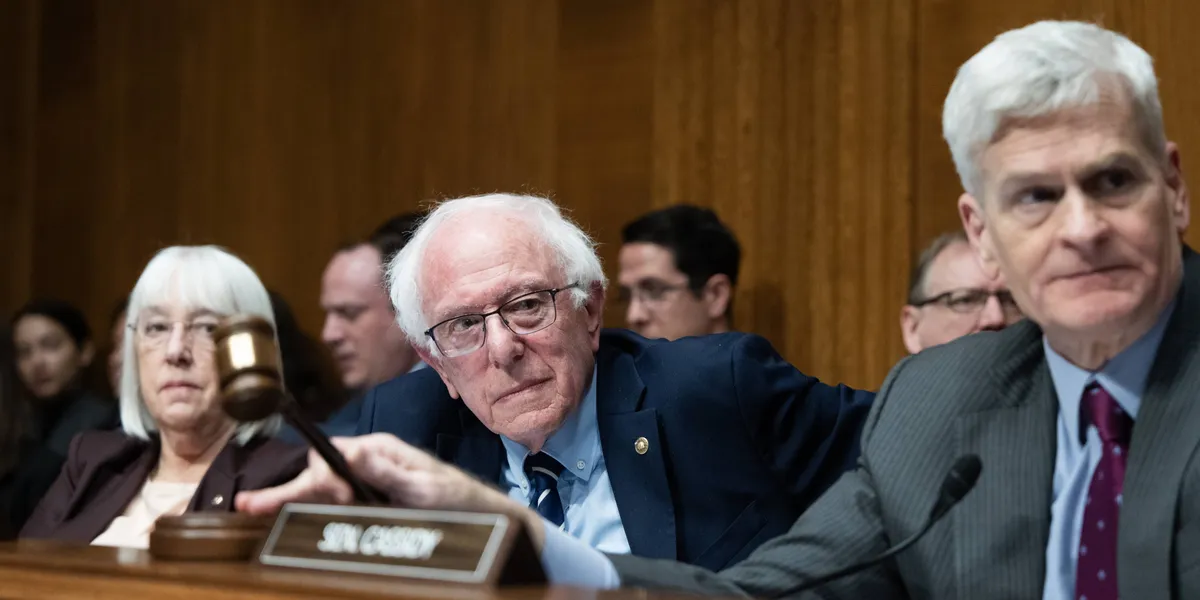
Sanders’ comments were made on MSNBC’s "MS NOW," arguing the spending is unjustifiable given domestic affordability pressures and describing the war as illegal.
The Common Dreams piece also leans on National Priorities Project messaging to argue $200 billion could instead fund domestic priorities, but it does not include the specific itemized estimates in the provided text.
Key procedural posture: at the time of the reporting, the request was described as having moved from Pentagon to the White House and not yet as a formal request transmitted to Congress.
The article asserts the war is illegal but does not cite a specific legal rationale (e.g., lack of an AUMF, War Powers Resolution timelines, or claimed Article II authority) or address what authorizations Congress has or has not granted.
The story references fears of expanded troop deployments and a possible ground invasion, but does not provide sourcing details (who proposed it, what force levels, or what operational objectives).