Judge indicates he might shut down Trump’s $400m White House ballroom plan
A federal judge signaled he may halt Trump’s privately backed $400m White House ballroom project, raising a stark question about how far a president can remake a national landmark without Congress and normal design review.
Mar 18, 2026
Sources
Summary
A federal judge indicated he may shut down construction tied to Trump’s plan to replace the White House East Wing with a $400m ballroom, as a preservation group seeks to stop the work. The story frames the dispute as a test of whether the project is an “alteration” requiring congressional approval and whether the administration’s shifting legal theories and review workarounds undermine oversight. It matters because it clarifies who controls changes to federally protected civic symbols and whether private funding can be used to evade accountability safeguards.
Reality Check
This is not a final ruling stopping construction yet: the judge’s comments reflect skepticism at a hearing, with a decision expected by the end of March 2026, while at least one key planning body’s approval vote is still pending until April 2026. The core legal issue is whether the administration can treat a major demolition-and-rebuild at the White House as routine “alteration/maintenance” (or as outside oversight due to mixed public/private funding) rather than a change that triggers congressional authorization and standard independent review steps. Even if prior presidents made changes to the White House, the dispute here centers on the project’s scale, process, and claimed exemptions, not simply whether any alterations have ever happened.
Detail
Judge Richard Leon, a federal judge, expressed skepticism at a hearing and suggested he might terminate the ballroom project by the end of March 2026.
The National Trust for Historic Preservation sued to halt construction, arguing the demolition and new construction require congressional approval and independent reviews.
White House lawyers argued Trump does not need outside permission and said Congress already funded alteration/maintenance, that the project is needed for “national security,” and that private donor funding exempts it from congressional scrutiny.
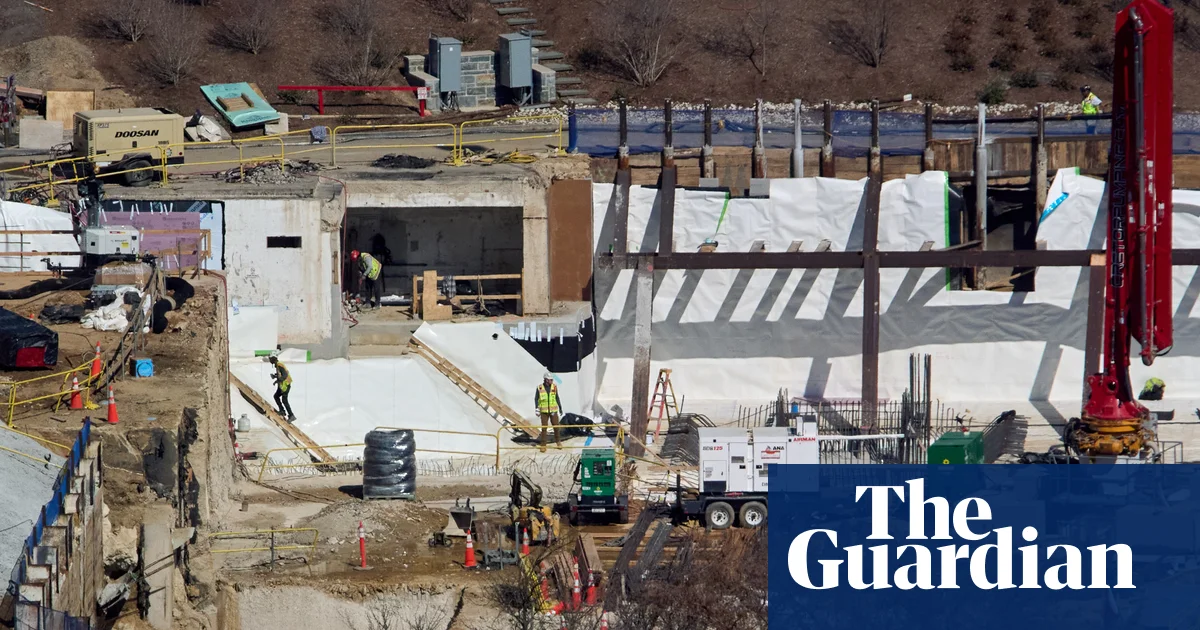
The project is described as a 90,000-sq-ft ballroom, estimated at $400m, with construction beginning after demolition of the East Wing in October (year implied as 2025 given the March 2026 timeline).
In October, Trump fired all six members of the US Commission of Fine Arts (CFA) and replaced them with appointees who later unanimously approved the plan.
The National Capital Planning Commission (NCPC) postponed its vote on approval to April 2026, citing the need to assess substantial public input.
Leon criticized the administration for “shifting theories” and questioned the claim of “dual source of funding and dual source of authority” as a way to put the project outside the court’s purview.
Leon previously denied the Trust’s first injunction request on procedural grounds (allowing work to continue) but permitted an amended complaint, which he is now considering.
Justice Department attorneys urged dismissal, arguing the Trust should not get another attempt; Trump publicly mischaracterized the prior ruling as having “completely erased” the effort to stop the project.
Leon flagged that the outcome is likely to be appealed and suggested the dispute is headed toward Supreme Court review.