Conservative Spin
Trump delays Xi meeting as Iran conflict lets US strong-arm China’s oil supply
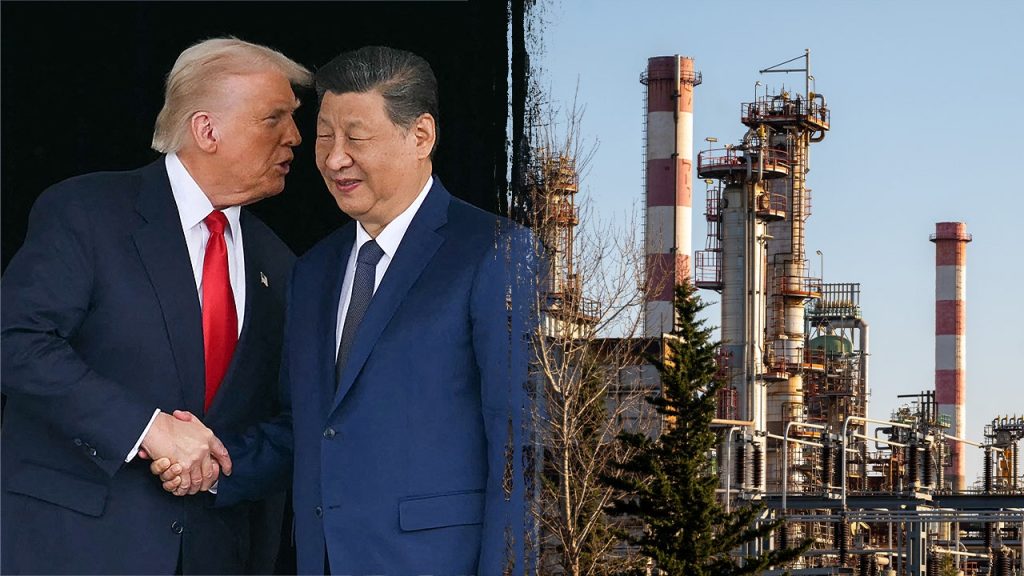
Source
Fox News
Trump delays Xi meeting as Iran conflict lets US strong-arm China’s oil supply
Claim
The piece implies Trump is strategically using the Iran war to strong-arm China’s energy lifeline, even though it offers little evidence the conflict was driven by that goal.
Facts
Trump said on March 16, 2026, that he asked to delay a planned summit with Xi Jinping by “a month or so,” citing the ongoing conflict with Iran, and said on March 17 it would be in “about five or six weeks.”
White House press secretary Karoline Leavitt said on March 16 that the president had May commitments and that the two sides would set a new date as soon as possible.
The article reports that China is the largest buyer of Iranian oil and that shipments continued despite the conflict, but with higher risk and logistical disruption around the Strait of Hormuz.
The article says the U.S. temporarily eased sanctions on Iranian oil already loaded on tankers via a short-term waiver covering an estimated 140 million barrels to reduce supply disruption, and also eased some restrictions on Russian oil in recent weeks.
The article states officials had not cited China as a rationale for the operation and quotes China’s embassy urging de-escalation and stable energy supply.
Spin
Fox’s main move is to convert a scheduling delay plus wartime oil volatility into a tidy geopolitical chess narrative: Trump “strong-arms” China by exploiting China’s reliance on Iranian crude. That conclusion is mostly built from inference—oil risk goes up, China buys Iranian oil, therefore the U.S. is using Iran as leverage—while the article itself concedes officials haven’t cited China as a rationale. It amplifies a few think-tank quotes and energy-market datapoints into a confident strategic motive attribution, even while acknowledging continued Iranian shipments and sanction workarounds that limit any “cutoff” effect. It also mixes in separate threads (Venezuela pressure, sanctions waivers, limited Russia easing, U.S. munitions stockpile concerns, “real-world experience” for forces) to make the moment feel like a coordinated master plan rather than a messy set of overlapping crises. The result is a story that feels decisive and intentional, but is thin on proof about causation, decision-making, and what the administration’s actual objectives are versus incidental leverage effects.
Active Tactic Breakdowns
Misleading Framing
7/10
The headline and core narrative frame the Iran conflict as a tool that “lets” the U.S. strong-arm China, steering readers toward an intentional-strategy interpretation while the story’s own text notes China wasn’t cited as a rationale.
Omitted Context
6/10
It discusses China’s vulnerability and market disruption but gives little concrete reporting on internal U.S. policy aims, decision memos, or stated objectives beyond generic Iran-related tensions—leaving motive mostly inferred.
Causal Leap
7/10
It treats oil disruption and China’s purchase of Iranian crude as evidence the U.S. is gaining leverage over Beijing, jumping from “effects” to “intent and strategy” without showing the delay or strikes were chosen for that purpose.
The piece repeatedly suggests the meeting delay and Middle East operations are factoring into U.S.-China leverage, but supports that with speculative language and pundit/think-tank interpretation rather than verifiable administration statements.
Narrative Stacking
6/10
It stacks multiple loosely connected elements—Venezuela pressure, Iran strikes, sanction waivers, Russia oil easing, Strait of Hormuz disruption, and U.S. interceptor inventory concerns—to imply a single coherent leverage campaign against China.
What's Missing
Concrete evidence of intent: what, if anything, the administration has explicitly said internally or publicly about using Iran-related oil disruption to pressure Beijing, and what alternative reasons drove the summit delay (security, logistics, diplomacy, domestic scheduling). The piece also doesn’t clearly distinguish between incidental leverage effects from a conflict and a deliberate policy of “strong-arming” China, or quantify how much China can offset Iranian barrels via other suppliers, reserves, and rerouting.
Reality Check
Oil-market disruption can create incidental leverage over big importers, but that’s not the same as a proven strategy to coerce China. The article’s own reporting says officials haven’t cited China as a rationale, so the “strong-arm” thesis is largely an inferred storyline rather than demonstrated policy.