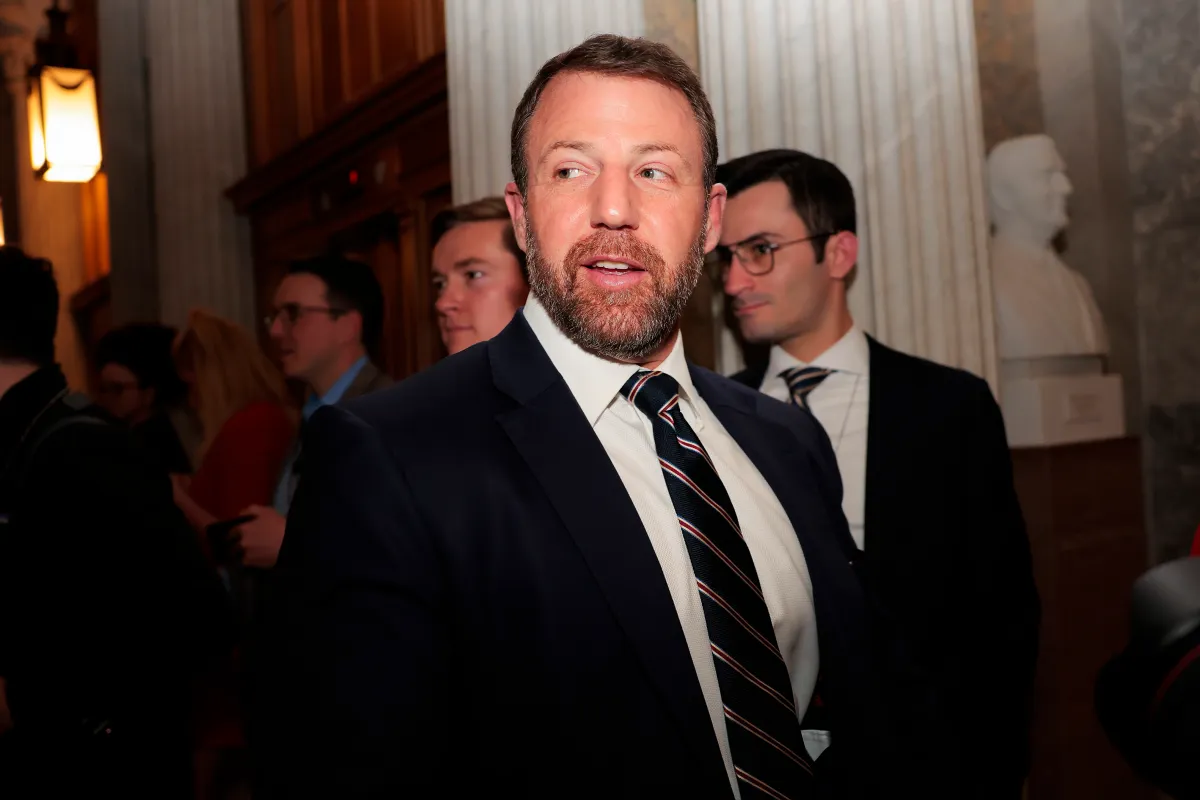
Democrats who voted with Republicans to confirm Markwayne Mullin
Markwayne Mullin’s confirmation to run DHS turned on two Democratic votes, but the bigger story is an ongoing DHS funding lapse and how immigration enforcement conditions are driving a governance breakdown.
Mar 23, 2026
Sources
Summary
The Senate confirmed Sen. Markwayne Mullin (R-OK) to be Secretary of Homeland Security in a 54–45 vote after Kristi Noem was fired. The coverage spotlights which Democrats crossed party lines, while leaving key facts thin on what policy commitments (if any) Mullin made that would change ICE practices and unlock funding. The most important public impact is that DHS’s operational strain—especially at airports and disaster response—hinges on a political standoff being framed mainly as a vote-count drama.
Reality Check
The confirming vote count and the cross-party support are real, but they’re not the core accountability question.
What matters most for readers is whether Mullin’s stated changes (judge-signed warrants, limits on sanctuary-funding penalties, FEMA contracting reversals) are binding, implementable, and sufficient to change on-the-ground DHS/ICE practices—and whether they actually move Congress toward ending the DHS funding lapse that is affecting airport screening and other DHS operations. (thehill.com)
Detail
On March 23, 2026, the Senate confirmed Markwayne Mullin as DHS secretary by a 54–45 vote. (newsweek.com)
Democratic Sens. John Fetterman (PA) and Martin Heinrich (NM) voted to confirm; Sen. Rand Paul (R-KY) voted no; Sen. Ruben Gallego (D-AZ) did not vote. (newsweek.com)
Mullin replaces Kristi Noem, who was fired by President Donald Trump on March 5, 2026. (usatoday.com)
The article claims DHS funding lapsed Feb. 14, 2026, with TSA staffing disruptions contributing to long airport security lines; contemporaneous reporting described multi-hour waits at some airports amid the funding lapse. (thehill.com)
The article describes Democrats tying DHS funding support to changes in immigration enforcement after two U.S. citizens (Alex Pretti and Renee Good) were killed in Minneapolis by federal agents; it presents this as a key reason negotiations stalled.
Mullin said he would require judge-signed warrants (with limited exceptions) for home entry, would treat cutting funds to sanctuary jurisdictions as a last resort, and would unwind a Noem-era FEMA contracting approval policy he said slowed response.
The piece emphasizes intra-Democratic fallout (especially around Fetterman) and Paul’s objections based on Mullin’s temperament and past confrontations, including a 2023 hearing incident.
Missing context not supplied in the piece: the exact legal/operational baseline for ICE warrants and home entries, the status of any written commitments, and what a DHS funding deal would or would not cover (TSA/FEMA/Coast Guard vs. immigration enforcement).