Pentagon Wants It to Be Illegal for Reporters to Ask “Unauthorized” Questions
After a federal judge struck down the Pentagon’s “unauthorized information” press restrictions, the department quickly repackaged similar limits—while the Supreme Court let stand qualified-immunity protection for Texas officers who arrested a journalist for asking for nonpublic information.
Mar 26, 2026
Sources
Summary
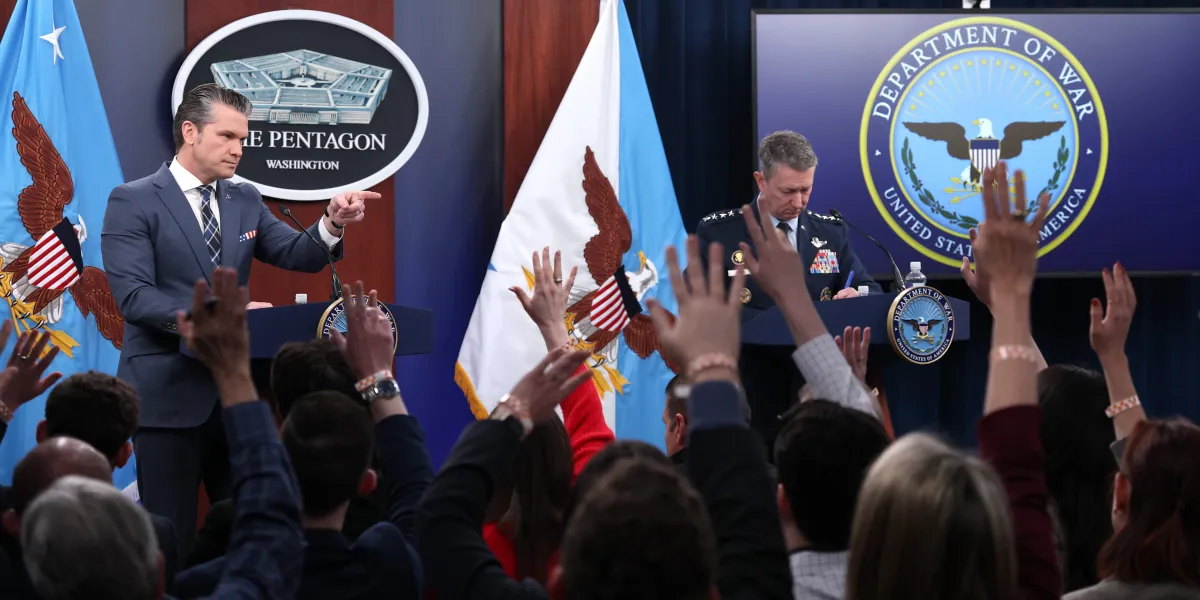
A federal judge ruled key parts of the Pentagon’s press-access/credential rules unconstitutional, prompting The New York Times to seek enforcement when the Pentagon rolled out a revised version and said it would appeal. The article frames the Pentagon’s revision as largely cosmetic and pairs it with a separate Supreme Court denial in a Texas case to argue the government is normalizing punishment for asking questions. The story matters because these fights set practical boundaries for day-to-day newsgathering—and show how agencies can keep chilling reporting even after losing in court, while qualified immunity blocks accountability.
Reality Check
A key stabilizing point: the Pentagon story is an ongoing court fight about access/credential conditions, and a federal judge has already ruled against major parts of the policy (March 20, 2026). (nytimes.com)
The Villarreal case does not newly criminalize asking questions nationwide; it shows how an old Texas statute was used against a local journalist—and how qualified immunity can prevent civil accountability even when charges were dropped and the arrest drew broad free-press concern. (apnews.com)
Detail
On March 20, 2026, U.S. District Judge Paul Friedman (D.D.C.) ruled that parts of the Pentagon’s press access/credentialing policy violated constitutional protections in a lawsuit brought by The New York Times. (nytimes.com)
The challenged Pentagon policy was tied to reporters seeking “unauthorized information” and imposed conditions on access/credentials that the court found unlawful (including First Amendment concerns and due-process issues). (abcnews.com)
After the ruling, the Pentagon announced a revised set of rules and other changes (including moving/ending some long-standing media workspaces in the Pentagon), and the government said it would appeal. (cbsnews.com)
On March 25, 2026 (Tuesday), The New York Times filed to compel compliance, arguing the updated policy still defies the judge’s order. (msn.com)
Separately, the Supreme Court on March 23, 2026 denied certiorari in Priscilla ("La Gordiloca") Villarreal v. Alaniz, leaving in place a Fifth Circuit ruling that officers were shielded by qualified immunity in her civil suit over her 2017 arrest under a Texas statute aimed at soliciting nonpublic information from public servants for “benefit.” (supremecourt.gov)
In Villarreal’s case, the core remaining dispute at the Supreme Court stage was not a new criminal prosecution but whether the officers could be held civilly liable given qualified immunity’s “clearly established law” requirement. (msn.com)
The Intercept’s linkage between the Pentagon dispute and the Villarreal case is thematic (chilling effects on newsgathering) rather than procedural: one is ongoing federal litigation over access rules; the other is a concluded Supreme Court cert denial in a damages suit. (theintercept.com)