Norms Impact
‘So Much for Lowering Costs’: Fury Over Musk’s Death Wish for CFPB That Returned Over $20 Billion to Consumers | Common Dreams
A private billionaire’s “RIP” and a White House handover of an independent watchdog signals an attempted end-run around Congress’s consumer-protection mandate.
Feb 8, 2025
⚖ Legal Exposure
Sources
Summary
Elon Musk declared the Consumer Financial Protection Bureau “RIP” as reports indicated DOGE personnel were granted access to key CFPB systems and President Donald Trump installed Russell Vought as acting director. The executive branch moved to halt or redirect the operations of an independent consumer watchdog created by Congress and sustained by statutory duties, while shifting control to a political appointee aligned with Project 2025. The practical result is a freeze or weakening of consumer protection enforcement and required public services, with immediate risk to complaint intake, transparency tools, and restitution outcomes that have returned over $20 billion to consumers.
Reality Check
When an administration moves to freeze “all meaningful work” at a congressionally created watchdog while outsiders gain access to its key systems, it normalizes the idea that statutory enforcement can be throttled for political ends—and our ability to seek redress is what gets lost first. If officials knowingly disabled or concealed legally required public functions or records, exposure could implicate federal prohibitions on unauthorized access and interference with protected systems under the Computer Fraud and Abuse Act (18 U.S.C. § 1030) and related federal records and obstruction provisions depending on the facts and intent. Even if prosecutors never bring a case, the conduct described—installing ideological control, halting core work, and allegedly using a deceptive 404 to mislead the public about an agency’s status—undercuts Congress’s authority and weakens the baseline expectation that consumer law enforcement is not a partisan plaything.
Legal Summary
The article describes abrupt executive actions and system/website disruptions that, if accurate, may unlawfully impair CFPB’s statutorily required operations and public disclosures, creating significant litigation and investigative exposure. While there is no money-access-benefit quid pro quo alleged, the reported freeze of “all meaningful work,” leadership maneuvers, and potentially deceptive site behavior support Level 2 exposure pending further facts on statutory violations and intent.
Legal Analysis
<h3>5 U.S.C. § 706(2) — Administrative Procedure Act (arbitrary/capricious action; action not in accordance with law)</h3><ul><li>The article alleges rapid executive actions to “freeze” CFPB work and to make the public-facing website display a “404” in a way described as “deceptive,” potentially reflecting agency action contrary to statutory requirements to provide certain web content.</li><li>Reports that operations were “handed over” to a newly installed acting director shortly after DOGE personnel accessed “key CFPB systems” can support an inference of irregular/unsupported administrative action and potential unlawful interference with required functions.</li></ul><h3>12 U.S.C. § 5492 — CFPB governance / Director authority (lawful control and continuity of operations)</h3><ul><li>The article states President Trump named Russell Vought acting director and that Treasury Secretary Scott Bessent (as “previous acting director”) allegedly ordered a halt of “all meaningful work,” raising questions whether leadership changes and directives were consistent with statutory structures governing the Bureau’s operation.</li><li>If statutory duties to maintain specific public databases/portals are being impeded, the alleged halt and website disruption could indicate noncompliance with congressionally mandated functions.</li></ul><h3>18 U.S.C. § 371 — Conspiracy to defraud the United States (impairing lawful government functions)</h3><ul><li>The described “plan to contravene the will of Congress and unlawfully ‘delete’” the CFPB, paired with a purported halt of meaningful work and allegedly deceptive web presentation, could fit an impairment theory if coordinated to obstruct mandated CFPB functions.</li><li>Key gap: the article does not provide concrete evidence of an agreement, specific overt acts by identified individuals beyond reported directives/access, or details on how statutory duties were intentionally obstructed.</li></ul><h3>18 U.S.C. § 1030 — Computer Fraud and Abuse Act (unauthorized access to protected computers)</h3><ul><li>The article reports DOGE members were “granted access to key CFPB systems,” which is not inherently unlawful; exposure would depend on whether access exceeded authorization or was used to impair availability/integrity of required systems (e.g., complaint portal/HMDA database).</li><li>Key gap: no allegation of unauthorized access, data exfiltration, or specific system impairment attributable to DOGE access (beyond the website 404 depiction).</li></ul><b>Conclusion:</b> The fact pattern presents serious investigative red flags centered on potential unlawful impairment of congressionally mandated CFPB functions and possibly deceptive public-facing actions—more consistent with procedural/administrative illegality risk than a money-for-official-act corruption scheme on the facts provided.</p>
Media
Detail
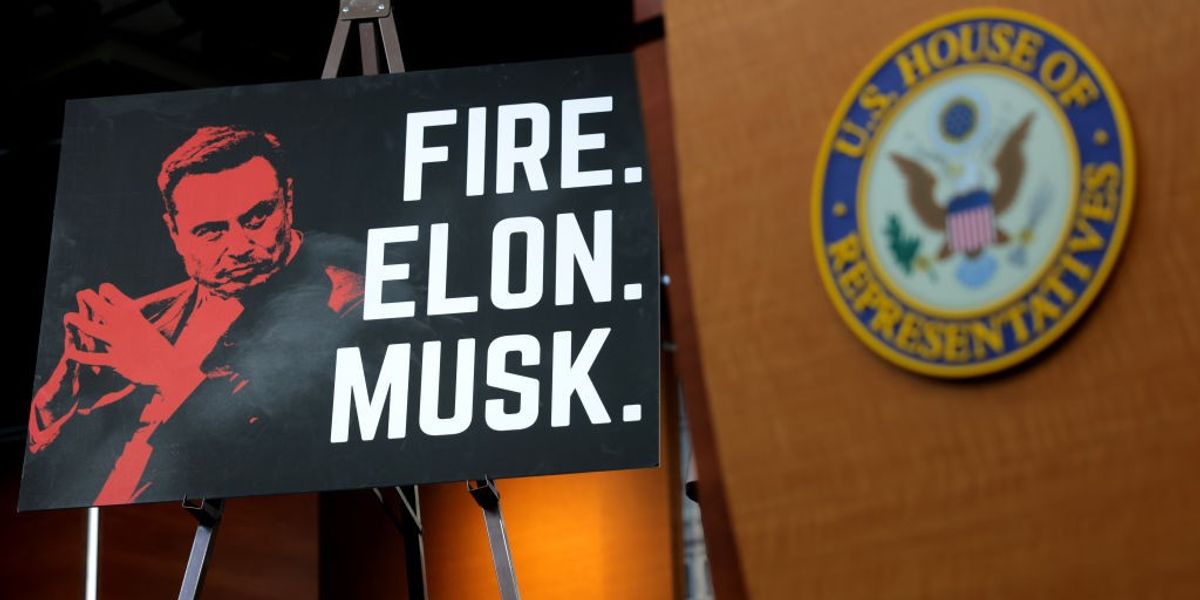
<p>Reports indicated that members of the Musk-led Department of Government Efficiency (DOGE) were granted access to key Consumer Financial Protection Bureau (CFPB) systems, followed by Elon Musk posting “RIP” about the agency on X.</p><p>President Donald Trump then named Russell Vought as acting director of the CFPB. Vought had been confirmed earlier in the week by Senate Republicans as head of the Office of Management and Budget.</p><p>House Democrats said a prior acting director, Treasury Secretary Scott Bessent, ordered a halt of “all meaningful work.” In a Friday letter addressed to Bessent, Rep. Maxine Waters, Rep. Juan Vargas, and 79 other House Democrats said they were alarmed by steps they described as a plan to “contravene the will of Congress” and unlawfully “delete” the agency.</p><p>The CFPB homepage displayed a 404 error message while other pages and links remained functional, including the Consumer Complaint portal and database and the Home Mortgage Disclosure Act database. House Democrats said the 404 display was intentionally “deceptive” and noted that portions of the CFPB’s web content are required by statute to be published and available.</p>