Norms Impact
Trump Openly Threatens Judges Who Blocked His Orders
A president publicly targets judges for blocking executive actions, signaling retaliation against judicial review—the core check that keeps our government from becoming rule by decree.
Feb 11, 2025
⚖ Legal Exposure
Sources
Summary
President Trump told reporters in the Oval Office that “maybe we have to look at the judges” after a federal judge temporarily blocked his administration’s National Institutes of Health spending cuts. The presidency is publicly casting judicial review of executive action as a “serious violation,” signaling pressure on courts that check executive orders. The practical consequence is a chilling message to the judiciary and a destabilized separation of powers as lawsuits and injunctions constrain major policy moves like NIH funding reductions and workforce cuts.
Reality Check
Threatening to “look at the judges” for doing their job invites retaliation against judicial review, a precedent that weakens our rights by turning court oversight into a punishable act. On this record, the conduct is not clearly a prosecutable federal crime by itself, but it squarely violates the bedrock norm that presidents respect independent courts rather than intimidate them. When injunctions are branded a “serious violation,” the message is that legality is subordinate to executive will—an authoritarian logic that corrodes separation of powers. If this posture hardens into personnel or funding actions aimed at judges, it risks sliding into abuse-of-power territory that our constitutional system is designed to prevent.
Legal Summary
The conduct described presents a significant investigative red flag: public rhetoric from the President implying scrutiny of judges after they block his administration’s actions, raising potential obstruction/intimidation concerns if followed by concrete retaliatory steps. The article does not allege a transactional quid pro quo, personal enrichment, or specific acts interfering with court proceedings, so exposure is best framed as politicization/pressure risk pending further facts.
Legal Analysis
<h3>18 U.S.C. § 1503 — Obstruction of justice (judicial proceedings)</h3><ul><li>Alleged facts show the President publicly suggesting the judiciary should be “look[ed] at” and framing adverse rulings as “corruption” after a federal judge temporarily blocked NIH funding cuts.</li><li>The conduct indicates pressure/retaliatory rhetoric toward judges in connection with pending litigation over executive actions; however, no concrete obstructive act (e.g., threats tied to a specific case outcome, witness tampering, or interference with court process) is alleged in the article.</li></ul><h3>18 U.S.C. § 242 — Deprivation of rights under color of law</h3><ul><li>The article describes executive efforts to cut NIH funding and restructure the federal workforce, with courts blocking certain actions; it also describes rhetoric about “look[ing] at the judges.”</li><li>Absent allegations of actual punitive action taken against judges or litigants to deter court access, the statutory elements are not met on these facts, but the posture raises concern if rhetoric translates into coercive official conduct.</li></ul><h3>5 C.F.R. Part 2635 — Standards of Ethical Conduct (misuse of office / appearance concerns)</h3><ul><li>Public statements implying judges who block executive priorities are “corrupt” and should be scrutinized can create an appearance of using official influence to delegitimize or intimidate an independent branch.</li><li>No financial transfer, personal enrichment, or access-for-action pattern is alleged; the exposure is primarily procedural/constitutional norm risk rather than transactional corruption.</li></ul><b>Conclusion:</b> The article supports a serious investigative red flag involving potential intimidation/retaliatory pressure toward the judiciary in connection with adverse rulings, but it does not allege a money-access-official act structure or specific obstructive acts sufficient to charge on these facts alone.
Media
Detail
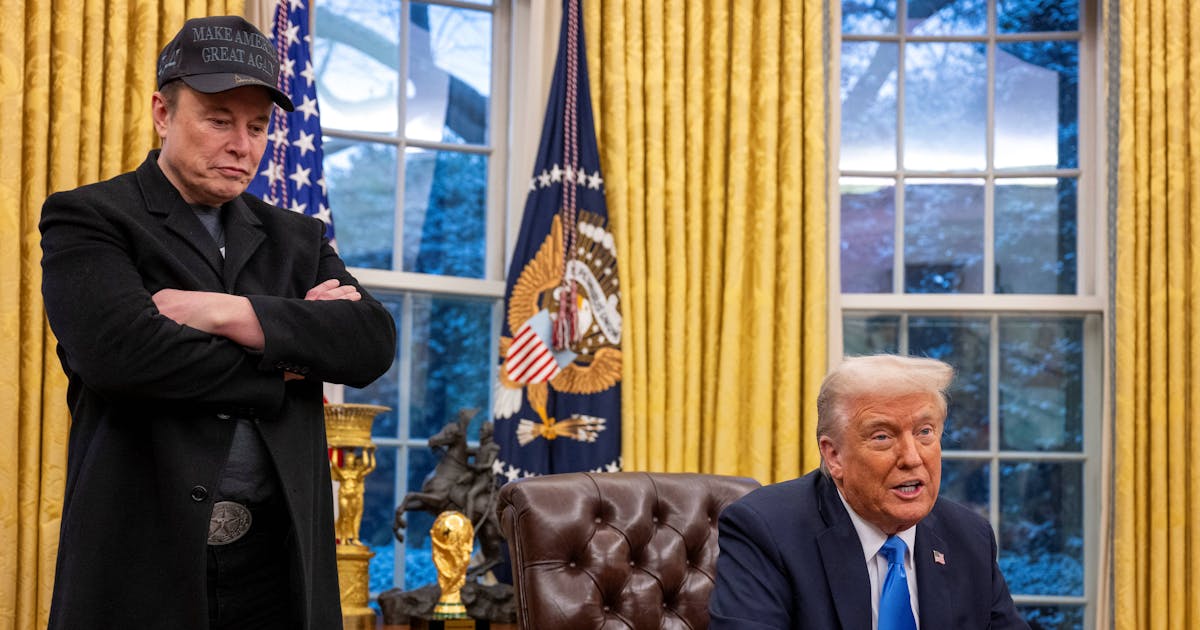
<p>On Tuesday in the Oval Office, President Donald Trump spoke to reporters during the signing of a new executive order that “effectively greenlights” Elon Musk’s work through DOGE to reduce large portions of the federal workforce. During the remarks, Trump addressed court actions that have blocked parts of his administration’s agenda, saying it “seems hard to believe” a judge could stop it and that “maybe we have to look at the judges,” calling the situation a “very serious violation.”</p><p>The comments referenced an administration effort made Friday to cut National Institutes of Health biomedical research funding by targeting $4 billion in “indirect funding” for administrative overhead, facilities, and operations. A federal judge temporarily blocked the spending cuts on Monday after a coalition of attorneys general from 22 states sued, arguing the initiative violated a 79-year-old law governing how agencies administer regulations. The lawsuit warned that without relief, institutions’ work to treat and cure disease would halt. The Association of American Medical Colleges stated that losing indirect funds would mean less research and job losses.</p><p>Other initiatives mentioned as being blocked in court include freezing funding for government grants and loans and allowing Musk access to Treasury Department data.</p>