Norms Impact
Kristi Noem Says $200 Million DHS Ad Campaign Thanking Trump Was His Idea
A Cabinet secretary publicly describes a $200 million DHS taxpayer-funded ad blitz as the president’s personal idea—built to thank him by name and bypass independent scrutiny.
Feb 22, 2025
⚖ Legal Exposure
Sources
Summary
The Department of Homeland Security budgeted up to $200 million for anti-immigrant ads in the United States and overseas that repeatedly thank President Donald Trump for an immigration crackdown. The sitting president is described by the Cabinet secretary overseeing the department as directing a government “marketing campaign” designed to bypass the press and center personal credit. The practical consequence is taxpayer-funded messaging deployed across multiple media platforms and countries that markets enforcement policy while elevating one officeholder’s image.
Reality Check
Using DHS appropriations for a leader-centered “thank me” media campaign normalizes a government that treats public funds as personal political branding, eroding our expectation that federal communications serve the public rather than an officeholder. On these facts alone, the clearest red line is the anti-propaganda norm in federal administration and the prohibition on using appropriated funds for publicity or propaganda; criminality is not established here without evidence of electioneering or covert manipulation, but the conduct squarely implicates the long-standing “publicity or propaganda” restrictions tied to appropriations law. Even if no prosecutor could prove an offense beyond a reasonable doubt, the precedent is corrosive: it teaches agencies that loyalty messaging is a legitimate output of executive power, and it leaves our rights more vulnerable to a government that can spend at scale to manufacture consent.
Legal Summary
DHS’s planned $200 million ad campaign repeatedly thanking the President—described as the President’s idea and directive—creates significant appropriations-purpose and government-propaganda/self-promotion exposure. On the provided facts, this looks more like an abuse-of-office/irregular use of public funds than a classic money-for-official-act corruption scheme, but it warrants scrutiny of purpose, content, and procurement/authorization.
Legal Analysis
<h3>31 U.S.C. § 1301(a) — Purpose Statute / Misuse of Appropriated Funds</h3><ul><li>Alleged facts describe DHS budgeting up to $200M for ads that “repeatedly thank” the President and were conceived as a “marketing campaign” to ensure the public “know the truth of what you’re doing,” raising a non-programmatic, self-promotional purpose concern.</li><li>If primary content is flattering the President rather than conveying necessary program information, the expenditure risks being an improper purpose for appropriated DHS funds.</li></ul><h3>18 U.S.C. § 1913 — Anti-Lobbying Act (appropriated funds influencing public opinion)</h3><ul><li>A large taxpayer-funded media campaign framed as countering media narratives and aimed at shaping public perception can implicate restrictions on using appropriated funds for grass-roots propaganda-like efforts.</li><li>Key gap: the context provided does not show urging the public to contact Congress or take legislative action, which is typically central to § 1913 exposure.</li></ul><h3>5 C.F.R. § 2635.702 / 5 U.S.C. § 7323 — Misuse of position / political activity constraints (ethics framework)</h3><ul><li>Directing official DHS communications to personally thank the President and feature a Cabinet official’s face as directed by the President suggests use of official resources for personal/political benefit rather than neutral governmental messaging.</li><li>Key gap: article context does not establish explicit electoral/partisan advocacy or campaign activity, limiting a clear Hatch Act fit on these facts alone.</li></ul><h3>18 U.S.C. § 201 (Bribery) / 18 U.S.C. § 1346 (Honest Services Fraud)</h3><ul><li>No financial transfer, outside payer, or personal enrichment is described; the facts indicate a top-down directive to spend public money on messaging that flatters the President.</li><li>Without a money-for-official-act exchange or kickbacks, the structural quid-pro-quo pattern necessary for bribery/honest-services is not established in the provided context.</li></ul><b>Conclusion:</b> The described conduct presents serious investigative red flags for misuse of appropriated funds and improper government propaganda/self-promotion, but the provided facts lack the transactional money-access-benefit exchange pattern typical of prosecutable public-corruption bribery schemes.</p>
Detail
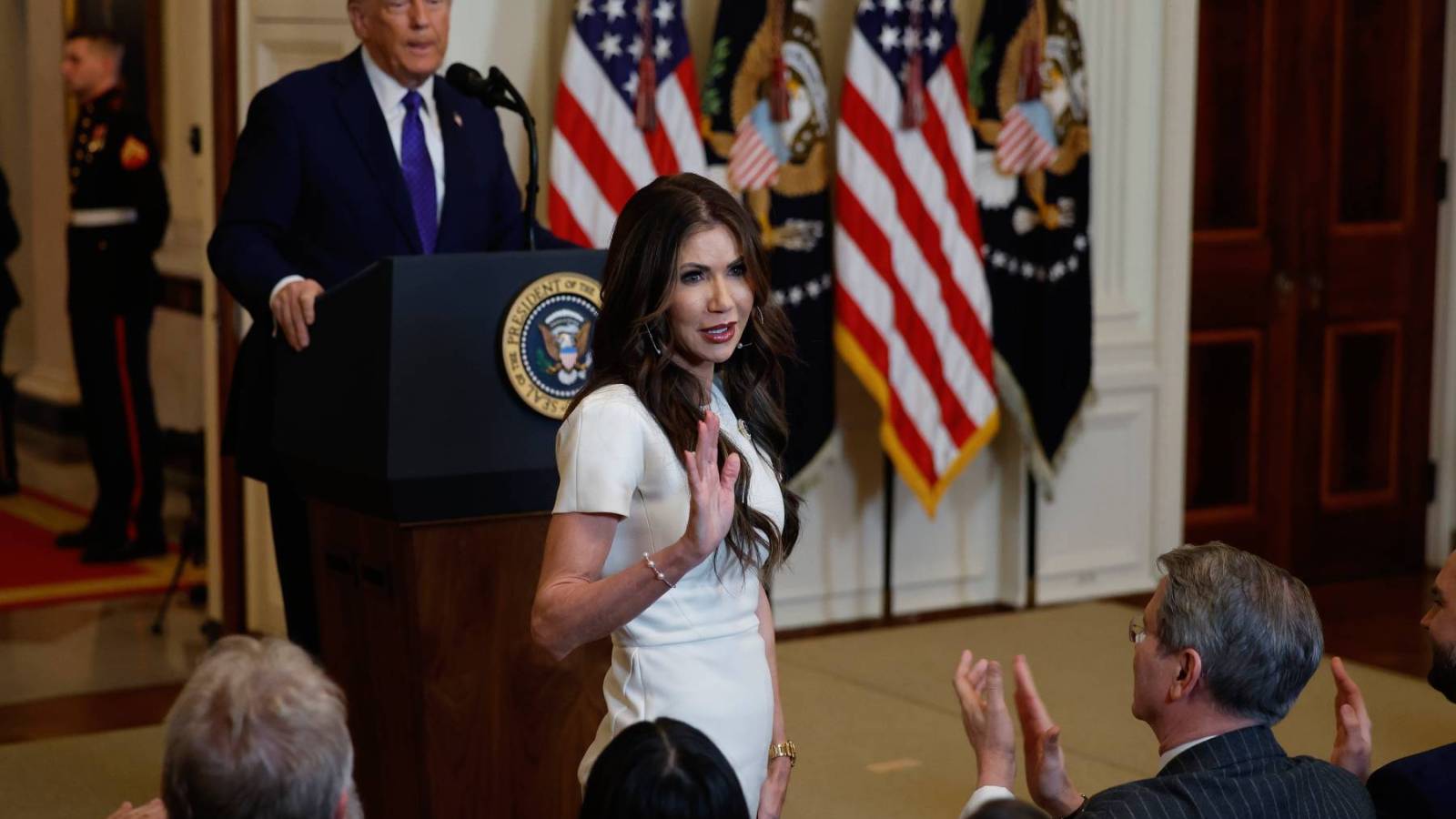
<p>At the Conservative Political Action Conference’s Ronald Reagan dinner in National Harbor, Maryland, Homeland Security Secretary Kristi Noem said the Department of Homeland Security’s ad campaign was President Donald Trump’s idea and that he asked her to appear in ads thanking him “for closing the border.” Noem recounted that after she was nominated, Trump told her he wanted border ads run “everywhere,” not only in the United States but “around the world,” with messaging telling people not to come to the country illegally. Noem said Trump told her the administration would not “let the media tell this story” and would “run a marketing campaign” so the public would know “the truth” of what DHS was doing.</p><p>Noem said Trump instructed that he did not want to appear in the ads and instead wanted her face in them, directing that the first ad include a thank-you to him for closing the border. Noem said the ad included that thank-you. DHS announced this week it was launching ads on radio, broadcast, and digital platforms, in multiple countries and regions, in various dialects.</p>