Norms Impact
Bodycam video raises questions in fatal shooting of US citizen by DHS agent
Federal agents used lethal force on a U.S. citizen while the agency delayed disclosure and defended the killing with claims the released video does not clearly substantiate.
Mar 7, 2026
⚖ Legal Exposure
Sources
Summary
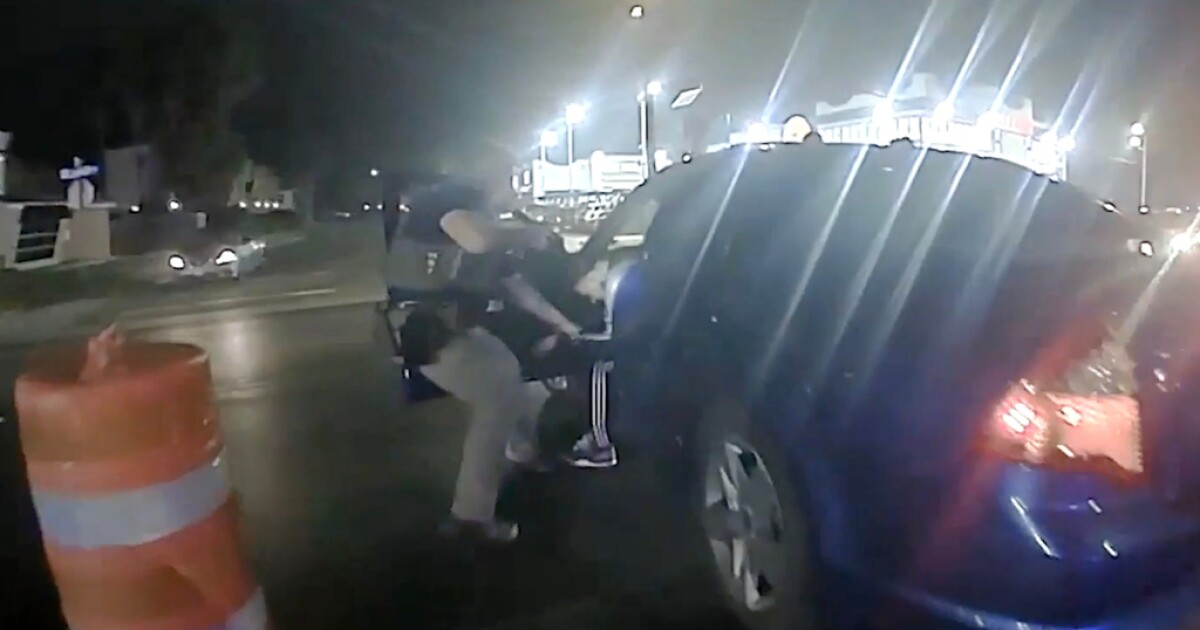
New body camera and other videos released Friday show a fatal March 15, 2025, shooting of U.S. citizen Ruben Ray Martinez by a Homeland Security Investigations supervisor in South Padre Island, Texas, without clearly depicting a vehicle striking an agent. The sequence adds to a pattern in which federal agencies withheld or delayed disclosure while official justifications relied on asserted threats not plainly supported by initial public evidence. The practical consequence is a widening gap between federal force narratives and verifiable records, weakening accountability when lethal power is used in public spaces.
Reality Check
When federal agencies can delay disclosure of their presence and then justify lethal force with threat narratives that are not clearly supported by released footage, our accountability chain breaks where it matters most: the moment the state takes a life. This precedent shifts oversight from verifiable records to after-the-fact assertions, making grand jury declinations and internal reviews functionally insulating rather than clarifying. Normalizing that gap conditions the public to accept lethal outcomes first and transparency later, eroding the rule-of-law expectation that force is explainable, reviewable, and promptly disclosed.
Legal Summary
Legal exposure is driven by potential civil-rights and truthfulness issues: bodycam footage reportedly undermines DHS’s initial “intentional ramming” narrative, raising questions about whether deadly force was objectively reasonable. The known record includes a grand jury’s decision not to charge, but the discrepancy between statements and video supports continued federal review for possible §242 and related false-statement exposure pending full evidence.
Legal Analysis
<h3>18 U.S.C. § 242 — Deprivation of rights under color of law</h3><ul><li>Federal agent (HSI SSA Jack Stevens) used deadly force during a traffic-control encounter; newly released bodycam video reportedly does not clearly show the vehicle striking an agent, while DHS previously asserted the driver “intentionally ran over” an agent.</li><li>If the vehicle was “barely moving” and the agent fired point-blank through the driver’s window while keeping pace/leaning in, the necessity and reasonableness of lethal force becomes a core element for potential willful deprivation of Fourth Amendment rights (unreasonable seizure).</li><li>Gaps: the article reflects a grand jury decline to charge and does not establish “willfulness” beyond dispute; however, the divergence between initial official narrative and video-triggered questions is a serious investigative red flag for federal civil-rights review.</li></ul><h3>18 U.S.C. § 111 — Assaulting, resisting, or impeding certain officers (context for claimed justification)</h3><ul><li>Stevens’ statement claims Martinez accelerated, struck an agent, and nearly ran Stevens over; if true, deadly force could be argued as defensive in response to an assault using a vehicle.</li><li>The released video and witness account (Orta) described slow movement and panic, undercutting the asserted immediacy of a lethal threat—relevant to assessing whether the shooting exceeded what was reasonably necessary.</li></ul><h3>18 U.S.C. § 1001 — False statements (potential exposure depending on what was said and where)</h3><ul><li>Stevens provided a written statement to Texas Rangers nearly two months after the shooting asserting the car struck an agent and broke the mirror; the video reportedly does not clearly corroborate the strike, and the mirror photo shows damage but still attached.</li><li>Exposure depends on whether any materially false statements were knowingly and willfully made in a matter within federal jurisdiction; the article does not establish falsity or intent, but the discrepancy warrants scrutiny.</li></ul><b>Conclusion:</b> The fact pattern reflects serious investigative red flags around use-of-force justification and possible post-incident narrative inconsistencies, but the article does not supply enough to conclude substantially satisfied criminal elements; this is closer to contested use-of-force/procedural accountability than proven transactional corruption.
Detail
<p>Hours of video footage and related law enforcement records were released Friday in response to a public records request by The Associated Press and other outlets. The materials document the March 15, 2025, fatal shooting of Ruben Ray Martinez, 23, by Homeland Security Investigations Supervisory Special Agent Jack Stevens at a South Padre Island intersection where police were directing traffic around a prior collision.</p><p>Body camera footage shows Martinez’s blue Ford sedan approaching slowly, nearly stopping for pedestrians, then moving into the intersection as HSI agents approached and shouted commands. Special Agent Hector Sosa moved in front of the car while Stevens positioned at the driver’s side and reached toward the door. As the car began slowly moving forward and turning left, Stevens drew his weapon and fired three shots through the driver’s window; the encounter lasted about 15 seconds. Martinez’s vehicle stopped, and officers pulled Martinez and passenger Joshua Orta out and handcuffed them; medical aid began about a minute later.</p><p>Stevens later told investigators Martinez accelerated, struck Sosa, and posed a mass-casualty threat. The newly released videos do not clearly show the car striking an agent, and DHS did not publicly disclose agent involvement until after later reporting.</p>