Norms Impact
China Deploys Thousands of Fishing Boats off Japan’s Coast, and They Are Not There to Fish
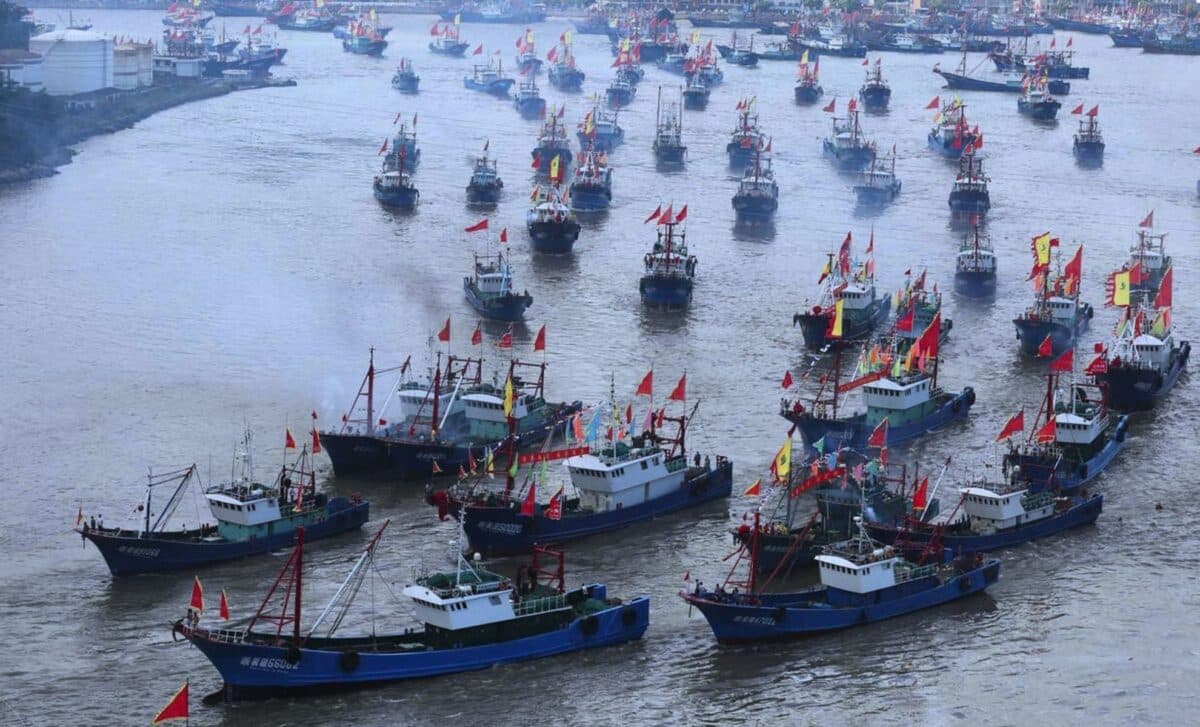
Thousands of China-flagged vessels held coordinated positions near Japan-administered waters, pressuring maritime governance as Japan resorted to detention under fisheries law to enforce territorial control.
Feb 26, 2026
Sources
Summary
Commercial satellite imagery from late January to early February 2026 showed thousands of China-flagged vessels clustered in dense grid formations near waters administered by Japan, including areas around the Senkaku Islands. Japan escalated from monitoring to enforcement within 24 hours by seizing a Chinese vessel that entered Japan’s territorial waters and detaining its captain under domestic fisheries law. The practical consequence is sustained maritime friction managed through patrol warnings, detentions, and diplomatic protest while large flotillas remain in place.
Reality Check
Massed, coordinated civilian-flagged flotillas probing territorial waters normalize coercion-by-presence and erode the day-to-day rule set that protects our navigation, enforcement capacity, and national sovereignty without open conflict. The conduct described is not clearly criminal under U.S. federal law on this record, but Japan’s seizure and detention are grounded in domestic fisheries enforcement against unauthorized operations inside territorial waters—precisely the legal boundary these formations test. When states can apply pressure through “civilian” AIS-broadcasting fleets while denying formal directives, it creates a template for gray-zone intimidation that weakens the credibility of lawful maritime administration and makes escalation more likely.
Media
Detail
<p>On 12 February 2026, satellite imagery based on commercial data showed thousands of vessels flying China’s flag operating in concentrated formations near waters administered by Japan. Sequential satellite passes from late January and early February showed the vessels repeatedly clustered in dense grids over multiple days rather than dispersed in trawling patterns.</p><p>Within 24 hours of the imagery drawing wider attention, Japanese authorities seized a Chinese fishing vessel after it entered Japan’s territorial waters. The captain was taken into custody pending investigation under Japan’s domestic fisheries legislation, which permits detention of foreign vessels operating without authorization inside territorial waters. Investigators will determine whether to refer the matter to prosecutors based on evidence collected during inspection and questioning.</p><p>The Japan Coast Guard increased patrols, using vessels and aircraft to monitor the clusters and issue radio warnings as ships approached territorial waters. Japan’s foreign ministry lodged a protest. Chinese foreign ministry briefings reiterated sovereignty claims over the Senkaku Islands and surrounding waters without directly addressing the imagery.</p>