Conservative Spin
Hegseth requests $200B for Iran conflict — ‘It takes money to kill bad guys’
Source
OAN
Hegseth requests $200B for Iran conflict — ‘It takes money to kill bad guys’
Claim
The Pentagon’s $200B request is a necessary, common-sense funding move to defeat “bad guys” in Iran and keep the military fully stocked for what comes next.
Facts
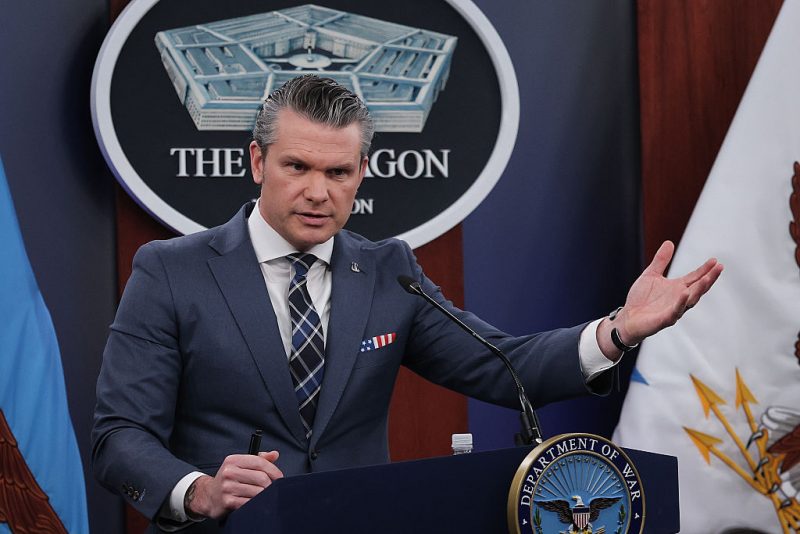
At a Pentagon briefing on Thursday, March 19, 2026, Pete Hegseth said the Pentagon asked the White House to approve a request to Congress for $200 billion related to ongoing military actions in Iran.
OAN reports the Iran operation is labeled “Operation Epic Fury” and began on February 28, 2026.
Hegseth said the $200 billion figure “could move,” and described the request as covering what has been done, what may be needed in the future, and replenishing ammunition and supplies above prior levels.
OAN included Hegseth’s remarks praising President Trump’s military rebuilding during his first term and saying it is being used in his second term.
Spin
The piece turns a huge funding request into a moral slogan—“bad guys” must be killed—so the number reads like basic upkeep instead of a major escalation and accountability moment.
It leans hard on emotional loading (“bad guys”) and manufactured salience (BREAKING presentation and the punchy quote) to make the ask feel urgent and unquestionable. It also invites a causal leap: because the enemy is labeled evil, the spending is presumed necessary, proportional, and effective—without showing any link between $200B and a defined objective.
By spotlighting a tough one-liner and Trump-centric praise, the story steers readers to treat congressional approval as a formality and skepticism as softness. The result is a simplified hero-vs-villain narrative that sidelines the policy questions that actually determine whether this funding is justified.
Active Tactic Breakdowns
Misleading Framing
7/10
The request is presented as routine “proper funding” for killing enemies and refilling stockpiles, which frames the headline number as mere readiness maintenance rather than a consequential decision about war scope, costs, and constraints.
Omitted Context
9/10
There’s no meaningful detail on the mission’s aims, projected timeline, legal basis, expected costs to date, casualty figures, limits on escalation, or how $200B would be broken down. Without those basics, readers can’t judge whether the request is proportionate or even connected to a coherent strategy.
The “🚨 BREAKING” packaging and viral-ready quote selection elevate a single soundbite into the main event, creating urgency and importance without supplying the supporting information that would justify the attention.
Causal Leap
7/10
Labeling the target as “bad guys” is used to imply that more money will deliver success and safety. The story doesn’t demonstrate that this specific figure is necessary, that it maps to specific operational needs, or that it improves outcomes versus alternatives.
Emotional Loading
8/10
“It takes money to kill bad guys” moralizes the spending request and pressures readers toward approval by equating funding with toughness and national defense, while positioning questions as sympathizing with the enemy.
What's Missing
A real accounting: how much has already been spent since February 28, what the $200B covers (operations, munitions, deployments, replacements, contractor costs), and what assumptions drive the estimate.
Clear guardrails and oversight: objectives, metrics for success, end-state, limits on mission expansion, legal authorizations, and how Congress and inspectors general would track where the money goes.
Reality Check
A $200 billion request is not self-justifying because the adversary is described as evil; it’s a major policy choice that requires specifics about goals, duration, and costs.
Stripping away the slogan, the only concrete takeaway here is that the Pentagon is seeking a very large, potentially adjustable amount for an ongoing Iran operation and replenishment. Whether that’s warranted depends on details the story doesn’t provide.