Conservative Spin
White House says ‘no one’ changing Trump enforcement agenda in response to Angel Mom appeal to Mullin
Source
Fox News Digital
White House says ‘no one’ changing Trump enforcement agenda in response to Angel Mom appeal to Mullin
Claim
Trump’s enforcement agenda is fixed because it is already protecting Americans from “illegal alien crime,” and critics—especially sanctuary leaders—are to blame for preventable deaths.
Facts
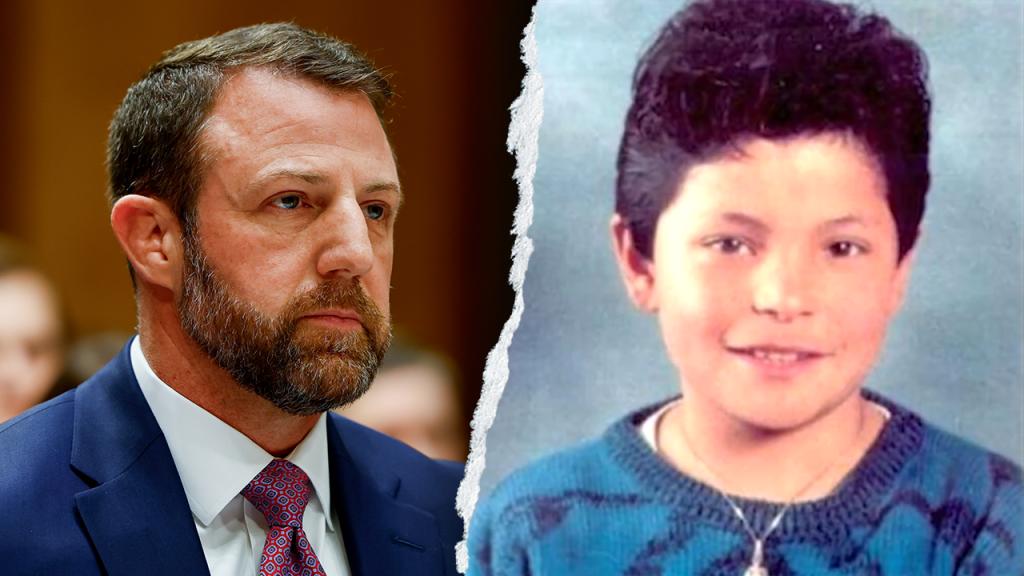
Angie Morfin appealed for immigration enforcement that would prevent other families from experiencing what she experienced after her son Ruben Morfin was killed in Salinas, California, in 1990.
Fox News Digital reported comments from DHS acting assistant secretary Lauren Bis saying DHS is targeting “dangerous criminal illegal aliens” and asserting that nearly 70% of ICE arrests involve people charged or convicted of a crime.
White House spokesperson Abigail Jackson told Fox News Digital that the administration’s immigration enforcement agenda is not changing and said the deportation of “illegal alien criminals” is a top priority.
Sen. Markwayne Mullin, Trump’s nominee for Homeland Security secretary, testified at a Senate Homeland Security and Governmental Affairs Committee confirmation hearing on March 18, 2026.
The article includes comments from The American Border Story’s executive director praising DHS/ICE engagement with “Angel Families.”
Spin
The piece wraps the administration’s enforcement posture in an “Angel Mom” tragedy narrative, using a single horrific case to imply that hardline enforcement is the morally obvious and primary answer to immigration policy.
It leans heavily on emotional loading (graphic, personal recollections), omitted context (no real scrutiny of the quoted statistics or the administration’s sweeping border claims), and narrative stacking (sanctuary politicians + “abandoned victims” + advocacy praise + confirmation drama) to build a one-direction storyline.
That assembly nudges the reader to treat dissent as callous and to accept broad claims of border control and deportation success at face value, rather than as political messaging that needs verification and comparison to broader data.
Active Tactic Breakdowns
Misleading Framing
7/10
The story treats “illegal alien crime” as the central lens for immigration policy and pairs it with a moral binary—victims vs. “sanctuary politicians”—so readers are steered toward enforcement-only conclusions. It largely skips the reality that immigration policy also turns on labor markets, asylum law, visa overstays, due process, and local-federal jurisdiction issues.
Omitted Context
8/10
It relays big, confidence-sounding claims (e.g., “nearly 70%” of ICE arrests involve people charged/convicted; “approximately 3 million” left; “zero illegals” crossing for nine months; “most secure border”) without methodological detail, time windows, definitions, or any independent corroboration. It also omits how enforcement priorities can change in practice even when the slogan stays the same.
A 1990 murder is made to feel like direct evidence about present-day border conditions and current enforcement performance. The case is real and tragic, but using it as the centerpiece inflates how representative it is of today’s immigration landscape and policy tradeoffs.
Causal Leap
7/10
The narrative implies that the administration’s approach is the key factor that prevents tragedies like this and that sanctuary policies are what “abandon” victims. That leap is asserted, not demonstrated, and it bypasses intervening variables like policing, prosecution, local conditions, and the specifics of how a perpetrator entered and remained in the country.
Emotional Loading
9/10
Graphic language (“executed at point blank range”) and a grieving mother’s recollection are used to create moral urgency around the administration’s agenda. The emotional weight discourages skepticism about the statistics and sweeping border claims that follow.
Narrative Stacking
7/10
Multiple reinforcing elements are chained together—victim story, “abandoned” by sanctuary politicians, DHS praise, advocacy-group validation, and confirmation-hearing conflict—to create the impression of a comprehensive indictment of opponents. The stack substitutes accumulation for careful evidence on what policies would have changed the outcome and what current results actually are.
What's Missing
Basic verification and definitions for the headline claims are absent: what time period the ICE arrest percentage covers, what counts as “charged or convicted,” and how the administration calculated “approximately 3 million” leaving.
There’s also no broader context on immigration crime rates relative to native-born populations, the role of visa overstays versus border crossings, or what specific policy change Morfin is asking for beyond a general call to “make sure” it doesn’t happen again.
Reality Check
A moving victim story does not, by itself, prove the effectiveness of a current immigration agenda or validate sweeping claims about “zero” crossings and millions leaving; those are empirical assertions that require definitions, data sources, and comparison points.
Stripped of the packaging, the concrete news is that DHS and the White House reiterated a political line—no change in enforcement agenda—while promoting selective metrics. Readers should separate sympathy for victims from unverified or context-free claims used to sell a broader policy narrative.