Norms Impact
DOJ indicts Democratic congressional candidate Kat Abughazaleh over ICE protests
DOJ’s felony indictment of a congressional candidate tied to an ICE-facility protest tests how easily protest conduct can be reframed as conspiracy against federal officers.
Oct 29, 2025
⚖ Legal Exposure
Sources
Summary
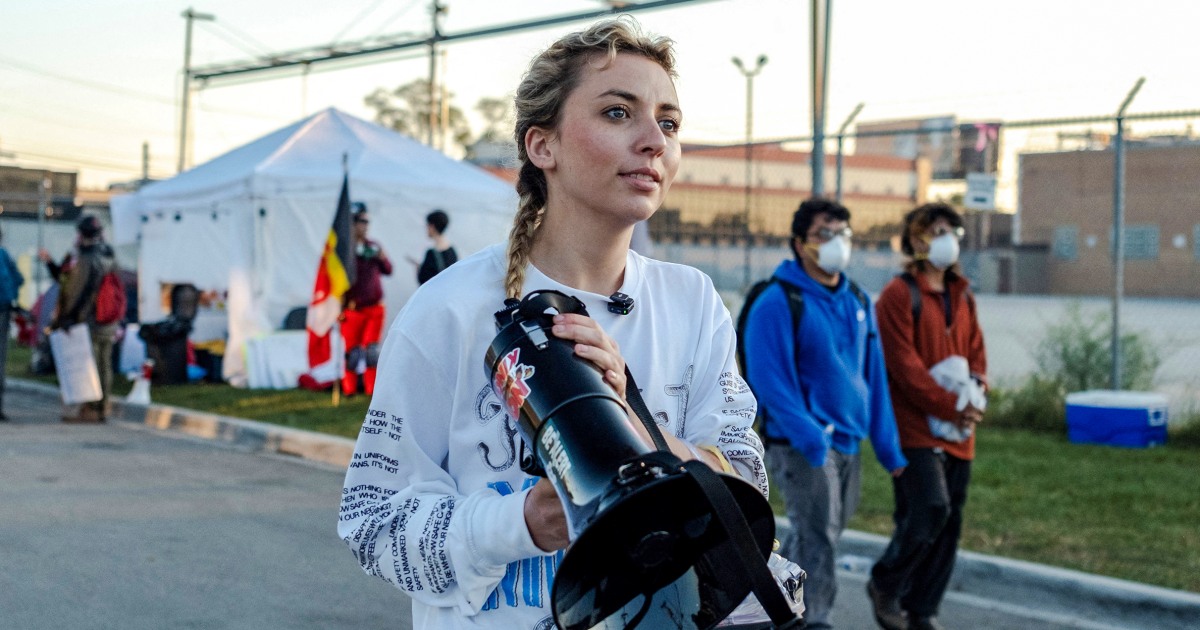
A special federal grand jury indicted Democratic congressional candidate Kat Abughazaleh and five others over allegations they blocked vehicles outside a federal immigration facility in Broadview, Illinois and impeded a federal agent.
The Justice Department is pursuing felony conspiracy and interference charges against multiple protest participants, including political candidates, in a long-running protest flashpoint where local officials created a designated “First Amendment” zone and a federal judge recently restricted certain crowd-control tactics.
The case now moves into federal court under a Biden-appointed judge, with defendants set to self-surrender and with protest activity facing heightened legal exposure at the edge of protected dissent.
Reality Check
Using federal conspiracy and officer-interference charges to reach protest activity risks setting a precedent where crowd conduct is packaged as coordinated force against the state, narrowing the space for dissent that protects our own rights. Based on the charging language, the conduct is plausibly prosecutable under federal officer-interference and conspiracy frameworks—most directly 18 U.S.C. § 111 and related conspiracy provisions—if the government can prove “forcible” interference rather than mere presence or speech. Even if a jury ultimately rejects the government’s theory, the leverage of felony indictment and mandatory federal process is the punishment vector, and it teaches every future protest movement that the line between civil disobedience and felony exposure can be drawn by prosecutors.
Legal Summary
A federal grand jury indictment alleging forcible interference with a federal officer and conspiracy to impede that officer creates significant criminal exposure, particularly under 18 U.S.C. §§ 111 and 372. While the defense frames the case as protected dissent, the charging allegations describe physical hindrance and force/intimidation, which—if proven—falls outside First Amendment protection and supports a prosecutable theory pending full evidentiary development.
Legal Analysis
<h3>18 U.S.C. § 111 — Forcibly assaulting/resisting/impeding federal officers</h3><ul><li>Indictment alleges Abughazaleh “forcibly impeded, intimidated, and interfered” with a U.S. law enforcement officer during performance of official duties at a federal facility, fitting the core actus reus (forcible interference/resistance).</li><li>Allegation that the agent was “forced to drive at an extremely slow rate of speed to avoid injuring” conspirators supports a theory of physical obstruction that could satisfy “forcibly” through intentional physical interference, even absent bodily injury.</li><li>Key litigable gap for trial: whether conduct was sufficiently “forcible” versus protected protest activity; however, the grand jury’s framing alleges physical hindrance rather than mere speech.</li></ul><h3>18 U.S.C. § 372 — Conspiracy to impede or injure an officer of the United States</h3><ul><li>Indictment alleges a group conspiracy “to prevent by force, intimidation, and threat” a federal agent from discharging duties and to “interrupt, hinder, and impede” him, tracking statutory language.</li><li>Presence of multiple alleged co-conspirators and coordinated blocking outside a federal immigration facility supports an agreement/combination inference and an objective to impede federal operations.</li><li>Proof gap to be tested: evidence of agreement and intent to use force/intimidation (beyond spontaneous crowd conduct), but the charging instrument asserts those mens rea elements.</li></ul><h3>First Amendment / Protected Activity Considerations (not a criminal statute; constitutional defense context)</h3><ul><li>Article reflects defense claims of “political prosecution” and protected dissent; constitutionally protected speech is not criminalized, but physically obstructing or forcibly impeding officers is not immunized by the First Amendment.</li><li>The legal exposure turns on whether facts show intentional physical obstruction/force (criminal) versus lawful protest within permitted zones/time restrictions (protected).</li></ul><b>Conclusion:</b> The alleged conduct reflects potentially prosecutable obstruction/force against federal officers (not merely procedural or political irregularity), with the central factual issue being whether the interference was “forcible” and conspiratorial rather than protected protest activity.
Detail
<p>A special federal grand jury returned an indictment filed Oct. 23 charging Kat Abughazaleh, a Democratic candidate for Congress in Illinois’ 9th District, and five other defendants in connection with a protest outside a federal immigration facility in Broadview, Illinois.</p><p>The indictment alleges Abughazaleh “physically hindered and impeded” a U.S. law enforcement officer by blocking vehicle movement, forcing the agent to drive “at an extremely slow rate of speed” to avoid injuring protesters. Prosecutors charged Abughazaleh with one count of conspiracy and one count alleging she “forcibly impeded, intimidated, and interfered” with an officer.</p><p>The indictment further alleges the group conspired “to prevent by force, intimidation, and threat” the officer from discharging his duties and to injure the officer or his property to interrupt or impede official duties. Defendants were not arrested; a court filing states they were notified and will self-surrender next Wednesday. U.S. District Judge April M. Perry is assigned to the case.</p>