Norms Impact
DOJ Sues Dem Governor—and Misspells Her Name Over and Over Again
DOJ moved to override a governor’s warrant requirement for ICE access to nonpublic state property, and did so with a basic failure of accuracy that corrodes prosecutorial legitimacy.
Feb 24, 2026
Sources
Summary
The Department of Justice filed a 21-page lawsuit against New Jersey Governor Mikie “Sherill,” repeatedly misspelling Governor Mikie Sherrill’s name. The filing attacks a state executive order requiring a judicial warrant before ICE may enter nonpublic areas of state-owned property. The suit seeks to weaken a state-level barrier to federal immigration operations and signals procedural breakdowns inside federal prosecution.
Reality Check
When the federal government weaponizes litigation to force warrantless access into nonpublic state spaces, we all inherit a precedent that weakens our Fourth Amendment security and normalizes executive workarounds to judicial oversight. Nothing in these facts clearly signals a prosecutable crime, but the conduct presses an anti-accountability template: use supremacy-clause litigation to attack a state’s judicial-warrant gatekeeping rather than comply with it. The repeated misidentification of the elected official in a federal filing is not a technicality—it is a credibility breach that undercuts due process norms and public trust in neutral law enforcement power.
Media
Detail
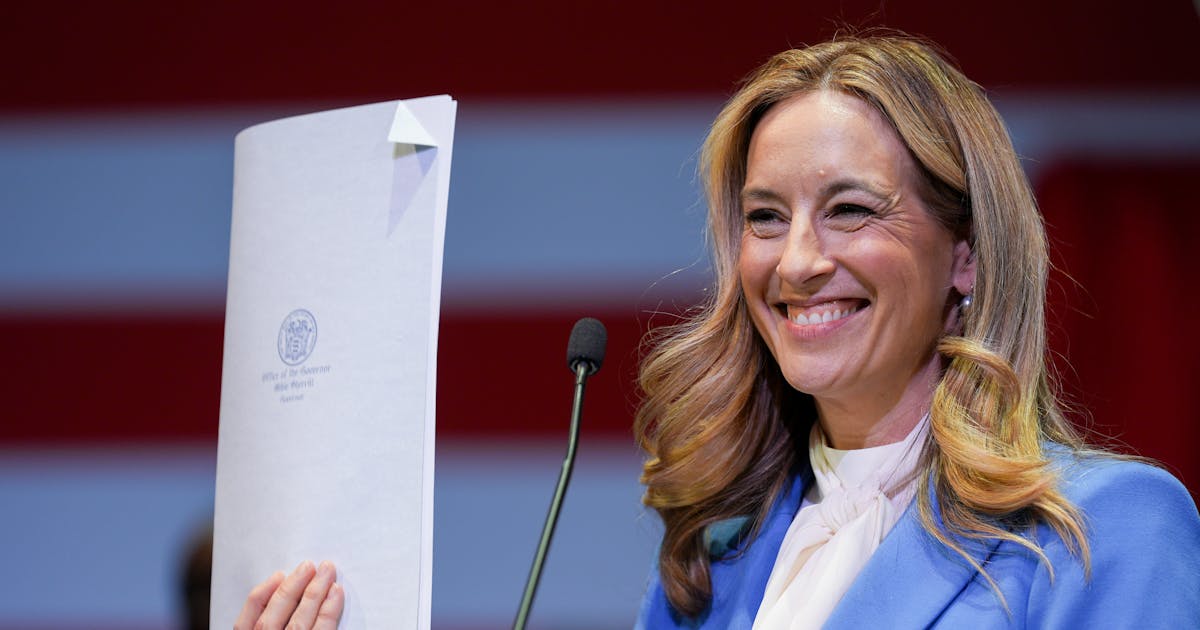
<p>On Monday, the Department of Justice filed a 21-page lawsuit against New Jersey Governor Mikie Sherrill, misspelling her name as “Mikie Sherill” five times while spelling it correctly three times, two of which appeared in quotations from other sources.</p><p>Earlier in the month, Sherrill signed an executive order that bars Immigration and Customs Enforcement agents from entering, accessing, or using nonpublic areas of state-owned property without first obtaining a judicial warrant. The order’s examples of nonpublic state property include government offices, childcare centers, residential medical facilities, and state university residence halls.</p><p>In the lawsuit, DOJ argues the executive order is an “intolerable obstacle” to federal immigration enforcement and “facially discriminates” against federal agents in violation of the Constitution’s supremacy clause.</p>