‘Enough Is Enough’: Sanders, Khanna Propose Billionaires Tax to Raise $4.4 Trillion | Common Dreams
A new federal wealth-tax push would rewrite how we fund government by directly assessing billionaire fortunes—testing whether our tax system can restrain extreme concentration without collapsing into oligarchic governance.
Mar 2, 2026
Sources
Summary
Sen. Bernie Sanders and Rep. Ro Khanna introduced the Make Billionaires Pay Their Fair Share Act, proposing a 5% annual wealth tax on 938 U.S. billionaires to raise an estimated $4.4 trillion over 10 years.
The proposal asserts a shift toward using the federal tax code to directly curb wealth concentration among the highest-net-worth households.
If enacted, fewer than 1,000 taxpayers would face new annual assessments, with revenue intended to fund federal responses to major affordability and security pressures on working families.
Reality Check
When wealth concentration becomes a governing force, our democratic accountability bends toward the interests of the few rather than the needs of the many. Normalizing a politics where policy legitimacy depends on billionaire-scale fortunes hardens inequality into institutional power, weakening the public’s ability to set priorities through representative government. Over time, the fight over whether extreme wealth can be taxed becomes a proxy battle over whether our system can still claim equal citizenship in practice.
Media
Detail
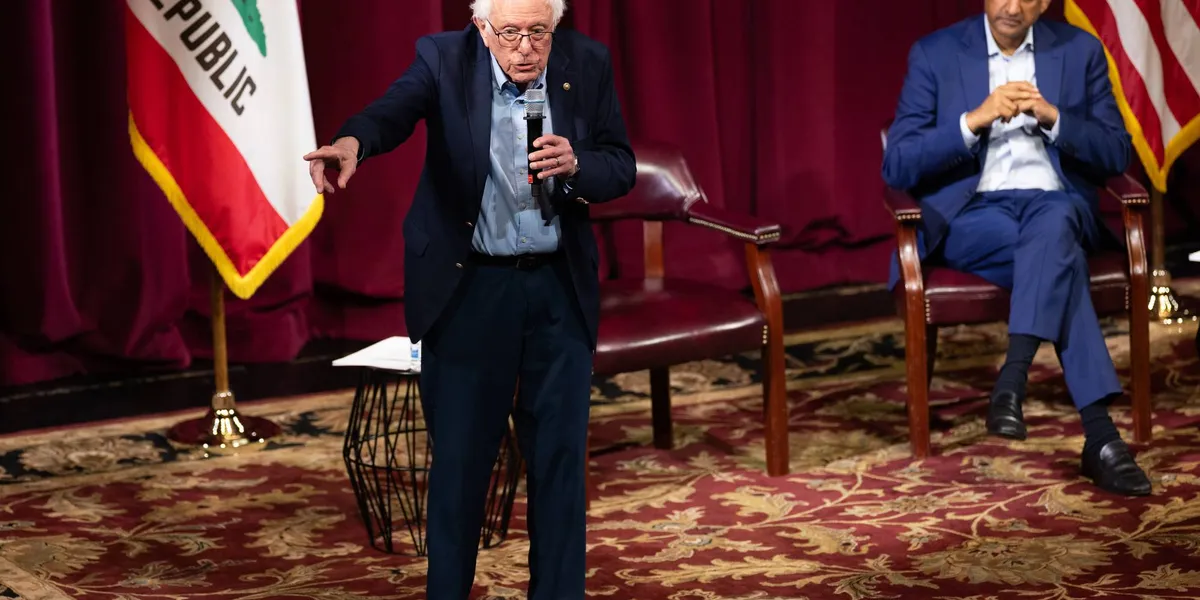
<p>On Monday, Sen. Bernie Sanders (I-Vt.) and Rep. Ro Khanna (D-Calif.) introduced the Make Billionaires Pay Their Fair Share Act. The legislation would apply an annual 5% wealth tax to 938 U.S. billionaires, affecting fewer than 1,000 people.</p><p>Sanders’ office estimated the tax would raise $4.4 trillion over the next decade. The lawmakers cited a collective billionaire net worth of $8.2 trillion and provided illustrative estimates of liabilities for specific individuals: Elon Musk would owe $42 billion on an $833 billion net worth; Mark Zuckerberg and Jeff Bezos would each owe $11 billion relative to net worth figures of $220 billion and $218 billion.</p><p>The lawmakers and cited economists described the proposal as a direct tool to address top wealth concentration, noting billionaire wealth more than doubled since 2019 and increased about 20% in 2025. The proposal was also described as a potential political test ahead of the 2028 presidential election.</p>