Norms Impact
F.B.I. Subpoenas Records in Arizona in Expansion of 2020 Voting Inquiry
Federal law enforcement power is being mobilized to re-litigate a settled national election, eroding the norm that criminal process is not a tool for partisan election narratives.
Mar 9, 2026
⚖ Legal Exposure
Sources
Summary
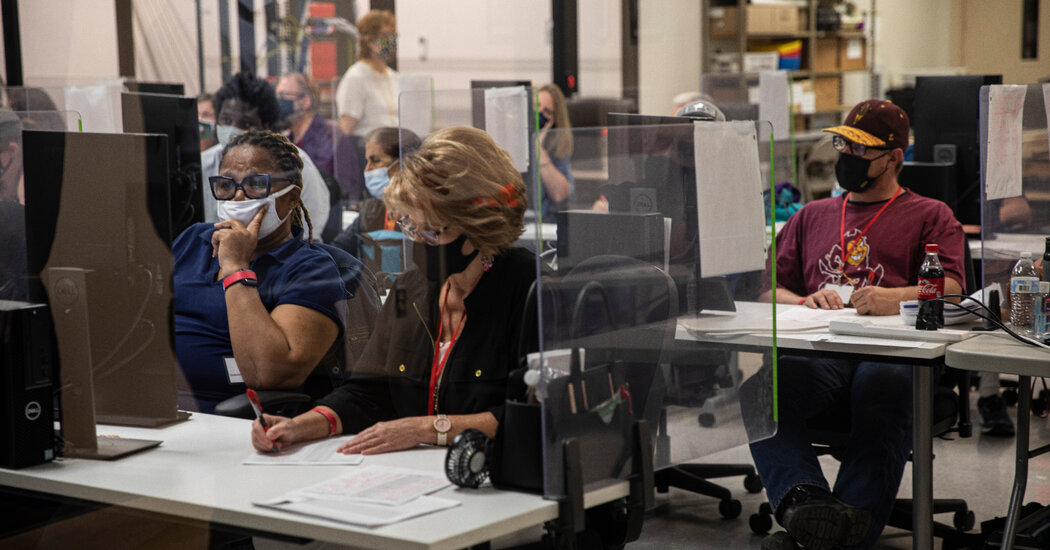
The F.B.I. issued a federal grand jury subpoena to the Arizona State Senate for records related to its 2020 audit of Maricopa County’s election results.
The Justice Department’s inquiry has expanded beyond Georgia, drawing state legislative materials into a federal criminal investigation tied to purported 2020 voting irregularities.
The subpoena places federal investigative authority behind a renewed effort to re-examine the 2020 election record in a pivotal swing-state jurisdiction.
Reality Check
Using federal criminal investigative machinery to revisit a settled presidential election creates a precedent where law enforcement can be steered toward political vindication rather than neutral public protection. When subpoenas and search warrants become instruments to amplify baseless claims, our guardrails against politicized policing weaken and the separation between electoral outcomes and criminal process collapses. This normalization shifts expectations of government power: future presidents can pressure institutions to treat political loss as prosecutable suspicion, undermining rule-of-law legitimacy and public acceptance of democratic results.
Legal Summary
The article indicates an expansion of a federal criminal inquiry into 2020 election “irregularities,” framed as potentially politicized deployment of DOJ/FBI powers to support claims described as baseless. On the stated facts, there is no described financial transfer or transactional quid pro quo, and no concrete rights-deprivation or obstruction conduct—making this a serious investigative red flag rather than a charge-ready corruption case.
Legal Analysis
<h3>18 U.S.C. § 242 — Deprivation of rights under color of law</h3><ul><li>Article describes use of federal investigative tools (grand jury subpoena; earlier search warrant) to re-examine 2020 voting in jurisdictions that certified results, framed as an effort to bolster “baseless claims” of a stolen election.</li><li>Potential theory: if investigative actions are undertaken with an improper purpose to target or intimidate election officials/voters or chill protected political activity, that could implicate rights under color of law; article does not allege specific rights-deprivation acts, threats, or discriminatory targeting beyond the election-focused inquiry.</li><li>Gap: no concrete allegations of coercion, intimidation, discriminatory intent, or specific deprivation of federally protected rights tied to the subpoena itself.</li></ul><h3>18 U.S.C. § 371 — Conspiracy to defraud the United States</h3><ul><li>Article suggests an effort to “harness the vast investigative power” to advance a false narrative; if coordinated to impair lawful federal functions (election administration oversight, DOJ/FBI neutrality) through deceitful means, this statute can be implicated.</li><li>Gap: no facts showing an agreement, overt acts by multiple actors to obstruct/impair a federal function through deception; only investigative steps are described.</li></ul><h3>18 U.S.C. § 1512 / § 1519 — Witness tampering / destruction or falsification of records</h3><ul><li>Grand jury subpoena seeks “reams of information” about voting results and audit materials; these statutes become relevant if any custodian alters, conceals, or destroys responsive records.</li><li>Gap: article does not allege any spoliation, falsification, or obstruction—only compliance (“complied with a federal grand jury subpoena”).</li></ul><h3>52 U.S.C. § 10307 — Election intimidation / interference</h3><ul><li>Investigation into “supposed irregularities” could raise concerns if used as a tool to harass or intimidate election workers or voters.</li><li>Gap: no described intimidation, threats, or direct interference with voting; actions are post-election investigative demands for records.</li></ul><b>Conclusion:</b> The described conduct most strongly presents a procedural/political irregularity risk—potential politicized use of federal investigative powers—without the money-access-official-action transactional structure typical of prosecutable public-corruption quid pro quo on these facts.</p>
Media
Detail
<p>In recent days, the F.B.I. issued a federal grand jury subpoena to the Arizona State Senate seeking extensive records related to the Senate’s 2020 audit of Maricopa County’s presidential election results, according to three people familiar with the matter. The audit was overseen by the State Senate after Donald J. Trump lost to Joseph R. Biden Jr., and was ordered by Senate Republicans in Maricopa County.</p><p>Warren Petersen, the Republican president of the Arizona Senate, confirmed on Monday that he received and complied with the subpoena, stating that the F.B.I. now has the records. The subpoena indicates the Justice Department has added Arizona to a broader investigation into purported irregularities in the 2020 race. That inquiry was disclosed in January, when F.B.I. agents executed a search warrant at an elections office in Fulton County, Georgia, and removed large quantities of voting records.</p><p>Mr. Trump praised the subpoena on social media and linked to reporting by John Solomon of Just the News.</p>