Norms Impact
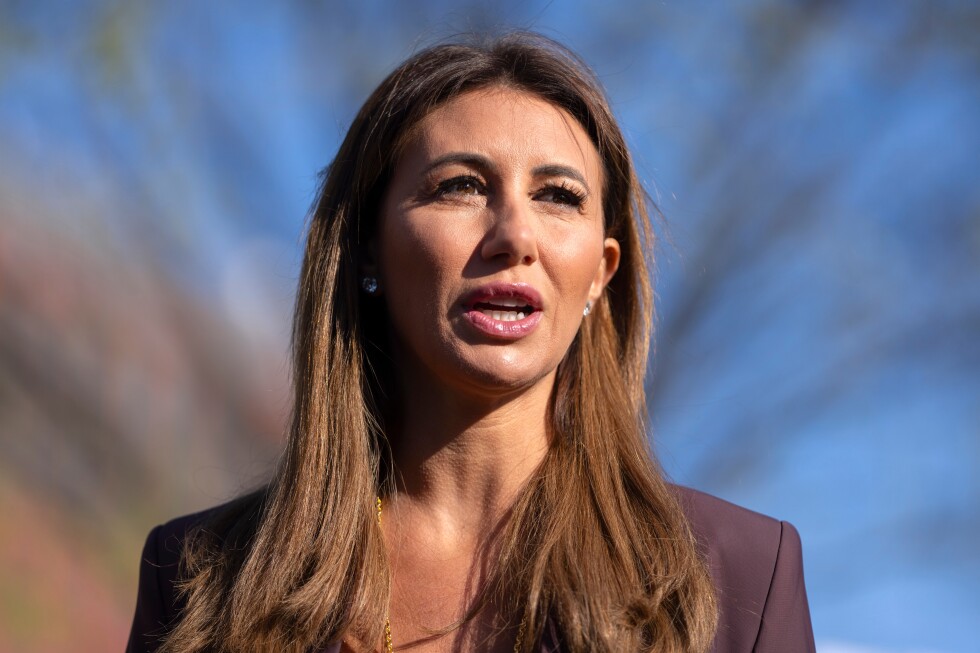
Former Trump lawyer Alina Habba is disqualified as top New Jersey prosecutor, US appeals court rules
A federal appeals court blocked the White House from keeping its preferred loyalist in a top prosecutor’s seat by maneuvering around the normal legal path to appointment.
Dec 1, 2025
⚖ Legal Exposure
Sources
Summary
A federal appeals court disqualified Alina Habba from serving as New Jersey’s top federal prosecutor despite efforts by the Trump administration to keep her in the role.
The ruling enforces legal constraints on how an administration can install a preferred candidate into an “acting” U.S. attorney position.
New Jersey’s U.S. Attorney’s Office is forced into a leadership reset, with direct consequences for prosecutorial continuity and public confidence.
Reality Check
This kind of end-run around appointment constraints threatens to turn federal prosecution into a political instrument, weakening democratic stability and our own protections against selective enforcement. On this record, the conduct is not shown to be criminal; the text describes “maneuvers” blocked by courts, not bribery, fraud, or obstruction, so federal statutes like 18 U.S.C. § 201 (bribery) or § 371 (conspiracy) are not supported by the facts provided. The deeper harm is institutional: efforts to install a preferred candidate as “Acting U.S. Attorney” despite legal barriers erode norms of lawful succession, independence, and continuity in a U.S. Attorney’s Office.
Legal Summary
The article supports exposure centered on irregular or potentially unlawful appointment maneuvers resulting in judicial disqualification, which warrants investigative scrutiny. It does not allege any financial transfer or thing of value tied to official action, so structural quid-pro-quo corruption charges are not supported by the stated facts.
Legal Analysis
<h3>18 U.S.C. § 201(b) — Bribery of public officials (quid pro quo)</h3><ul><li>The article describes executive-branch “maneuvers” to keep a former personal lawyer in a senior federal prosecutorial role and judicial findings that she is disqualified, indicating potential improper pressure or circumvention of appointment rules.</li><li>No facts in the article describe any payment, thing of value, or personal financial benefit tied to an “official act,” so the money-to-official-action structure required for § 201(b) is not alleged.</li><li>Absent alleged consideration (value) and an exchange for a specific official act, bribery elements are not established on this record.</li></ul><h3>18 U.S.C. § 201(c) — Illegal gratuities</h3><ul><li>The article does not allege that Habba gave or received anything of value “for or because of” an official act; it centers on eligibility to serve and administrative efforts to maintain her status.</li><li>Without a described transfer of value connected to official action, gratuity exposure is not supported by the stated facts.</li></ul><h3>18 U.S.C. § 371 — Conspiracy to defraud the United States / commit offense</h3><ul><li>The reported “maneuvers” and judicial disqualification raise an investigative question whether officials attempted to circumvent lawful appointment constraints, potentially impairing lawful governmental functions.</li><li>The article does not specify the acts taken, the participants, or any agreement; it only reports the courts’ conclusions and general frustration with “legal and political barriers,” leaving key conspiracy elements factually undeveloped.</li></ul><h3>18 U.S.C. §§ 1343, 1346 — Honest-services fraud (public corruption)</h3><ul><li>Honest-services fraud typically requires a bribery/kickback scheme; the article contains no allegation of payments, kickbacks, or personal enrichment linked to maintaining the appointment.</li><li>The described conduct is better characterized as an appointment/authority dispute and potential procedural irregularity rather than a transactional corruption scheme on the provided facts.</li></ul><b>Conclusion:</b> The facts as described present a serious investigative red flag focused on legality of appointment maneuvers and potential circumvention of statutory/constitutional constraints, not a money-for-official-action scheme. On this record, it reads as procedural or political irregularity with possible unlawful appointment mechanics rather than prosecutable structural corruption absent evidence of value exchanged or corrupt intent.
Detail
<p>A three-judge panel of the 3rd U.S. Circuit Court of Appeals in Philadelphia ruled Monday that Alina Habba, President Donald Trump’s former personal lawyer, is disqualified from serving as the top federal prosecutor in New Jersey. The panel affirmed a lower-court judge’s ruling after oral arguments held Oct. 20, at which Habba was present.</p><p>In a 32-page opinion, the court described the administration’s efforts to elevate Habba as its preferred candidate for U.S. Attorney for the District of New Jersey, including maneuvers to place her into the position as Acting U.S. Attorney. The court said those efforts reflected the administration’s frustration with legal and political barriers to installing its appointees. The panel emphasized that New Jersey residents and career employees in the U.S. Attorney’s Office require clarity and stability in leadership.</p>