Norms Impact
How the Trump Administration Is Giving Even More Tax Breaks to the Wealthy
Treasury and the I.R.S. are using opaque rulemaking to hollow out a law Congress passed, rewriting national tax policy without the scrutiny or consent our democracy requires.
Nov 8, 2025
⚖ Legal Exposure
Sources
Summary
The Treasury Department and Internal Revenue Service issued new notices and proposed regulations that expand tax breaks for large corporations and wealthy investors while sharply reducing the expected revenue from the 2022 corporate alternative minimum tax. The administration is using executive-branch rulemaking to dismantle a congressionally enacted tax floor designed to ensure highly profitable corporations pay federal income tax. The practical result is hundreds of billions more in tax relief for powerful interests, a smaller tax base, and deeper deficit pressure alongside cuts to health and food assistance.
Reality Check
This kind of executive-branch end-run around a congressionally enacted tax floor normalizes governance by administrative sabotage, where the winners are preselected and the public pays through deficits and program cuts. On these facts, the sharper legal risk is not an obvious criminal offense but an institutional breach: using Treasury and I.R.S. rulemaking to effectively nullify a statute tests the boundary of lawful authority and invites government by discretion rather than law. When agencies can quietly convert a $222 billion enforcement mechanism into “a fraction” through notices and proposed regulations, our rights are no longer set by elected representatives but by whoever controls the machinery of interpretation.
Legal Summary
The article alleges Treasury and the IRS are using notices and proposed regulations to substantially weaken a congressionally enacted corporate minimum tax, raising nontrivial exposure to APA/ultra vires challenges. However, it provides no facts indicating personal enrichment, payments, or a quid pro quo; the principal risk is administrative illegality or politicized rulemaking rather than prosecutable bribery-style corruption on this record.
Legal Analysis
<h3>5 U.S.C. § 706(2) (APA — agency action in excess of statutory authority / arbitrary & capricious)</h3><ul><li>The article alleges Treasury/IRS issued a “series of new notices and proposed regulations” that rapidly “gut” the 2022 corporate alternative minimum tax, potentially reducing expected revenue substantially, raising a plausible claim the agency is exceeding delegated authority or acting contrary to the statute’s design.</li><li>Because the described actions are notices/proposed regulations affecting major fiscal outcomes “with little public scrutiny,” an investigative red flag exists for procedurally/ substantively defective rulemaking and inadequate reasoned explanation, though the article provides no specifics on the regulatory text or administrative record.</li></ul><h3>26 U.S.C. § 7805 (Treasury regulatory authority — limits on interpretive/rulemaking power)</h3><ul><li>Treasury is described as “empowered to write rules to help the I.R.S. carry out tax laws passed by Congress,” but the “aggressive actions” to hollow out a minimum tax aimed at ensuring large corporations pay some tax suggests potential overreach beyond implementation into effective nullification.</li><li>Key gap: the article does not specify the statutory provisions being interpreted, the precise regulatory carveouts, or whether Congress left ambiguity permitting these outcomes.</li></ul><h3>18 U.S.C. § 201 (Bribery of public officials) / 18 U.S.C. § 1346 (Honest services fraud)</h3><ul><li>The article describes broad policy changes benefiting wealthy companies/investors but does not allege any payments, gifts, or personal enrichment to officials, or specific access-for-action alignment tied to identifiable beneficiaries.</li><li>Absent any transactional facts, the described conduct reads as policy/administrative overreach risk rather than prosecutable quid-pro-quo corruption on this record.</li></ul><b>Conclusion:</b> The conduct described presents a serious investigative red flag for potential unlawful administrative action (procedural/substantive overreach) but, on the facts provided, lacks the money-access-official-act alignment indicative of prosecutable structural public corruption.</p>
Detail
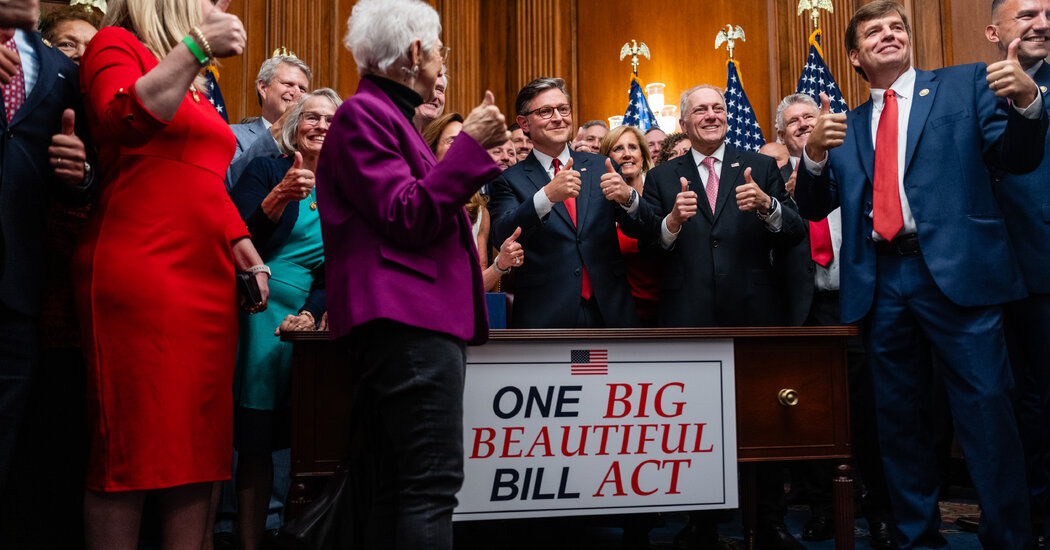
<p>Beginning in the summer of 2025, the Treasury Department and the Internal Revenue Service issued a succession of notices and proposed regulations that provide tax relief to large private equity firms, crypto companies, foreign real estate investors, insurance providers, and multinational corporations. The actions are described as rapidly weakening the corporate alternative minimum tax enacted in 2022 and signed by President Joseph R. Biden Jr.</p><p>That 2022 provision was intended to ensure that some of the country’s most profitable corporations pay at least some federal income tax, targeting companies that could report large profits to shareholders while maintaining low federal tax liabilities. The provision had been projected to raise $222 billion over a decade, but the new administrative guidance is expected to reduce collections to a fraction of that amount.</p><p>These administrative changes follow a roughly $4 trillion tax-cut package President Trump signed into law in July 2025, passed entirely by Republicans, projected to add trillions to the federal deficit and paired with cuts to health care for the elderly and food stamps for poorer Americans.</p>