Norms Impact
ICE Is Stockpiling Warheads and Chemical Weapons
A domestic immigration agency’s weapon purchases have exploded into ordnance and chemical agents while courts are already restricting DHS force—normalizing militarized policing without meaningful public accountability.
Oct 23, 2025
⚖ Legal Exposure
Sources
Summary
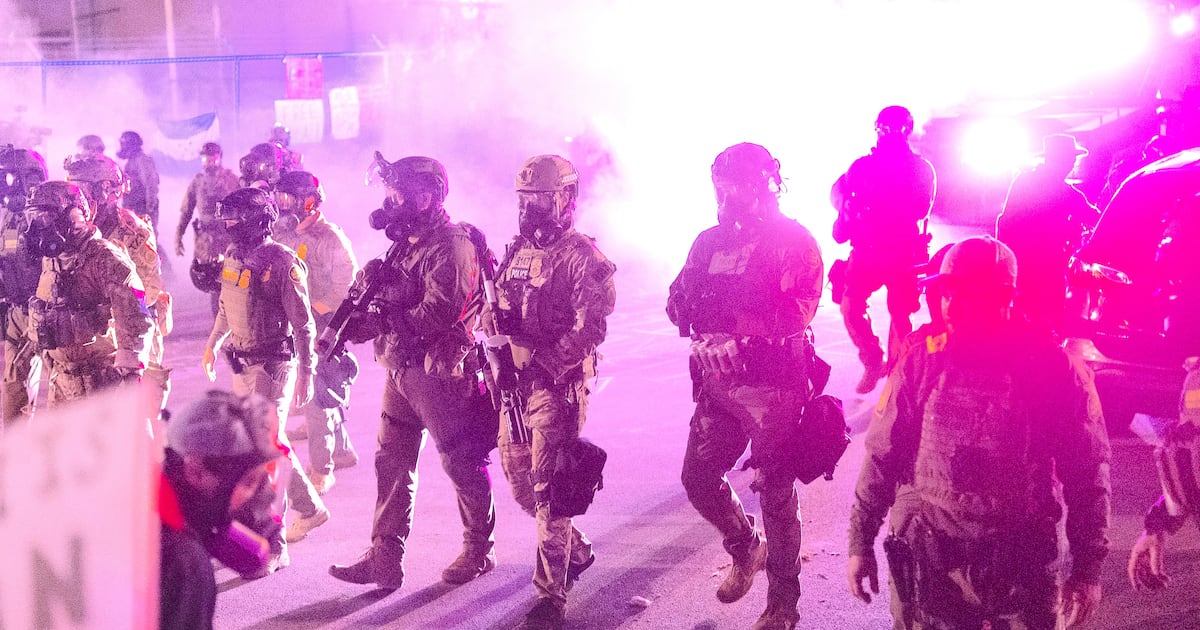
Federal purchasing logs show ICE spent $71,515,762 on “small arms, ordnance, and ordnance accessories” from Jan. 20 to Oct. 18, up from $9,715,843 over the same period in 2024. The scale of domestic enforcement armament inside DHS is shifting toward a posture associated with militarized operations, amid a rapid expansion of agents. The practical consequence is a larger, more heavily equipped federal force operating on U.S. streets while courts are already moving to restrict DHS uses of force after documented incidents.
Reality Check
A massively expanded, heavily armed federal enforcement apparatus operating on our streets—while a federal judge is already curbing unjustified DHS force—sets a precedent where coercive power grows faster than oversight, and our rights become the collateral damage. The purchasing itself is not necessarily criminal on this record, but the on-the-ground use of chemical agents and pepper-spray projectiles against journalists and bystanders points straight at potential civil-rights exposure under 18 U.S.C. § 242 if force is willfully applied without legal justification. When domestic agencies stockpile “non-lethal” munitions and deploy them in public settings, the constitutional line is not abstract: it is the boundary between lawful enforcement and government violence that chills speech, press, and protest.
Legal Summary
ICE’s reported rapid escalation in weapons purchases (including disputed claims of guided-missile components and chemical agents) and repeated chemical-agent incidents triggering a federal court restriction create significant investigative red flags. The strongest potential criminal exposure in the article is incident-specific excessive-force liability under color of law, but the procurement facts as stated more clearly indicate oversight/procedural risk rather than a prosecutable corruption quid pro quo.
Legal Analysis
<h3>5 U.S.C. § 706(2)(A) — Arbitrary and capricious agency action (APA)</h3><ul><li>Reported 700% surge in ICE weapons spending, including alleged “chemical weapons” and “guided missile warheads,” raises questions whether procurement and deployment decisions are properly justified, documented, and within lawful mission scope.</li><li>Public reports of force incidents (pepper-spray ball injuries to a reverend and a journalist) and a federal judge’s temporary restriction on DHS force suggest potential pattern evidence relevant to whether agency practices are reasonable and supported by lawful standards.</li><li>Gap: The article provides spend totals and descriptions but not the underlying procurement rationales or formal approvals needed to assess definitively under APA standards.</li></ul><h3>18 U.S.C. § 242 — Deprivation of rights under color of law</h3><ul><li>Allegations of ICE agents using chemical agents/pepper-spray projectiles on non-threatening individuals (a praying reverend; a reporter in a truck) and the existence of a judicial order restricting unjustified force support investigative concern about willful excessive force.</li><li>Repeated incidents involving journalists and a “criminal probe” into one shooting incident indicate potential fact patterns that can satisfy “under color of law” and “willfulness” if evidence shows intentional, unjustified force.</li><li>Gap: Article does not establish individual intent, justification context, or injury severity beyond isolated descriptions; criminal exposure depends on specific incident facts.</li></ul><h3>18 U.S.C. § 241 — Conspiracy against rights</h3><ul><li>Multiple similar incidents near the same facility, coupled with judicial intervention restricting force, could warrant inquiry into coordinated practices targeting protected activity (e.g., press/newsgathering) if evidence shows agreement and intent.</li><li>Gap: No explicit agreement or coordinated plan is stated; requires additional evidence of coordination beyond repeated events.</li></ul><h3>40 U.S.C. § 101 et seq. & FAR compliance — Federal procurement integrity / mission-appropriate acquisition</h3><ul><li>Large, rapid procurement increases (including a single $9,098,590 rifle-maker purchase) raise oversight red flags for procurement justification, scope, and compliance with acquisition rules—especially where items are characterized as unusually militarized for a domestic agency.</li><li>DHS statement disputes “guided missile components,” creating a factual conflict that, if resolved against the agency, could indicate misclassification or improper procurement representations.</li><li>Gap: The article does not allege kickbacks, bribery, or bid-rigging; exposure here is primarily procedural/oversight absent evidence of corruption.</li></ul><b>Conclusion:</b> The article supports serious investigative and oversight red flags around procurement escalation and potential excessive-force incidents, but it does not present a money-for-official-act transactional structure or facts sufficient to charge classic public-corruption bribery; exposure is strongest as procedural/constitutional enforcement risk pending investigation of specific force events and procurement records.</p>
Detail
<p>Federal purchasing logs reviewed in an analysis by Popular Information show ICE spent $71,515,762 on “small arms, ordnance, and ordnance accessories” in the nine months between Jan. 20 and Oct. 18, compared with $9,715,843 over the same period in 2024. Popular Information reported that spending included armor, guns, and ammunition, and also described “significant purchases of chemical weapons and ‘guided missile warheads and explosive components.’” On Sept. 29, ICE spent $9,098,590 with Geissele Automatics.</p><p>Assistant Homeland Security Secretary Tricia McLaughlin told the Daily Beast that allegations ICE is buying guided missile components are false and said purchases include firearms and “non-lethal resources,” citing increased onboarding of 11,000 agents. The report notes the data may understate total weaponry spending because other federal agencies beyond ICE have been involved in immigration enforcement.</p><p>Separately, multiple incidents involving chemical agents and pepper-spray balls near the Broadview ICE facility prompted scrutiny, and a federal judge issued a 14-day order restricting DHS force against people without justification.</p>