Norms Impact
In Refusing to Impeach Trump, Congress Has Failed the American People and the World | Common Dreams
By refusing to force impeachment votes, the House normalizes executive lawlessness and abandons its constitutional duty to check war powers, civil-liberties violations, and obstruction of justice.
Mar 4, 2026
⚖ Legal Exposure
Sources
Summary
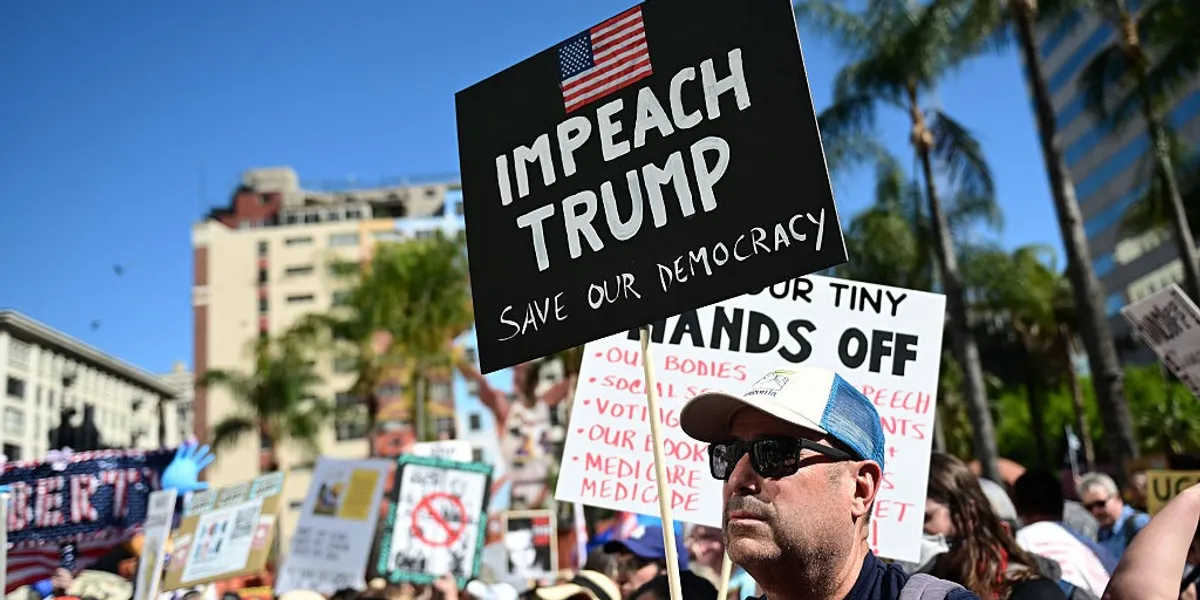
House members introduced multiple impeachment resolutions during President Donald Trump’s second term, but the House either tabled them or left them in committee without floor votes. This sustained refusal to deploy a core constitutional accountability tool reflects an institutional retreat from Congress’s role as a co-equal branch, even amid claims of executive usurpation of war powers and obstruction of justice. The practical consequence is that executive actions described as unlawful proceed without formal congressional consequence, while members avoid recorded votes that would define constitutional limits.
Reality Check
When Congress declines to use impeachment as an operational tool—forcing votes, creating a record, and imposing consequences—it weakens the separation of powers in practice, not theory. A legislature that will not put members on record against alleged constitutional violations teaches future presidents that defiance is survivable and repeatable. Over time, that precedent converts accountability from a constitutional mechanism into a discretionary talking point, and our guardrails become optional.
Legal Summary
The article alleges serious executive overreach and criticizes Congress for failing to use impeachment tools, which is largely a political/procedural narrative rather than a transactional corruption case. It also asserts a DOJ “cover-up” and “obstruction” regarding the Epstein Files, but provides no concrete acts or proceeding details sufficient to satisfy obstruction elements. Overall exposure is an investigative red flag (procedural/politicization and potential obstruction allegations) without the money-access-benefit alignment typical of prosecutable structural corruption.
Legal Analysis
<h3>18 U.S.C. § 371 — Conspiracy to defraud the United States</h3><ul><li>The article alleges broad “lawless” executive conduct (war-powers/purse usurpation, obstruction of justice, civil-liberties violations), but it does not allege an agreement among identifiable actors to impair a federal function by deceitful or dishonest means.</li><li>Absent specific facts showing coordinated planning between officials and others, the narrative reads as political/constitutional critique rather than a chargeable conspiracy.</li></ul><h3>18 U.S.C. § 1505 — Obstruction of proceedings before departments, agencies, and committees</h3><ul><li>The piece asserts “continued obstructions of justice” and a “blatant cover-up” regarding the “Epstein Files” by Attorney General Pam Bondi, which, if supported by evidence, could implicate obstruction of congressional/investigative processes.</li><li>Key gaps: no described obstructive acts (e.g., document destruction, false statements, witness tampering), no identified pending proceeding details, and no linkage to specific intent; allegations are conclusory.</li></ul><h3>18 U.S.C. §§ 201(b), 208; 1346/1341/1343 — Bribery/conflict of interest/honest services fraud</h3><ul><li>The article does not allege payments, gifts, or personal enrichment tied to official action by Members of Congress or executive officials; it criticizes congressional inaction and executive overreach without a money-access-benefit transaction pattern.</li><li>Accordingly, the structural corruption (quid-pro-quo) indicators needed for bribery/honest-services theories are not present in the provided facts.</li></ul><h3>House Rules/Constitutional process issues — Noncriminal procedural/political conduct</h3><ul><li>Allegations focus on Congress tabling/withdrawing impeachment resolutions, leaving measures in committee, and political “road blocks” to impeachment—core legislative discretion that is generally noncriminal even if framed as dereliction.</li><li>Claims of unconstitutional war-making and policy harms (e.g., war declarations/strikes) are asserted, but the article does not supply specific statutory violations or evidentiary facts supporting criminal exposure.</li></ul><b>Conclusion:</b> The described conduct primarily reflects alleged abuses of power and political/procedural irregularities (including conclusory obstruction/cover-up claims) rather than a developed money-to-power transactional scheme; it warrants investigative scrutiny but is not charged on this record.
Detail
<p>More than a year into President Donald Trump’s second term, members of the House introduced several impeachment-related measures and then failed to advance them to consequential votes. In April 2025, Rep. Shri Thanedar filed H.Res 353, which the text says was submitted under Rule IX to force action, but Thanedar withdrew it minutes before a vote; it has remained with the House Judiciary Committee for 10 months. In May 2025, Rep. Al Green forced a vote on H.Res 537 to impeach Trump; the House voted to table it.</p><p>In December 2025, Thanedar’s office sought endorsements for H.Res 935 to impeach Secretary of Defense Pete Hegseth; the resolution remains in Judiciary without a vote. In early 2026, H.Res 996 to impeach DHS Secretary Kristi Noem gained endorsements from 187 members; Minority Leader Hakeem Jeffries said he would pursue impeachment if Noem was not fired, but Noem remained in office and the resolution stayed in committee. The text also describes no filed impeachment articles addressing the Department of Justice’s handling of the Epstein Files despite a near-unanimous vote to release the files and allegations of obstruction by Attorney General Pam Bondi.</p>